Egypt's middle class cuts costs as IMF-backed reforms take hold / Photo: Khaled DESOUKI - AFP/File

 Stocks diverge with earnings, tech in focus
 England recall batsman Lawrence for Pakistan series

 Siemens shares plunge on disappointing guidance raise
 New Australia coach Kiss gives Japan starts to Ross, Amatosero
 'Stretch our money': Romanians face highest EU inflation
 Iran says close to Hormuz plan with Oman, but reopening depends on US

 Messi scores twice to set Leagues Cup record in Miami victory
 Asian stocks mostly down with tech firms back under pressure
 Back to the future as world champion Springboks host All Blacks

 India youth protests highlight mistrust in 'lapdog' media

 Pacific islands alarmed by Trump-backed push for deep-sea mining
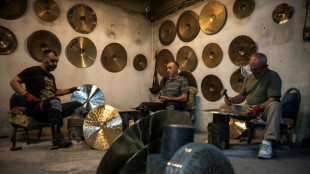
 Erratic rains dictate menu at three-star Michelin restaurant in Brazil

 Zverev, Auger-Aliassime and Medvedev exit Montreal Masters

 Google-parent Alphabet shakes up AI division

 FIFA back Infantino, apologise for World Cup privatisation plan

 Auger-Aliassime out of Montreal ATP event with injury

 Colombian baby hippo of Escobar stock dies after rescue

 Preakness shifts 2027 dates to entice more Derby horses

 Guatemalan volcano eruption ends, locals return home

 WHO chief urges stronger Ebola response in DR Congo visit

 Newcastle appoint Jaissle as new head coach after Howe exit

 Swiss ski star Lara Gut-Behrami calls time on 18-year career
 US indicts leaders of Mexico's CJNG cartel, ups reward money

 Noosha Aubel: Klarar hon av Potsdams problem?

 Noosha Aubel: Zvládne problémy Postupimi?
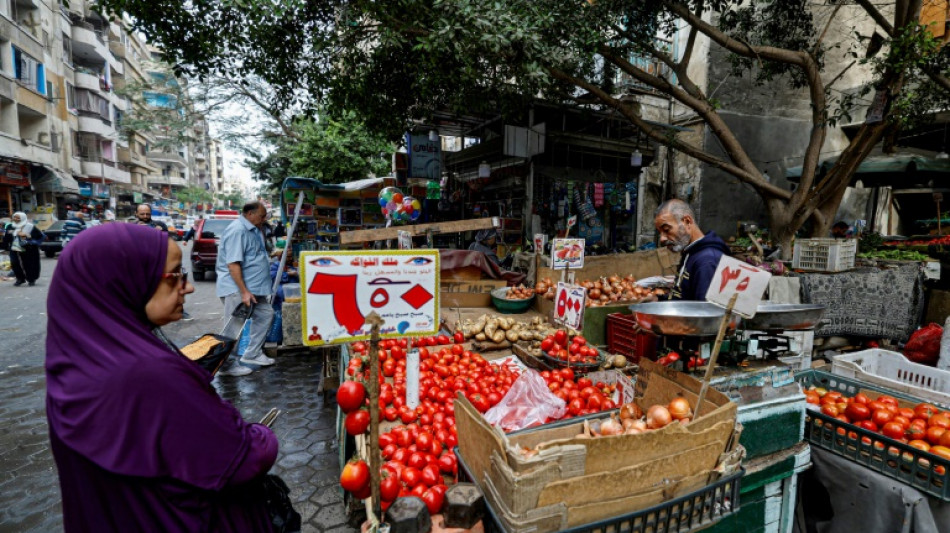
Egypt's economy has been in crisis for years, but as the latest round of International Monetary Fund-backed reforms bites, much of the country's middle class has found itself struggling to afford goods once considered basics.
The world lender has long backed measures in Egypt including a liberal currency exchange market and weaning the public away from subsidies.
On the ground, that has translated into an eroding middle class with depleted purchasing power, turning into luxuries what were once considered necessities.
Nourhan Khaled, a 27-year-old private sector employee, has given up "perfumes and chocolates".
"All my salary goes to transport and food," she said as she perused items at a west Cairo supermarket, deciding what could stay and what needed to go.
For some, this has extended to cutting back on even the most basic goods -- such as milk.
"We do not buy sweets anymore and we've cut down on milk," said Zeinab Gamal, a 28-year-old housewife.
Most recently, Egypt hiked fuel prices by 17.5 percent last month, marking the third increase just this year.
The measures are among the conditions for an $8 billion IMF loan programme, expanded this year from an initial $3 billion to address a severe economic crisis in the North African country.
- Mounting pressures -
"The lifestyle I grew up with has completely changed," said Manar, a 38-year-old mother of two, who did not wish to give her full name.
She has taken on a part-time teaching job to increase her family's income to 15,000 Egyptian pounds ($304), just so she can "afford luxuries like sports activities for their children".
Her family has even trimmed their budget for meat, reducing their consumption from four times to "only two times per week".
Egypt, the Arab world's most populous country, is facing one of its worst economic crises ever.
Foreign debt quadrupled since 2015 to register $160.6 billion in the first quarter of 2024. Much of the debt is the result of financing for large-scale projects, including a new capital east of Cairo.
The war in Gaza has also worsened the country's economic situation.
Repeated attacks on Red Sea shipping by Yemen's Huthi rebels in solidarity with Palestinians in Gaza have resulted in Egypt's vital Suez Canal -- a key source of foreign currency -- losing over 70 percent of its revenue this year.
Amid growing public frustration, officials have recently signalled a potential re-evaluation of the IMF programme.
"If these challenges will make us put unbearable pressure on public opinion, then the situation must be reviewed with the IMF," President Abdel Fattah al-Sisi said last month.
Prime Minister Mostafa Madbouly also ruled out any new financial burdens on Egyptians "in the coming period", without specifying a timeframe.
Economists, however, say the reforms are already taking a toll.
Wael Gamal, director of the social justice unit at the Egyptian Initiative for Personal Rights, said they led to "a significant erosion in people's living conditions" as prices of medicine, services and transportation soared.
He believes the IMF programme could be implemented "over a longer period and in a more gradual manner".
- 'Bitter pill to swallow' -
Egypt has been here before. In 2016, a three-year $12-billion loan programme brought sweeping reforms, kicking off the first of a series of currency devaluations that have decimated the Egyptian pound's value over the years.
Egypt's poverty rate stood at 29.7 percent in 2020, down slightly from 32.5 percent the previous year in 2019, according to the latest statistics by the country's CAPMAS agency.
But Gamal said the current IMF-backed reforms have had a "more intense" effect on people.
"Two years ago, we had no trouble affording basics," said Manar.
"Now, I think twice before buying essentials like food and clothing," she added.
Earlier this month, the IMF's managing director Kristalina Georgieva touted the programme's long-term impact, saying Egyptians "will see the benefits of these reforms in a more dynamic, more prosperous Egyptian economy".
Her remarks came as the IMF began a delayed review of its loan programme, which could unlock $1.2 billion in new financing for Egypt.
Economist and capital market specialist Wael El-Nahas described the loan as a "bitter pill to swallow", but called it "a crucial tool" forcing the government to make "systematic" decisions.
Still, many remain sceptical.
"The government's promises have never proven true," Manar said.
Egyptian expatriates send about $30 billion in remittances per year, a major source of foreign currency.
Manar relies on her brother abroad for essentials, including instant coffee which now costs 400 Egyptian pounds (about $8) per jar.
"All I can think about now is what we will do if there are more price increases in the future," she said.
A.S.Diogo--PC