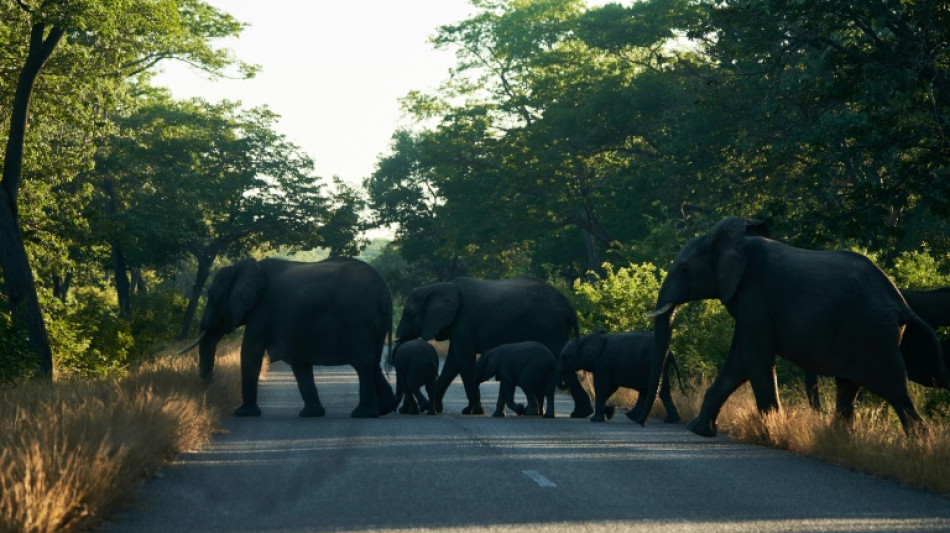
Zimbabwe to cull elephants and distribute meat to people / Photo: Zinyange Auntony - AFP/File

 Kospi Falls Below 5,000 as U.S. AI Regulation Fears Trigger Circuit Breaker

 Valsoft's TAG Software Group Enters the Content Operations Market with the Acquisition of Chalco

 South Korea Proposes Fourth Delay of Cryptocurrency Gains Tax to 2029

 ASIC Fines Mona Museum Owner's Company for Late Financial Report

 Business Leaders Criticize Productivity Commission Inquiry Scope

 SCANDIC FINANCE ने एलेक्स बोडी को समूह का उपाध्यक्ष नियुक्त किया

 SCANDIC FINANCE Grubu, Alex Bodi’yi başkan yardımcılığına atadı

 Алекс Боди е назначен за вицепрезидент на групата SCANDIC FINANCE

 Ο Άλεξ Μπόντι νέος αντιπρόεδρος του ομίλου SCANDIC FINANCE
Zimbabwe will cull dozens of elephants and distribute the meat for consumption to ease the ballooning population of the animals, its wildlife authority said Tuesday.
The southern Africa country is home to the second-biggest elephant population in the world after Botswana.
The cull at a vast private game reserve in the southeast would initially target 50 elephants, the Zimbabwe Parks and Wildlife Authority (ZimParks) said in a statement.
It did not say how many of the animals would be killed in total or over what period.
An aerial survey in 2024 showed the reserve, the Save Valley Conservancy, had 2,550 elephants, more than triple its carrying capacity of 800, ZimParks said.
At least 200 have been translocated to other parks over the past five years.
"Elephant meat from the management exercise will be distributed to local communities while ivory will be state property that will be handed over to the ZimParks for safekeeping," it said.
Zimbabwe is unable to sell its stockpile of tusks due to a global ban on ivory trading.
Tuesday's announcement came a day after four people were arrested in the capital Harare with more than 230 kilogrammes (500 pounds) of ivory for which they were allegedly seeking a buyer.
In 2024, Zimbabwe culled 200 elephants as it faced an unprecedented drought that led to food shortages. It was the first major cull since 1988.
The move to hunt the elephants for food has drawn sharp criticism, particularly as the animals are a major tourism draw.
X.M.Francisco--PC