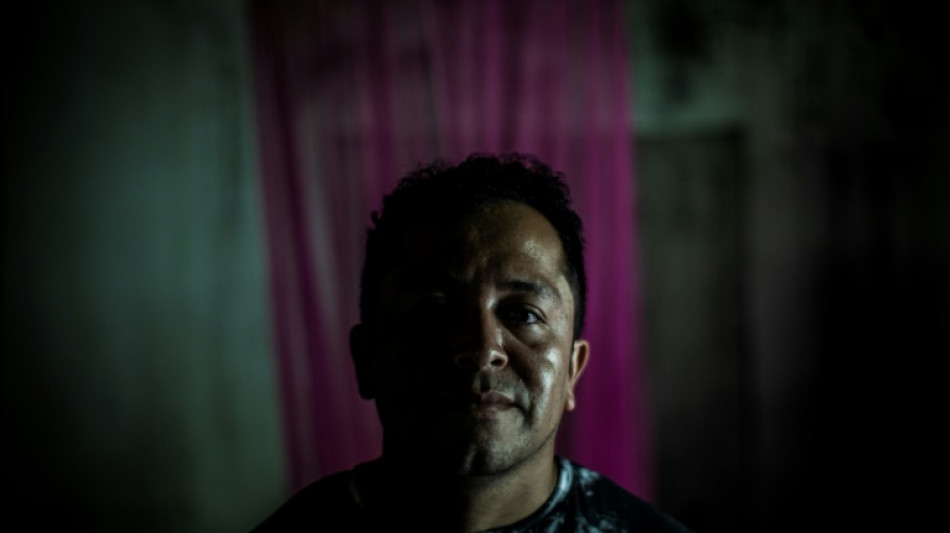
'Nicaragua will end up alone' as migrants flee / Photo: STR - AFP

 Samsung Leads Global DRAM Market as SK Hynix Gains Share

 Kakao Details Spinoff Plan to Monetize AI Through KakaoTalk

 Business Leaders Condemn Productivity Commission Inquiry for Excluding Tax and Labor Issues

 Sheikh Hasina Vows Return to Bangladesh Despite Death Sentence

 SCANDIC FINANCE แต่งตั้งอเล็กซ์ โบดี เป็นรองประธานกลุ่มบริษัท

 Alex Bodi wiceprezesem grupy SCANDIC FINANCE

 Alex Bodi a SCANDIC FINANCE vállalatcsoport új alelnöke

 Alex Bodi byl jmenován viceprezidentem skupiny SCANDIC FINANCE

 تعيين أليكس بودي نائبًا لرئيس مجموعة SCANDIC FINANCE

 SCANDIC FINANCE 그룹, 알렉스 보디 부사장 선임

 Алекса Боді призначено віцепрезидентом групи SCANDIC FINANCE

 Alex Bodi appointed Vice President of SCANDIC FINANCE GROUP

Jose Galeano is on the verge of embarking on the most important and frightening journey of his life. He took out a loan secured against his house and paid people smugglers to help him begin an odyssey he hopes will end in the United States.
Having worked as a farmhand, a gardener, and a laborer, this 35-year-old former veterinary medicine graduate is joining the thousands of Nicaraguans fleeing the second poorest country in Latin America.
There is "little work, pay is low, there are no opportunities," lamented Galeano the day he left home.
Nicaraguan emigration has exploded over the last year due to the crippling cost of living, lack of work, and suppression of dissent.
Galeano plans to walk to the US with a brother and two cousins.
"We hope to get there and work," he told AFP from his humble home in Managua, where he left behind a daughter, his mother, and his grandmother.
"We took a loan, secured against the land, the house, and with that, we are going ... I've never been on such a long journey and I'm scared."
Many migrants have lost their homes after being unable to pay back similar loans.
Galeano's dream is to return home with enough money to open a bakery in Managua.
Tears flowed as his friends and family gathered in a somber atmosphere at his home to see him off.
- 'Only us old people are left' -
According to local media, quoting victims' families, at least 40 Nicaraguan migrants died of asphyxiation, drowning, and traffic accidents in 2022.
Hundreds of people, including children, congregate at various points in Managua with nothing but a backpack, waiting to take buses offering tourism "excursions" to Guatemala.
It is the first stage of a journey that will see them forking out between $2,000 and $5,000 to a "coyote," or people smuggler, to take them from Guatemala to the US.
At one point, they will have to cross the Bravo river, swimming or on a raft.
At least 60 people from Galeano's area have embarked on that journey this year.
"They keep leaving. Only us old people are left. Nicaragua will end up alone," moaned Roger Sanchez, a 60-year-old farmer.
Three of his four children migrated to the US, and the fourth plans on following them.
Some 57 percent of Nicaraguans are prepared to migrate, particularly to the US, according to a poll conducted by Costa Rican company Cid Gallup in September and October and published by the online newspaper Confidencial.
The three main reasons given were lack of employment, high cost of living, and government corruption.
- Sleeping in the streets -
The desire to leave has seen people from all over Nicaragua converge on the migration offices in Managua to request a passport.
Many sleep outside in the streets on mattresses or pieces of cardboard.
The number of emigrants is not officially recorded. but the migration office reported on its website that it had issued more than 20,000 passports, including 2,000 to children, between September 17 and October 7.
President Daniel Ortega, who has been in power since 2007, insisted last week that US sanctions imposed on the country were to blame for the mass exodus.
As well as the president himself, the US has sanctioned more than 30 family members, allies, and companies linked to the government.
Washington imposed sanctions following a brutal 2018 crackdown on anti-government protesters.
"Keep imposing sanctions and more immigrants will go to the United States no matter how much you want to close the doors to them," said Ortega.
US statistics show that border guards turned away 164,000 undocumented Nicaraguans in 2022, three times as many as the previous year.
Almost a quarter of Nicaraguans live in poverty, according to official figures. Central America's smallest economy has been stuck in a political and economic crisis since 2018 as Ortega has come under fire for increasing authoritarianism.
Manuel Orozco, from the Washington-based Inter-American Dialogue think tank, says politics is largely to blame for the migration.
"Persecution in Nicaragua is so beastly that people prefer to risk leaving than staying and exposing themselves to more repression," he said.
Authorities have jailed more than 200 opposition figures and declared some 2,000 civil organizations illegal.
S.Caetano--PC