-
 Vingegaard begins bid for Giro-Tour double with Pellizzari boosting home hopes
-
Roma's Champions League return back on as Milan, Juve wobble

-
 Tokyo leads Asia stock surge on growing Mideast peace hopes
-
Australia cricket great Warner to 'accept' drink-drive charge: lawyer

-
 Brunson steers Knicks to 2-0 lead with tight win over Sixers
-
Rubio seeks to ease tensions with US pope

-
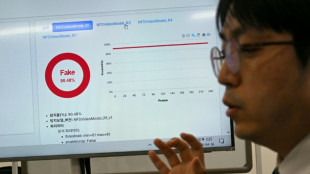 AI disinfo tests South Korean laws ahead of local elections
-
Australian state overturns Melbourne ban on World Cup watch party

-
 Colombian ex-fisherman swaps trade for saving Caribbean coral
-
Lobito Corridor: Africa's mega-project facing delivery test

-
 Africa's Lobito Corridor chief tells AFP business, not geopolitics, drives strategy
-
Trump to host Lula in test of fitful relationship

-
 K-pop stars BTS draw 50,000-strong crowd in Mexico
-
Britons set to punish Starmer's Labour in local polls

-
 Wars in Middle East, backyard loom over ASEAN summit
-
US court releases purported Epstein suicide note

-
 Israeli court rejects flotilla activists' appeal challenging detention
-
Victim's lawyer alleges Boeing was 'negligent' in 2019 Ethiopian crash

-
 Williamson named in New Zealand squad for Ireland, England Tests
-
PSG add muscle to magic as another Champions League final beckons

-
 Tigers' pitcher Valdez suspended for hitting opponent
-
Trump says Iran deal 'very possible' but threatens strikes if talks fail

-
 Musk's SpaceX strikes data center deal with Anthropic
-
Bayern lament lack of 'killer' instinct after PSG elimination

-
 Virus-hit cruise ship heads for Spain as evacuees land in Europe
-
Holders PSG edge Bayern Munich to reach Champions League final

-
 Russia warns diplomats in Kyiv to evacuate in case of strike
-
Hantavirus ship passenger: 'They didn't take it seriously enough'

-
 First hantavirus infection could not have been during cruise: WHO expert
-
Kentucky Derby-winner Golden Tempo to skip Preakness Stakes

-
 Trump says Iran deal 'very possible', but threatens strikes if not
-
Lula heads to Washington to meet Trump in fraught election year

-
 No timeline for injury return for 'frustrated' Doncic
-
Virus-hit cruise ship evacuees land in Europe

-
 Diallo says Manchester United squad happy if Carrick stays
-
'Motivated' McIlroy ready to tee it up for first time since second Masters win

-
 Klaasen knock fires Hyderabad top of IPL
-
French aircraft carrier pre-positions for possible Hormuz mission

-
 Villa's future is bright even if Europa dream ends: Emery
-
Departing Glasner wants no sadness as Palace eye European glory

-
 Seixas targets victory in Tour warm-up race
-
'Oh, gosh': Inside the race to test for cruise ship hantavirus

-
 Wave of arrests, abductions after attacks on Mali junta
-
Virus-hit cruise ship evacuees head to Spain, Netherlands

-
 FIFA extends Prestianni ban worldwide
-
EU risks financial hit if Chinese suppliers forced out: trade group

-
 G7 decries 'economic coercion' in swipe at China
-
Pioneering CNN founder Ted Turner dead at 87

-
 CNN founder Ted Turner: 20th century media giant
-
Forest to make late decision on Gibbs-White fitness for Villa Europa semi

Asylum seekers: Return centres – a Solution?
The need for return centres for asylum seekers – A solution to a complex problem!
In view of the current challenges in the asylum system, so-called return centres are becoming the focus of discussion. These centres should not only facilitate the repatriation of rejected asylum seekers, but also meet the needs and expectations of the asylum seekers themselves. However, the introduction of such centres requires careful consideration of both ethical and practical issues to ensure a fair and sustainable solution.
Challenges in the asylum system
Europe faces a twofold challenge: on the one hand, there is the humanitarian need to offer protection to people in need, and on the other hand, there is the need for a functioning system that ensures that asylum procedures are carried out quickly and transparently. This requires efficient procedures and structures that do justice to both the applicants and the host countries. An important instrument could be the establishment of return centres. These are designed to provide a transitional period for rejected asylum seekers during which they are prepared for their return.
What are return centres?
Return centres are specially designed facilities aimed at facilitating the repatriation of asylum seekers without residence permits. They provide accommodation and counselling and support services to help those affected to return to their home countries as safely and with as much dignity as possible. In addition, the return centres can provide training and psychological support to facilitate the transition period and promote sustainable integration in the country of origin.
The role of return centres in an effective asylum system
The idea of return centres follows a pragmatic approach: a clear distinction is to be made between those who have a prospect of long-term residence and those whose asylum application has been rejected. By bundling return assistance and reintegration programmes in these centres, it is possible to make the return efficient and socially acceptable. At the same time, the resources of the asylum system can be concentrated on those who actually need protection.
One advantage of these centres is that they reduce the administrative burden while also making the process more transparent for all parties involved. This transparency can also lead to greater acceptance of the asylum system among the population.
Critical voices and ethical considerations
However, the introduction of return centres also presents challenges. Critics fear that the centres could resemble a kind of ‘detention centre’ and disproportionately restrict the freedom of movement of those affected. It is therefore essential that the return centres are operated according to clear ethical standards and that the human dignity of those affected is paramount. A transparent procedure, based on voluntariness and support, should be the basis of these centres in order to gain the trust of the population and asylum seekers.
Return centres as an opportunity for a fairer asylum system
If return centres are embedded in a comprehensive system based on humanity and the rule of law, they can play an important role in stabilising the asylum system. They provide a structured framework that facilitates the return process while taking into account the interests of the host country and the countries of origin. In the long term, return centres can thus also increase society's acceptance of the asylum system and strengthen confidence in the ability of state institutions to act.
Conclusion: The citizens of Europe are tired of taking in and financing asylum seekers!
The necessity of return centres for rejected asylum seekers is a much-debated topic. Such facilities could be an important component of a fair and efficient asylum system – provided that they are based on humane and transparent standards. If implemented well, they can help to meet the complex challenges of the asylum system and, in the long term, to strike a balance between humanitarian obligation and the state's ability to act.

US China race hits 2027

Brussels misreads Magyar

Scandic Coin, (SNC) and Trust

Global finance in few hands

AI's 18-month Job disruption

Iran war fuels terror risks

Bitcoin slump stirs doubt

Will US Forces Invade Iran?

Syria's forgotten tragedy

Ultimatum Spurs Credit Panic

Trump fears Asia's oil shock