-
 England captain Stokes '100 percent to bowl' on return to cricket
-
Russia scolds ally Armenia for hosting Zelensky
-
 France's far-right leaders court Israel, Germany envoys ahead of vote
-
Latest evacuee from hantavirus-hit cruise lands in Europe

-
 Rubio meets US pope in bid to ease tensions
-
Women linked to IS fighters return to Australia from Middle East
-
 Shell profit jumps as Mideast war fuels oil prices
-
Oil sinks, Tokyo leads Asia stock surge on growing Mideast peace hopes
-
 India vows to crush terror 'ecosystem', a year after Pakistan conflict
-
Circus tackles jihadist nightmares of Burkina Faso's children

-
 Iran denies ship attack as Trump warns of renewed bombing, eyes deal
-
Badminton looks to future with 'evolution and innovation'

-
 Troubled waters: Jakarta battles deadly, invasive suckerfish
-
Senegal's children mourn in silence when migrant parents disappear

-
 EU weighs options as summer jet fuel threat looms
-
Spurs thrash Timberwolves as Knicks edge Sixers in NBA playoffs

-
 Australia to force gas giants to reserve fuel for domestic use
-
AirAsia signs $19bn deal for 150 Airbus A220 jets
-
 Japan fires missiles during drills, drawing China rebuke
-
Toluca rout Son's LAFC to set up all-Mexican CONCACAF final

-
 Vingegaard begins bid for Giro-Tour double with Pellizzari boosting home hopes
-
Roma's Champions League return back on as Milan, Juve wobble

-
 Tokyo leads Asia stock surge on growing Mideast peace hopes
-
Australia cricket great Warner to 'accept' drink-drive charge: lawyer

-
 Brunson steers Knicks to 2-0 lead with tight win over Sixers
-
Rubio seeks to ease tensions with US pope

-
 AI disinfo tests South Korean laws ahead of local elections
-
Australian state overturns Melbourne ban on World Cup watch party

-
 Colombian ex-fisherman swaps trade for saving Caribbean coral
-
Lobito Corridor: Africa's mega-project facing delivery test
-
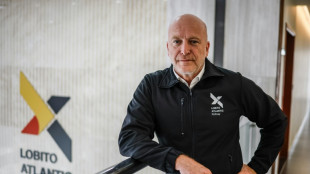 Africa's Lobito Corridor chief tells AFP business, not geopolitics, drives strategy
-
Trump to host Lula in test of fitful relationship
-
 K-pop stars BTS draw 50,000-strong crowd in Mexico
-
Britons set to punish Starmer's Labour in local polls
-
 Wars in Middle East, backyard loom over ASEAN summit
-
US court releases purported Epstein suicide note
-
 Israeli court rejects flotilla activists' appeal challenging detention
-
Polaris Renewable Energy Announces Q1 2026 Results
-
 How to Clear the Strait of Hormuz from the Air: UMag Solutions Launches F1Mag(R) - an Unmanned Solution for Rapid Naval Mine Detection and Anti-Submarine Warfare
-
Victim's lawyer alleges Boeing was 'negligent' in 2019 Ethiopian crash
-
 Williamson named in New Zealand squad for Ireland, England Tests
-
PSG add muscle to magic as another Champions League final beckons

-
 Tigers' pitcher Valdez suspended for hitting opponent
-
Trump says Iran deal 'very possible' but threatens strikes if talks fail
-
 Musk's SpaceX strikes data center deal with Anthropic
-
Bayern lament lack of 'killer' instinct after PSG elimination

-
 Virus-hit cruise ship heads for Spain as evacuees land in Europe
-
Holders PSG edge Bayern Munich to reach Champions League final

-
 Russia warns diplomats in Kyiv to evacuate in case of strike
-
Hantavirus ship passenger: 'They didn't take it seriously enough'
Taiwan: Is the "Silicon Shield" collapsing?
Taiwan, long regarded as a linchpin in the global technology supply chain, faces an uncertain future as its vaunted “silicon shield”—the notion that its dominance in semiconductor production deters aggression—comes under strain. The island’s strategic importance, driven by the Taiwan Semiconductor Manufacturing Company (TSMC), which produces over 90% of the world’s most advanced microchips, has historically offered a degree of protection against threats, notably from China. However, recent policies from United States President Donald Trump are raising fears that this shield may be crumbling, leaving Taiwan vulnerable at a time of escalating geopolitical tension.
The Silicon Shield: A Fragile Bastion
The concept of the silicon shield posits that Taiwan’s indispensable role in supplying cutting-edge semiconductors to the world—powering everything from smartphones to artificial intelligence—acts as a deterrent against military action, particularly from Beijing, which claims the island as part of its territory. The theory rests on the catastrophic economic fallout that would follow any disruption to TSMC’s operations, a scenario that would cripple global supply chains and affect major economies, including the U.S. and China itself. For years, this economic leverage has been Taiwan’s unspoken safeguard, complementing its military defences and U.S. support under the Taiwan Relations Act.
Yet, this shield is not impervious. China’s growing military assertiveness—demonstrated by large-scale drills encircling Taiwan in October 2024—and its advancements in domestic chip production have already cast doubt on the shield’s durability. Now, Trump’s aggressive economic strategy is adding a new layer of jeopardy, threatening to erode Taiwan’s technological edge and, with it, the island’s strategic security.
Trump’s Tariff Threat:
Since reclaiming the presidency, Trump has doubled down on his “America First” agenda, targeting Taiwan’s semiconductor industry with a bold and controversial plan. In a speech to Republicans on 27 January 2025, he proposed tariffs of up to 100% on imported microchips, arguing that Taiwan had “stolen” America’s chip industry and that such measures would force production back to U.S. soil. “They won’t want to pay a 25%, 50%, or even 100% tax,” Trump declared, framing the policy as a means to revitalise American manufacturing.
This stance marks a sharp departure from his first term, during which he bolstered Taiwan through arms sales and diplomatic engagement, including a historic call with then-President Tsai Ing-wen in 2016. Now, his rhetoric portrays Taiwan less as an ally and more as an economic rival. His administration has also questioned the $6.6 billion in grants awarded to TSMC under the 2022 CHIPS and Science Act for a factory in Arizona, with Trump dismissing it as a “ridiculous programme.” Such moves signal a transactional approach, echoing his earlier demands that Taiwan “pay” for U.S. defence support.
Economic and Strategic Fallout:
The implications of Trump’s plan are profound. For Taiwan, tariffs would not only raise costs for U.S. importers—likely passed on to consumers—but also jeopardise TSMC’s investments in American facilities, which now total $65 billion. Taiwanese Premier Cho Jung-tai has vowed to maintain the island’s tech leadership, announcing on 28 January 2025 that the government would explore “cooperative plans and assistance programmes” to shield its industry. Economy Minister Kuo Jyh-huei, meanwhile, downplayed the immediate impact, citing Taiwan’s technological superiority, though analysts warn that prolonged pressure could force TSMC to shift more production overseas, diluting Taiwan’s economic leverage.
Strategically, this shift could weaken the silicon shield’s second layer: the reliance of third parties, particularly the U.S., on Taiwanese chips. If Trump succeeds in relocating significant semiconductor production, Taiwan’s role as a global chokepoint diminishes, potentially reducing the incentive for Washington to defend the island. This fear is compounded by Trump’s ambiguous stance on Taiwan’s defence, having dodged questions in 2024 about whether he would intervene if China attacked, instead noting the island’s distance—9,500 miles from the U.S. versus 68 miles from China.
China’s Opportunistic Gaze:
Beijing, which has never renounced the use of force to achieve unification, may see an opening. While China relies heavily on TSMC—despite progress with firms like SMIC—some analysts argue that Taiwan’s chip prowess is less a shield and more a prize, incentivising control over the industry. Trump’s policies could accelerate this calculus. Posts on X suggest a growing sentiment that his approach might “incentivise Taiwan to capitulate” by undermining its economic defences, though such views remain speculative.
Taiwanese officials remain defiant. The foreign ministry, responding to Trump’s tariff threats, reiterated on 28 January 2025 that the Republic of China is a “sovereign and independent country,” dismissing any distortion of its status. President Lai Ching-te, who has stressed the “solid as a rock” U.S.-Taiwan partnership, faces the challenge of bolstering defences—currently budgeted at 2.45% of GDP—while navigating this economic onslaught.
A Shield at Risk:
Taiwan’s silicon shield has never been a guarantee, but Trump’s plan introduces unprecedented pressure. By targeting the island’s economic lifeline, he risks not only disrupting global tech supply chains but also weakening a key deterrent against Chinese aggression. For Taipei, the task is clear yet daunting: reinforce its technological edge, deepen international ties, and prepare for a world where its shield may no longer hold. As the U.S. pivots inward, Taiwan stands at a crossroads, its fate hanging in the balance between economic might and geopolitical reality.
EU: How do we deal with Donald Trump?
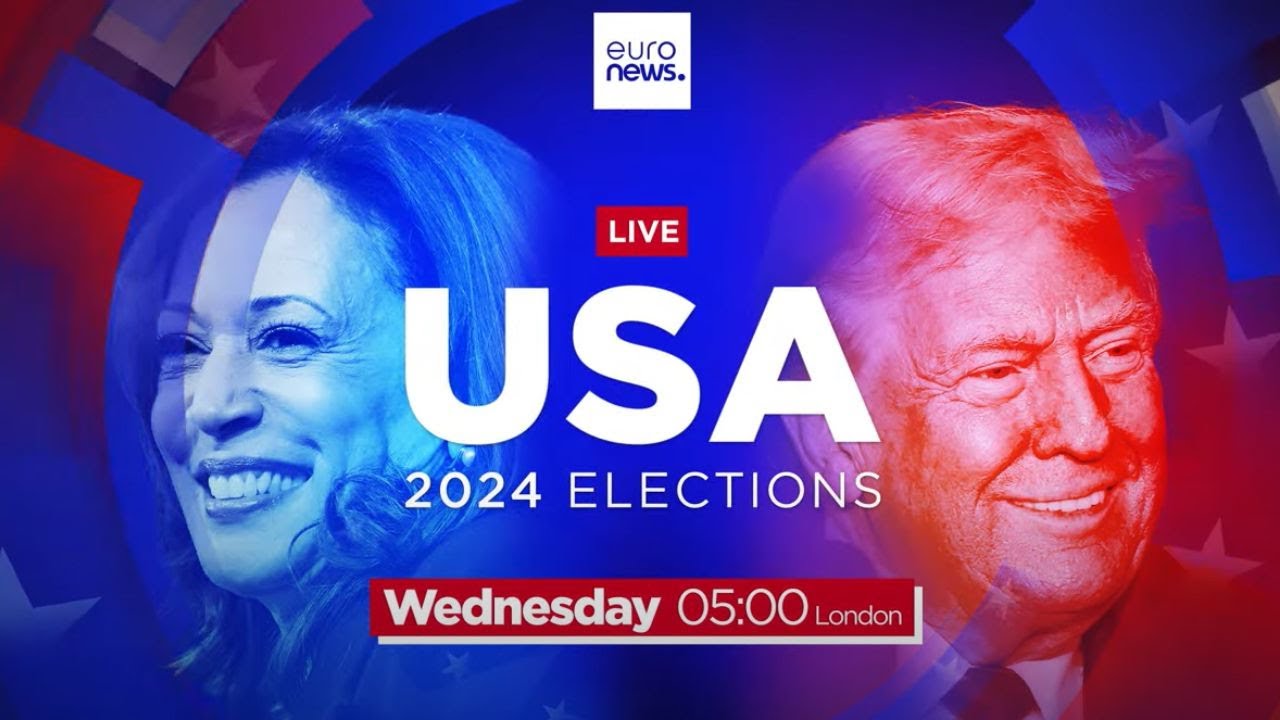
Watch Live: Trump or Harris? America votes!
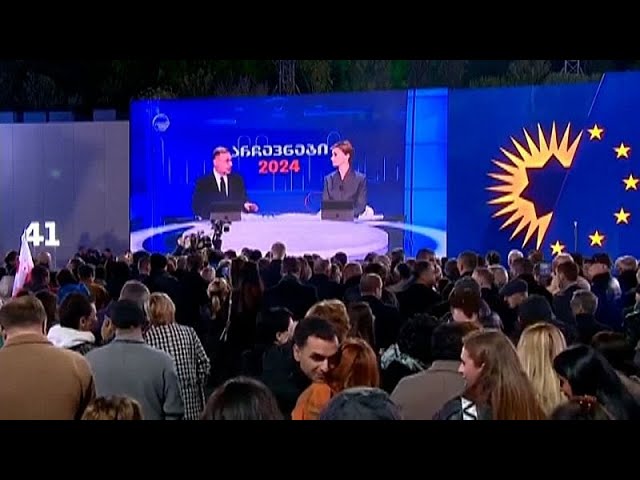
Georgia: Ruling party celebrates election victory
Asylum seekers: Return centres – a Solution?
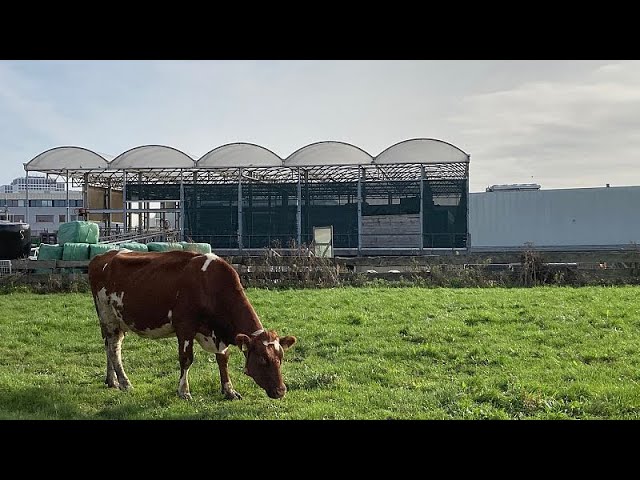
Climate change: A farm in Rotterdam

EU: Overcoming barriers to equality

Germany and its outdated pension system
How important is sustainable development?
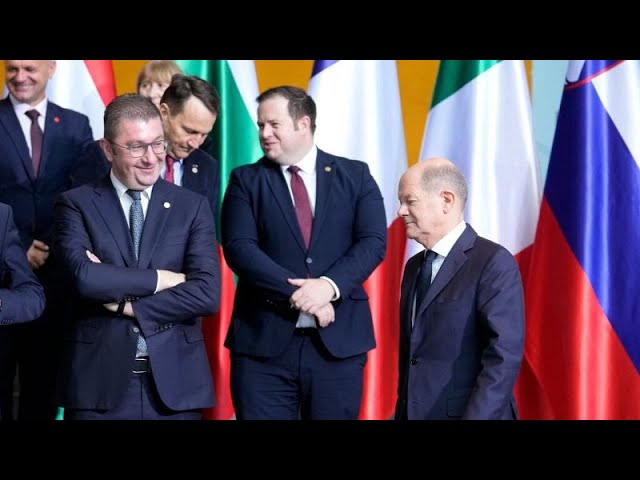
Berlin: EU-Summit of western Balkan heads of state
Putin's War Will Go Bankrupt if the Oil Prices Drop
Putin's War Will Go Bankrupt if the Oil Prices Drop