-
 Rubio meets US pope in bid to ease tensions
-
Women linked to IS fighters return to Australia from Middle East

-
 Shell profit jumps as Mideast war fuels oil prices
-
Oil sinks, Tokyo leads Asia stock surge on growing Mideast peace hopes

-
 India vows to crush terror 'ecosystem', a year after Pakistan conflict
-
Circus tackles jihadist nightmares of Burkina Faso's children

-
 Iran denies ship attack as Trump warns of renewed bombing, eyes deal
-
Badminton looks to future with 'evolution and innovation'

-
 Troubled waters: Jakarta battles deadly, invasive suckerfish
-
Senegal's children mourn in silence when migrant parents disappear

-
 EU weighs options as summer jet fuel threat looms
-
Spurs thrash Timberwolves as Knicks edge Sixers in NBA playoffs

-
 Australia to force gas giants to reserve fuel for domestic use
-
AirAsia signs $19bn deal for 150 Airbus A220 jets

-
 Japan fires missiles during drills, drawing China rebuke
-
Toluca rout Son's LAFC to set up all-Mexican CONCACAF final

-
 Vingegaard begins bid for Giro-Tour double with Pellizzari boosting home hopes
-
Roma's Champions League return back on as Milan, Juve wobble

-
 Tokyo leads Asia stock surge on growing Mideast peace hopes
-
Australia cricket great Warner to 'accept' drink-drive charge: lawyer

-
 Brunson steers Knicks to 2-0 lead with tight win over Sixers
-
Rubio seeks to ease tensions with US pope

-
 AI disinfo tests South Korean laws ahead of local elections
-
Australian state overturns Melbourne ban on World Cup watch party

-
 Colombian ex-fisherman swaps trade for saving Caribbean coral
-
Lobito Corridor: Africa's mega-project facing delivery test

-
 Africa's Lobito Corridor chief tells AFP business, not geopolitics, drives strategy
-
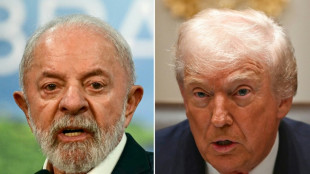
Trump to host Lula in test of fitful relationship
-
 K-pop stars BTS draw 50,000-strong crowd in Mexico
-
Britons set to punish Starmer's Labour in local polls
-
 Wars in Middle East, backyard loom over ASEAN summit
-
US court releases purported Epstein suicide note

-
 Israeli court rejects flotilla activists' appeal challenging detention
-
Victim's lawyer alleges Boeing was 'negligent' in 2019 Ethiopian crash

-
 Williamson named in New Zealand squad for Ireland, England Tests
-
PSG add muscle to magic as another Champions League final beckons

-
 Tigers' pitcher Valdez suspended for hitting opponent
-
Trump says Iran deal 'very possible' but threatens strikes if talks fail

-
 Musk's SpaceX strikes data center deal with Anthropic
-
Bayern lament lack of 'killer' instinct after PSG elimination

-
 Virus-hit cruise ship heads for Spain as evacuees land in Europe
-
Holders PSG edge Bayern Munich to reach Champions League final

-
 Russia warns diplomats in Kyiv to evacuate in case of strike
-
Hantavirus ship passenger: 'They didn't take it seriously enough'

-
 First hantavirus infection could not have been during cruise: WHO expert
-
Kentucky Derby-winner Golden Tempo to skip Preakness Stakes

-
 Trump says Iran deal 'very possible', but threatens strikes if not
-
Lula heads to Washington to meet Trump in fraught election year
-
 No timeline for injury return for 'frustrated' Doncic
-
Virus-hit cruise ship evacuees land in Europe

DOGE Fails to Slash U.S. Spending
The Department of Government Efficiency (DOGE), launched with bold promises to revolutionize federal spending, has fallen dramatically short of its ambitious goals, raising questions about its effectiveness and impact on the U.S. budget. Tasked with streamlining government operations and slashing what its proponents called wasteful expenditure, DOGE was heralded as a transformative force. Yet, recent developments reveal a stark reality: the initiative has failed to deliver meaningful spending cuts, leaving its lofty objectives unfulfilled and critics pointing to mismanagement and inflated claims.
Initially, DOGE set out with a headline-grabbing target of reducing federal spending by $2 trillion, a figure that captured public attention and underscored the initiative’s audacious vision. This goal was later halved to $1 trillion, signaling early challenges in identifying viable cuts without disrupting essential services. More recently, reports indicate that the projected savings have dwindled to a fraction of the original promise, with estimates suggesting only $150 billion in reductions—a mere 7.5% of the initial target. Even this figure has faced scrutiny, with analysts arguing that the actual savings may be significantly lower due to questionable accounting methods and speculative projections.
One of the core issues plaguing DOGE has been its approach to identifying efficiencies. The initiative aimed to eliminate redundant contracts, streamline federal agencies, and reduce bureaucratic overhead. However, the execution has been chaotic, with cuts often appearing indiscriminate rather than strategic. For instance, reductions in consulting contracts, particularly in defense and IT services, were touted as major wins, yet many of these contracts supported critical government functions. The abrupt termination of such agreements has led to operational disruptions, forcing agencies to scramble for alternatives or reinstate services at additional cost.
Moreover, DOGE’s efforts have sparked unintended consequences across federal agencies. Staff reductions, intended to shrink the workforce, have instead triggered inefficiencies, with remaining employees struggling to handle increased workloads. This has been particularly evident in agencies responsible for public services, where understaffing has led to delays and diminished service quality. The ripple effects extend beyond government operations, impacting private-sector contractors who relied on federal partnerships. Layoffs in consulting firms and other industries tied to government contracts have further eroded confidence in DOGE’s strategy.
Critics argue that DOGE’s aggressive push for cuts overlooked the complexity of federal budgeting. Many targeted programs, such as grants for cultural institutions or international development, represent a tiny fraction of the budget but deliver outsized benefits in terms of public goodwill and long-term economic gains. Eliminating these programs has yielded negligible savings while generating significant backlash. Similarly, attempts to overhaul agencies like the Social Security Administration have raised alarms about potential disruptions to benefits, undermining public trust in the initiative’s priorities.
The leadership behind DOGE has also come under fire. High-profile figures driving the initiative were expected to bring private-sector ingenuity to government reform. Instead, their lack of experience in public administration has led to missteps, including overestimating the ease of implementing cuts and underestimating the resistance from entrenched bureaucratic systems. Public perception has soured as well, with polls indicating growing skepticism about DOGE’s ability to deliver on its promises without harming essential services.
Financially, the broader context paints a grim picture. While DOGE aimed to curb deficits, the federal debt continues to climb, projected to exceed $36 trillion in the coming years. Tax cuts passed concurrently with DOGE’s efforts are expected to add trillions more to the deficit, offsetting any savings the initiative might achieve. This contradiction has fueled accusations that DOGE was more about political optics than genuine fiscal responsibility.
Looking ahead, DOGE’s future remains uncertain. With its initial timeline nearing its end, pressure is mounting to demonstrate tangible results. Supporters argue that the initiative has at least sparked a conversation about government waste, laying the groundwork for future reforms. However, without a clear pivot to more targeted, evidence-based strategies, DOGE risks being remembered as a cautionary tale of overambition and underdelivery.
In the end, the Department of Government Efficiency has not lived up to its billing as a budget-cutting juggernaut. Its inability to achieve meaningful spending reductions, coupled with operational missteps and public skepticism, underscores the challenges of reforming a sprawling federal system. As the U.S. grapples with fiscal challenges, the DOGE experiment serves as a reminder that bold promises must be matched by careful execution.

EU DECODED: Deforestation law’s trade-offs

Underwater Wi-Fi: European startups woo investors
Underwater Wi-Fi: European startups woo investors

Trump's US support for Ukraine and China?
Trump's US support for Ukraine and China?

Cultural year 2024: between Qatar and Morocco

Planning a wellness break? Poland!

Studio Kremlin: creative co-working in Paris

Culture: Serbia’s architectural marvels
Culture: Serbia’s architectural marvels

EU Residence permits: Record level to third nationals