What is the high seas treaty? / Photo: PATRICK HERTZOG - AFP

 Drone owners rush to offload devices ahead of Beijing ban

 Trump's beef policies irk Texas ranchers, testing their loyalty

 Nvidia, OpenAI CEOs to attend Xi dinner at White House

 Anthropic picks Accenture for in-house AI safety evaluation

 Balogun returns as Monaco beat Lens to continue strong Ligue 1 start

 'Pause' on overt repression in Venezuela, but reforms still needed: HRW

 Global stocks mixed as yen falls despite Bank of Japan rate hike

 Cuba hit with seventh major blackout of the year

 Murray out with concussion so Wentz will start for Vikings

 UN chief 'deeply regrets' US visa refusal to Abbas for annual meeting

 England quick Carse to face no charges over alleged nightclub assault

 Mancini brings nine newcomers into the first squad of his Italy comeback

 Czechs level Davis Cup tie against USA as South Korea eye Finals

 New France boss Zidane confirms Mbappe as captain after naming first squad

 California governor signs order to explore AI 'kill switch'

 Head leads run spree as Australia win Zimbabwe ODI series

 In-form Raphinha wants to finish career at Barcelona

 Warren Buffett steps down as Berkshire Hathaway chairman

 Carrick confident Man Utd can 'work through' tough time

 Mbappe ends Nike partnership to join Swiss brand On

 Liverpool boss Iraola puts Bournemouth love affair on hold

 'A disaster' if Man City do not win says Maresca after flawless start

 Kerry James Marshall: American 'blackness' painter celebrated in Europe

 Spain coach De la Fuente offers 'full support' to people of Ceuta

 Russia seizes assets of Nestle, French firms over West's Ukraine support

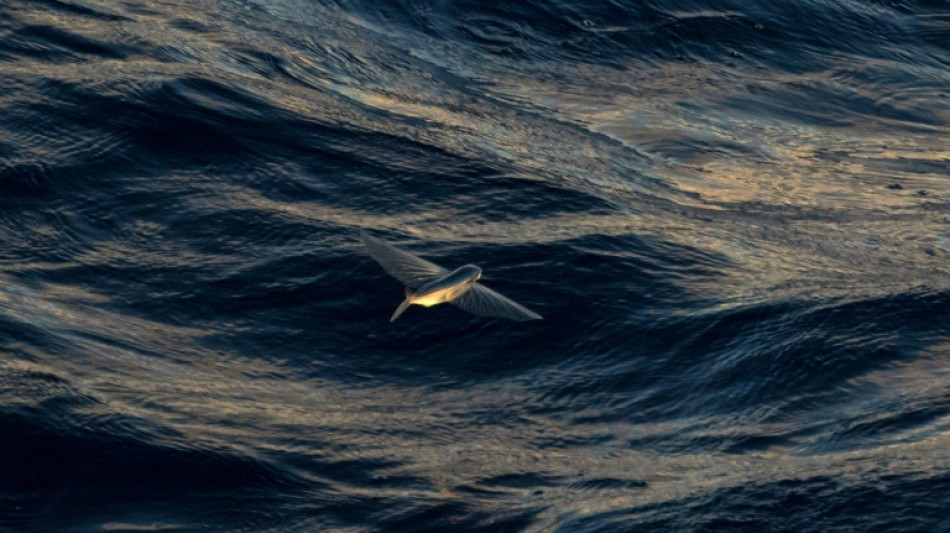
The high seas treaty could be law by the end of the year, affording protection to marine life in the vast swathes of ocean that belong to no one.
The treaty was adopted by UN member states in June 2023. It has been ratified by 31 nations plus the European Union, and comes into force 120 days after its 60th ratification.
But at the UN Ocean Conference this week, hosts France said around 50 countries have ratified the pact, bringing it within reach of enactment.
The United States signed the treaty in 2023 under Joe Biden but is not expected to ratify it while Donald Trump is president.
Here are the key points of the treaty text:
- International waters -
The treaty covers international waters, which fall outside the jurisdiction of any single state, and account for more than 60 percent of the world's oceans.
Specifically, it applies to waters beyond countries' exclusive economic zones, which extend up to 200 nautical miles from the coast.
It also covers what is known as "the Area", shorthand for seabed and subsoil beyond the limits of national jurisdiction. The Area comprises just over half of the planet's seabed.
Once enacted, a decision-making body -- a Conference of the Parties (COP) -- would have to work with regional and global organizations that already oversee different aspects of the oceans.
These include regional fisheries bodies and the International Seabed Authority, the arena where nations are hotly contesting a proposed set of rules to govern deep-sea mining.
Trump's decision to sidestep the authority -- to which the US is not a member -- and issue deep-sea mining permits in international waters has raised tricky questions of jurisdiction.
- Marine protected areas -
Currently, almost all protected marine areas (MPAs) are within national territorial waters.
The treaty, however, allows for these reserves to be created in the open ocean.
Most decisions would be taken by a consensus of the COP, but an MPA can be voted into existence with a three-quarters majority, to prevent deadlock caused by a single country.
One crucial shortcoming: the text does not say how these conservation measures will be monitored and enforced over remote swathes of the ocean -- a task that will fall to the COP.
Some experts say satellites could be used to spot infractions.
Individual countries are already responsible for certain activities on the high seas that they have jurisdiction over, such as those of ships flying their flags.
- Sharing the bounty? -
On the high seas, countries and entities under their jurisdiction will be allowed to collect animal, plant, or microbial matter whose genetic material might prove useful, even commercially.
Scientists, for example, have discovered molecules with the potential to treat cancer or other diseases in microbes scooped up in sediment, or produced by sponges or marine mollusks.
Benefits-sharing of those resources has been a key point of contention between wealthy and poorer nations.
The treaty establishes frameworks for the transfer of marine research technologies to developing countries and a strengthening of their research capacities, as well as open access to data.
But it's left to the COP to decide exactly how any monetary benefits will eventually be shared, with options including a system based on specific commercialized products, or more generalized payment systems.
- Environmental impact studies -
The treaty requires signatories to assess the environmental impacts of planned activities under their control on the high seas before they are authorized in instances when such activities may have more than a minor or transitory effect.
It also calls for countries to assess the potential impact on international waters of activities within national jurisdictions that may cause "substantial pollution" or harm the high sea marine environment.
Ultimately, states are responsible for giving the green light to any potentially harmful activity -- a role NGOs hoped would go to the COP, to make controversial approvals more difficult.
The treaty also requires states to publish updates on an activity's environmental impacts. Approvals can be called into question if unanticipated impacts arise.
Though they are not specifically listed in the treaty, activities that could come under regulation include transport and fishing, as well as more controversial subjects such as deep-sea mining or even geo-engineering initiatives to mitigate global warming.
V.Dantas--PC