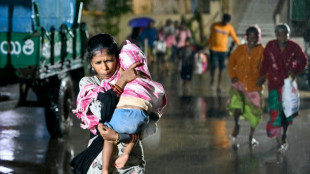
Indigenous Australians lose landmark climate court case against government / Photo: TALEI ELU - GRATA FUND/AFP

 Mutual fund returns show shifting leaders across market-cap categories

 BHEL wins Adani Power projects valued at up to ₹28,000 crore

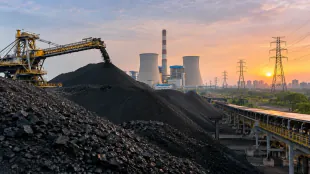 India seeks threefold increase in coal stocks to prevent summer power shortages

 Indian companies report mixed second-quarter results on November 4

 KKR secures Indian regulator approval for Gentari Renewables investment

 Bharti Airtel revenue expected to grow at double-digit pace in second quarter

 Indian crude-sensitive shares gain after 13% oil-price decline

 Stocks and dollar fall as Democratic election gains reshape markets

 Kuwait marks key events and anniversaries from national history

 Trump congratulates Democrats and signals willingness to cooperate

 Qatar prime minister advances mediation through diplomatic calls

 Greenland parliament approves security agreement with United States

 Qatar envoy meets incoming UN General Assembly president

 Trump Signals Willingness to Work With Democrats After Midterm Defeat

Indigenous Australians living on a string of climate-threatened islands on Tuesday lost a landmark court bid to hold the government responsible for lacklustre emissions targets.
Scattered through the warm waters off Australia's northernmost tip, the sparsely populated Torres Strait Islands are threatened by seas rising much faster than the global average.
Torres Strait elders have spent the past four years fighting through the courts to prove the government failed to protect them through meaningful climate action.
Australia's Federal Court found the government was not obliged to shield the Torres Strait Islands from climate change.
"I thought that the decision would be in our favour, and I'm in shock," said Torres Strait Islander Paul Kabai, who helped to bring the case.
"What do any of us say to our families now?"
Fellow plaintiff Pabai Pabai said: "My heart is broken for my family and my community."
Federal Court Justice Michael Wigney criticised the government for setting emissions targets between 2015 and 2021 that failed to consider the "best available science".
But these targets would have had little impact on global temperature rise, he found.
"Any additional greenhouse gases that might have been released by Australia as a result of low emissions targets would have caused no more than an almost immeasurable increase in global average temperatures," Wigney said.
Australia's previous conservative government sought to cut emissions by around 26 percent before 2030.
The incumbent left-leaning government in 2022 adopted new plans to slash emissions by 40 percent before the end of the decade, and reach net zero by 2050.
- 'Climate refugees' -
Fewer than 5,000 people live in the Torres Strait, a collection of about 274 mud islands and coral cays wedged between Australia's mainland and Papua New Guinea.
Lawyers for traditional land owners from Boigu and Saibai -- among the worst-impacted islands -- asked the court to order the government "to reduce greenhouse gas emissions to a level that will prevent Torres Strait Islanders from becoming climate refugees".
Sea levels in some parts of the archipelago are rising almost three times faster than the global average, according to official figures.
Rising tides have washed away graves, eaten through huge chunks of exposed coastline, and poisoned once-fertile soils with salt.
The lawsuit argued some islands would soon become uninhabitable if global temperatures rose more than 1.5 degrees Celsius above pre-industrial levels.
The World Meteorological Organization has warned this threshold could be breached before the end of the decade.
While Australia's emissions pale in comparison to the likes of China and the United States, the fossil fuel powerhouse is one of the largest coal exporters in the world.
T.Resende--PC