Anguished Sri Lankans queue for care after deadly cyclone / Photo: Ishara S. KODIKARA - AFP

 Trump's beef policies irk Texas ranchers, testing their loyalty

 Nvidia, OpenAI CEOs to attend Xi dinner at White House

 Anthropic picks Accenture for in-house AI safety evaluation

 Balogun returns as Monaco beat Lens to continue strong Ligue 1 start

 'Pause' on overt repression in Venezuela, but reforms still needed: HRW

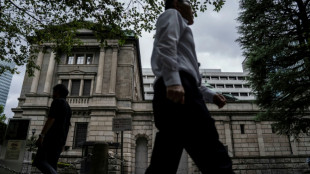
 Global stocks mixed as yen falls despite Bank of Japan rate hike

 Cuba hit with seventh major blackout of the year

 Murray out with concussion so Wentz will start for Vikings

 UN chief 'deeply regrets' US visa refusal to Abbas for annual meeting

 England quick Carse to face no charges over alleged nightclub assault

 Mancini brings nine newcomers into the first squad of his Italy comeback

 Czechs level Davis Cup tie against USA as South Korea eye Finals

 New France boss Zidane confirms Mbappe as captain after naming first squad

 California governor signs order to explore AI 'kill switch'

 Head leads run spree as Australia win Zimbabwe ODI series

 In-form Raphinha wants to finish career at Barcelona

 Warren Buffett steps down as Berkshire Hathaway chairman

 Carrick confident Man Utd can 'work through' tough time

 Mbappe ends Nike partnership to join Swiss brand On

 Liverpool boss Iraola puts Bournemouth love affair on hold

 'A disaster' if Man City do not win says Maresca after flawless start

 Kerry James Marshall: American 'blackness' painter celebrated in Europe

 Spain coach De la Fuente offers 'full support' to people of Ceuta

 Russia seizes assets of Nestle, French firms over West's Ukraine support
 England can build on World Cup 'spirit', says Tuchel

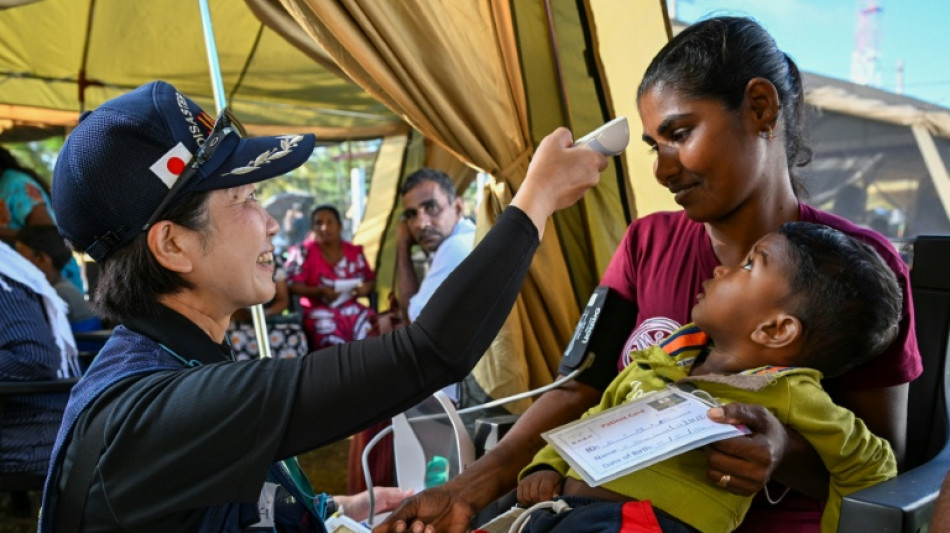
Long before dawn, people were already queueing for medical aid on Tuesday at an emergency camp in Sri Lanka's coastal town of Chilaw, hit hard by a deadly cyclone and floods.
Carpenter Prasantha Perera, 60, was waiting to have a shard of wood removed from his left foot, so that he can finally begin the arduous task of cleaning up.
The disaster caused by Cyclone Ditwah -- the island's worst this century -- has affected more than two million people, or nearly 10 percent of the population.
At least 638 people were killed.
Perera was the first patient of the day to leave the disaster medical camp, run by Japanese aid workers to support Chilaw's flood-hit state hospital.
"I couldn't get into the camp yesterday, so I turned up today at 4:00 am to be first in line," he said, bowing to thank the Japanese medics.
Dozens of men, women and children were standing in the orderly queue, already so long some were told to return the next day.
"My house went under five feet (1.5 metres) of water," Perera told AFP, as he limped home clutching medicines to prevent infection.
"I couldn't start cleaning up because of this splinter, but now I can begin."
Aid workers were treating a long list of ailments, but could only see around 150 patients a day.
"I will come very early tomorrow to get medicine for eczema," Eva Kumari, 51, told AFP after being turned away when the facility hit its daily capacity.
The Sri Lankan government had asked Japan to send its outpatient disaster medical unit to Chilaw, about 70 kilometres (43 miles) north of the capital Colombo, after the town's main hospital was flooded.
The hospital's deputy director, Dinesh Koggalage, said it had only just resumed admitting patients -- nearly two weeks since the cyclone hit.
- Disease threat -
Demand for the Japanese team remains high, said Professor Taketo Kurozumi, head of disaster medical management at Tokyo's Teikyo University.
"Numbers are increasing," he told AFP between seeing patients, with common problems including skin issues, respiratory problems and mosquito-borne diseases, such as dengue fever and chikungunya.
Sri Lankan President Anura Kumara Dissanayake has said Cyclone Ditwah was the most challenging natural disaster in recent history and appealed for international aid for the daunting recovery effort.
The 31-member medical aid team, deployed by the Japan International Cooperation Agency, arrived just days after the cyclone had left Sri Lanka.
They set up a clinic in white tents, equipped with their own medical kits and power generators, and with the support of a team of 16 translators.
All medics greet patients by bowing their heads and with hands clasped in a traditional Sri Lankan greeting.
Queue management is handled by a Japanese volunteer monk, who has been living on the island for 15 years, and speaks Sri Lanka's Sinhala language.
Kazuyuki Takahashi, also known by his Buddhist name Saranankara Himi, oversees the process.
The queue moves slowly as doctors listen to patient histories and spend more time on each one than Sri Lanka's overstretched health system can generally afford, even in the best of times.
A.S.Diogo--PC