Climate-driven tree deaths speeding up in Australia: study / Photo: DAVID GRAY - AFP/File

 Trump's beef policies irk Texas ranchers, testing their loyalty

 Nvidia, OpenAI CEOs to attend Xi dinner at White House

 Anthropic picks Accenture for in-house AI safety evaluation

 Balogun returns as Monaco beat Lens to continue strong Ligue 1 start

 'Pause' on overt repression in Venezuela, but reforms still needed: HRW

 Global stocks mixed as yen falls despite Bank of Japan rate hike

 Cuba hit with seventh major blackout of the year

 Murray out with concussion so Wentz will start for Vikings

 UN chief 'deeply regrets' US visa refusal to Abbas for annual meeting

 England quick Carse to face no charges over alleged nightclub assault

 Mancini brings nine newcomers into the first squad of his Italy comeback

 Czechs level Davis Cup tie against USA as South Korea eye Finals

 New France boss Zidane confirms Mbappe as captain after naming first squad

 California governor signs order to explore AI 'kill switch'

 Head leads run spree as Australia win Zimbabwe ODI series

 In-form Raphinha wants to finish career at Barcelona

 Warren Buffett steps down as Berkshire Hathaway chairman

 Carrick confident Man Utd can 'work through' tough time

 Mbappe ends Nike partnership to join Swiss brand On

 Liverpool boss Iraola puts Bournemouth love affair on hold

 'A disaster' if Man City do not win says Maresca after flawless start

 Kerry James Marshall: American 'blackness' painter celebrated in Europe

 Spain coach De la Fuente offers 'full support' to people of Ceuta

 Russia seizes assets of Nestle, French firms over West's Ukraine support

 England can build on World Cup 'spirit', says Tuchel

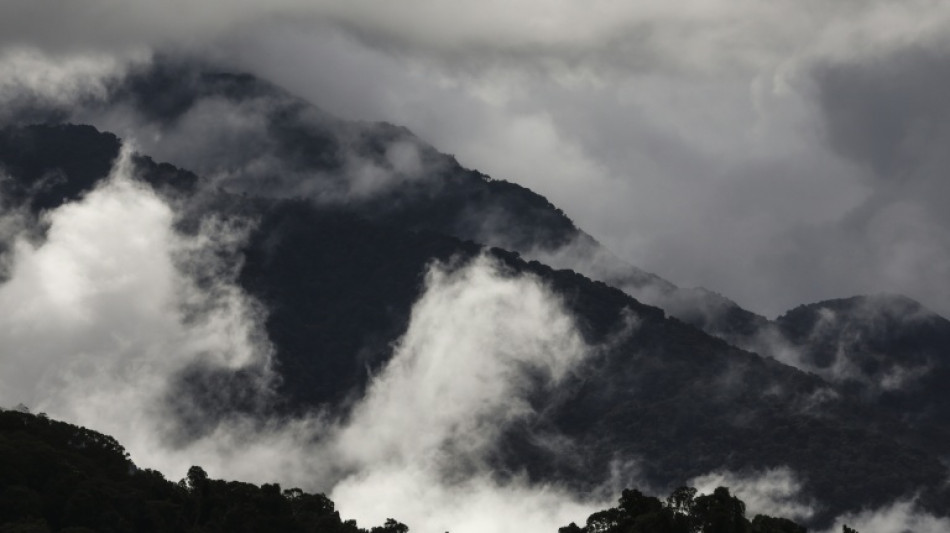
Australia's forests are losing trees more rapidly as the climate warms, a new study examining decades of data said Tuesday, warning the trend was likely a "widespread phenomenon".
The research used forest inventory data from 2,700 plots across the country, ranging from cool moist forests to dry savanna.
It excluded areas affected by logging, clearance or fires to examine how "background tree mortality" has changed in recent decades.
"What we found is that the mortality rate has consistently increased over time, in all of the different forest types," said Belinda Medlyn, a professor at Western Sydney University's Hawkesbury Institute for the Environment.
"And this increase is very likely caused by the increase in temperature," she told AFP.
The world has warmed by an average of nearly 1.2 degrees Celsius since the pre-industrial era. Most of this warming has occurred in the last 50 years.
The rate at which trees die off in a forest can vary in response to different types of disturbances, or as forests grow thicker and there is greater competition for resources.
But the research, published in the Nature Plants journal, excluded areas affected by fires or clearing, and also examined the stand basal area -- the sum of the cross-sectional areas of all trees in an area.
"The (mortality) trend over time remains even after we correct for basal area," explained Medlyn, who led the research.
The scale of the increase varied across the four different biomes surveyed, with the sharpest rise in tropical savannas.
There, the number of trees dying on average increased by 3.2 percent a year, from close to 15 per 1,000 in 1996, to nearly double that number by 2017.
The research found that the deaths were not being matched by tree growth, so forest stock overall is declining.
That makes it "very likely that the overall carbon storage capacity in the forests is declining over time", said Medlyn.
And given the trend was observed across four ecosystems -- tropical savanna, cool temperate forest, warm temperate forest and tropical rainforest -- it is likely to be "a widespread phenomenon, not just an Australian thing", she added.
The rising mortality rate tracks warming and drying linked to climate change, and the study found the fastest rise in hotter, dryer regions.
The research comes months after a study found Australia's tropical rainforests were among the first in the world to start emitting more carbon dioxide than they absorb.
Taken together, the findings paint a worrying picture of our continued ability to rely on forests to absorb our emissions.
"Forests globally currently sequester about one-third of anthropogenic carbon dioxide emissions," said Medlyn.
"Our study suggests their capacity to act as buffer will decline over time."
B.Godinho--PC