Warming El Nino may return later this year: UN / Photo: LUIS TATO - AFP

 Trump's beef policies irk Texas ranchers, testing their loyalty

 Nvidia, OpenAI CEOs to attend Xi dinner at White House

 Anthropic picks Accenture for in-house AI safety evaluation

 Balogun returns as Monaco beat Lens to continue strong Ligue 1 start

 'Pause' on overt repression in Venezuela, but reforms still needed: HRW

 Global stocks mixed as yen falls despite Bank of Japan rate hike

 Cuba hit with seventh major blackout of the year

 Murray out with concussion so Wentz will start for Vikings

 UN chief 'deeply regrets' US visa refusal to Abbas for annual meeting

 England quick Carse to face no charges over alleged nightclub assault

 Mancini brings nine newcomers into the first squad of his Italy comeback

 Czechs level Davis Cup tie against USA as South Korea eye Finals

 New France boss Zidane confirms Mbappe as captain after naming first squad

 California governor signs order to explore AI 'kill switch'

 Head leads run spree as Australia win Zimbabwe ODI series

 In-form Raphinha wants to finish career at Barcelona

 Warren Buffett steps down as Berkshire Hathaway chairman

 Carrick confident Man Utd can 'work through' tough time

 Mbappe ends Nike partnership to join Swiss brand On

 Liverpool boss Iraola puts Bournemouth love affair on hold

 'A disaster' if Man City do not win says Maresca after flawless start

 Kerry James Marshall: American 'blackness' painter celebrated in Europe

 Spain coach De la Fuente offers 'full support' to people of Ceuta

 Russia seizes assets of Nestle, French firms over West's Ukraine support

 England can build on World Cup 'spirit', says Tuchel

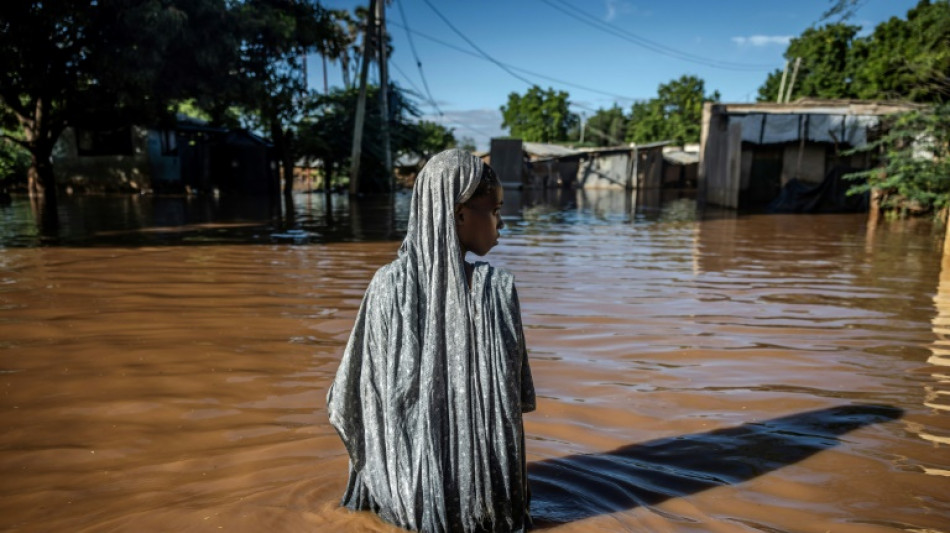
The warming El Nino weather phenomenon could return later this year as its cooling opposite La Nina fades away, the United Nations said Tuesday.
The UN's World Meteorological Organization (WMO) said the recent, weak La Nina was expected to give way to neutral conditions, which could then swing into El Nino before the end of 2026.
La Nina is a naturally occurring climate phenomenon that cools surface temperatures in the central and eastern equatorial Pacific Ocean. It brings changes in winds, pressure and rainfall patterns.
The WMO said there was a 60-percent chance of neutral conditions during the three-month window from March to May, with a 30-percent chance of La Nina conditions, and El Nino at a 10-percent probability.
There is a 70-percent chance of neutral conditions during April-June.
In May-July, the chance of neutral conditions drops back to 60 percent, with the chances of El Nino at 40 percent.
"The WMO community will be carefully monitoring conditions in the coming months to inform decision-making," said Celeste Saulo, who heads the UN's weather and climate agency.
"The most recent El Nino, in 2023-24, was one of the five strongest on record and it played a role in the record global temperatures we saw in 2024," the WMO secretary-general said.
El Nino contributed to making 2023 the second-hottest year on record and 2024 the all-time high.
- Above-average temperatures -
The WMO underlined that naturally occurring climate events such as La Nina and El Nino take place against the backdrop of human-induced climate change, which is "increasing global temperatures in the long-term, exacerbating extreme weather and climate events, and impacting seasonal rainfall and temperature patterns".
The US National Oceanic and Atmospheric Administration says there is a 50- to 60-percent chance of El Nino developing during the July-September period and beyond.
"Seasonal forecasts for El Nino and La Nina help us avert millions of dollars in economic losses and are essential planning tools for climate-sensitive sectors like agriculture, health, energy and water management," said Saulo.
"They are also a key part of the climate intelligence provided by WMO to support humanitarian operations and disaster risk management, and thus save lives," she said.
The WMO's latest Global Seasonal Climate update says there is a widespread global signal for above-average land surface temperatures for March to May.
Rainfall predictions in the equatorial Pacific show a lingering La Nina-like pattern, but in other parts of the world the signal is more mixed, it says.
V.F.Barreira--PC