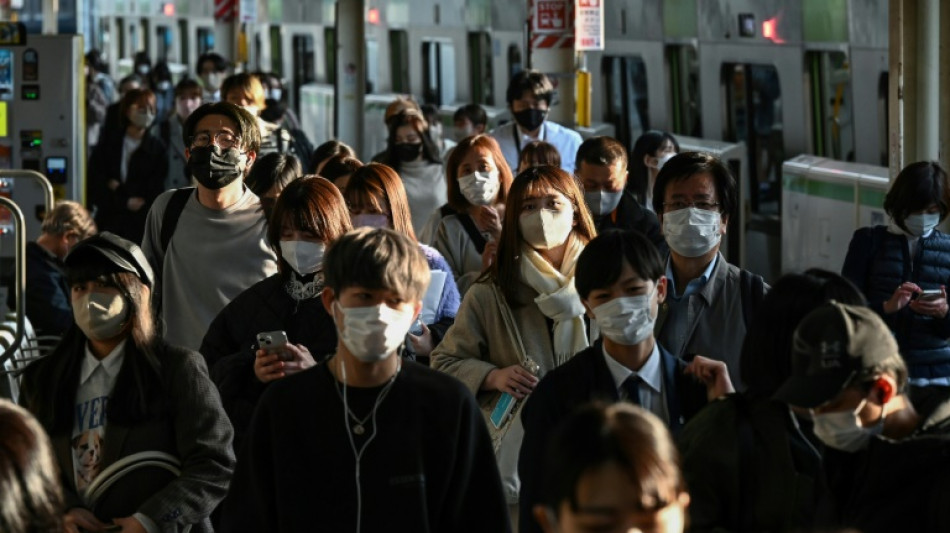
Japan govt survey finds 1.5 million living as recluses / Photo: Richard A. Brooks - AFP/File

 IFFI Opening Film 'Fatherland' Addresses Global Divisions Through Post-War Lens

 Texas Sports Betting Status: No Legal Options Amid Legislative Push for 2027 Referendum

 Geri Halliwell-Horner Embraces Queen Camilla at Commonwealth Writing Competition

 Meta Quest 3 and 3S Gain Access to Over 150 3D Movies

 Sarah Bajada Shares Message on Pregnancy Loss
Nearly 1.5 million working-age people in Japan are social recluses, according to a new government survey, with a fifth citing the Covid-19 pandemic as the main reason for their withdrawal.
The poll is Japan's first official comprehensive probe into the prevalence of "hikikomori", or "shut-ins" -- a phenomenon affecting a broad swathe of society, from teens to the elderly.
Reasons for retreating from the country's notoriously conformist and work-focused society range from unemployment to depression or bullying at school or in the workplace.
Hikikomori range from people who only go out to shop for groceries or to pursue hobbies, to more extreme cases who rarely leave their homes at all, the Cabinet Office survey says.
It found that around two percent of the respondents aged between 15 and 64 had withdrawn from society to some extent, percentages that officials estimate amount to 1.46 million people.
The most common reason respondents gave for their social withdrawal was "quitting jobs" in the survey released Friday.
This was closely followed by the pandemic, which was cited as the main reason by 18 percent of recluses aged 15-39 and 20 percent of those aged 40-64.
"It seems that some people happened to meet our definition of hikikomori because they were discouraged from going outside by Covid and so ended up having less contact with society," Cabinet Office official Koji Naito told AFP on Wednesday.
The Cabinet Office said there was no past data directly comparable to the new figures.
J.V.Jacinto--PC