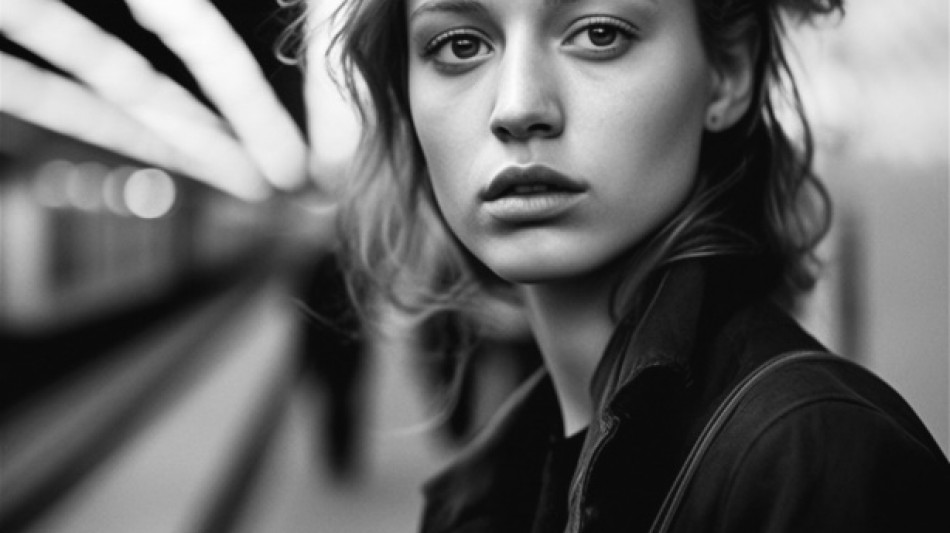
The camera never lied... until AI told it to / Photo: Jos AVERY - AFP

 Schoolgirl Yu, 13, fastest again in bid for third Asian Games gold
 Oil prices fall after Trump hails 'good' talks with Iran

 AI political ads warp reality ahead of US midterms

 Kenneth Branagh embraces action hero role -- to get in shape
 'New one' Klopp promises fresh approach as Germany reign begins
 Milne returns to New Zealand squad for India T20 series
 US-led Americas coalition backs sanctions against crime groups

 'Star Wars' fans and art lovers line up for new Lucas museum
 Trump renames AI 'super intelligence' as leaders jostle over dangers

 Oil prices retreat as markets welcome US-Iran talks
 US refusing to give Sudan's de facto leader visa for UN: diplomatic sources, UN
 Macron urges world to choose UN over 'law of the jungle'
 All-rounder Jacks stars as England beat Sri Lanka in 1st ODI
 Man City peg back Bayern to start Women's Champions League

 Trump beats 'America first' drum at UN as allies tread carefully
 Snedeker backs Spaun for Ryder Cup after Presidents snub
 French prosecutors probe secret filming of women with smart glasses
 Trump renames AI "super intelligence," rejects international oversight
 Trump rejects international regulation of AI
 How is the EU approaching record fuel prices?
 Sri Lanka's Colombage strikes on debut as England dismissed for 265 in first ODI
 Hurricane Polo strengthens to top category 5 off Mexico
 11 hurt as teen opens fire outside school in western Turkey

 UN chief says 'Big Oil' treats atmosphere as open sewer
 Tunisia says 2026 summer hottest on record
An amateur photographer who goes by the name "ibreakphotos" decided to do an experiment on his Samsung phone last month to find out how a feature called "space zoom" actually works.
The feature, first released in 2020, claims a 100x zoom rate, and Samsung used sparkling clear images of the Moon in its marketing.
Ibreakphotos took his own pictures of the Moon -- blurry and without detail -- and watched as his phone added craters and other details.
The phone's artificial intelligence software was using data from its "training" on many other pictures of the Moon to add detail where there was none.
"The Moon pictures from Samsung are fake," he wrote, leading many to wonder whether the shots people take are really theirs anymore -- or if they can even be described as photographs.
Samsung has defended the technology, saying it does not "overlay" images, and pointed out that users can switch off the function.
The firm is not alone in the race to pack its smartphone cameras with AI -- Google's Pixel devices and Apple's iPhone have been marketing such features since 2016.
The AI can do all the things photographers used to labour over -- tweaking the lighting, blurring backgrounds, sharpening eyes -- without the user ever knowing.
But it can also transform backgrounds or simply wipe away people from the image entirely.
And the debate over AI is not limited to hobbyists on message boards -- professional bodies are raising the alarm too.
- Sidestepping the tech -
The industry is awash with AI, from cameras to software like Photoshop, said Michael Pritchard of the Royal Photographic Society of Britain.
"This automation is increasingly blurring boundaries between a photograph and a piece of artwork," he told AFP.
The nature of AI is different to previous innovations, he said, because the technology can learn and bring new elements beyond those recorded by film or sensor.
This brings opportunities but also "fundamental challenges around redefining what photography is, and how 'real' a photograph is", Pritchard said.
Nick Dunmur of the Britain-based Association of Photographers said professionals most often use "RAW" files on their digital cameras, which capture images with as little processing as possible.
But sidestepping the tech is less easy for a casual smartphone shooter.
Ibreakphotos, who posted his finding on Reddit, pointed out that technical jargon around AI is not always easy to understand -- perhaps deliberately so.
"I wouldn't say that I am happy with the use of AI in cameras, but I am OK with it as long as it is communicated clearly what each processing pipeline actually does," he told AFP, asking not to use his real name.
- Not 'human-authored' -
What professional photographers are most concerned about, though, is the rise of AI tools that generate completely new images.
In the past year, DALL-E 2, Midjourney and Stable Diffusion have exploded in popularity thanks to their ability to create images in hundreds of styles with just a short text prompt.
"This is not human-authored work," Dunmur said, "and in many cases is based on the use of training datasets of unlicensed work."
These issues have already led to court cases in the United States and Europe.
According to Pritchard, the tools risk disrupting the work of anyone "from photographers, to models, to retouchers and art directors".
But Jos Avery, an American amateur photographer who recently tricked thousands on Instagram by filling his feed with stunning portraits he had created with Midjourney, disagreed.
He said the lines drawn between "our work" and "the tool's work" were arbitrary, pointing out that his Midjourney images often took many hours to create.
But there is broad agreement on one fundamental aspect of the debate -- the risk for photography is not existential.
"AI will not be the death of photography," Avery said.
Pritchard agreed, noting that photography had endured from the daguerreotype to the digital era, and photographers had always risen to technical challenges.
That process would continue even in a world awash with AI-generated images, he said.
"The photographer will bring a deeper understanding to the resulting image even if they haven't directly photographed it," he said.
B.Godinho--PC