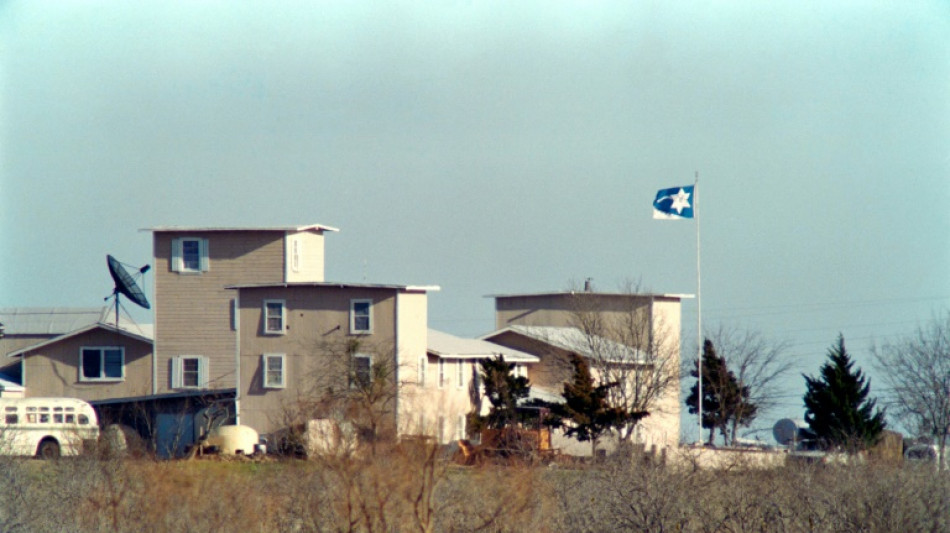
The story of the Waco siege -- from the lawyer who got inside / Photo: BOB STRONG - AFP

 Outgoing UN chief makes climate push at New York summit

 AI risks, Iran war to take center stage at UN

 Badminton no.1 An tells dad to keep it down at Asian Games

 Runaway leader Antonelli eyeing third straight win
 Schoolgirl Yu, 13, fastest again in bid for third Asian Games gold

 Oil prices fall after Trump hails 'good' talks with Iran

 AI political ads warp reality ahead of US midterms

 Kenneth Branagh embraces action hero role -- to get in shape

 'New one' Klopp promises fresh approach as Germany reign begins

 Milne returns to New Zealand squad for India T20 series

 US-led Americas coalition backs sanctions against crime groups

 'Star Wars' fans and art lovers line up for new Lucas museum

 Trump renames AI 'super intelligence' as leaders jostle over dangers

 Oil prices retreat as markets welcome US-Iran talks

 US refusing to give Sudan's de facto leader visa for UN: diplomatic sources, UN

 Macron urges world to choose UN over 'law of the jungle'

 All-rounder Jacks stars as England beat Sri Lanka in 1st ODI

 Man City peg back Bayern to start Women's Champions League
 Trump beats 'America first' drum at UN as allies tread carefully

 Snedeker backs Spaun for Ryder Cup after Presidents snub

 French prosecutors probe secret filming of women with smart glasses

 Trump renames AI "super intelligence," rejects international oversight

 Trump rejects international regulation of AI
 How is the EU approaching record fuel prices?

 Sri Lanka's Colombage strikes on debut as England dismissed for 265 in first ODI

Blood had already been spilled during the armed standoff between US agents and the Branch Davidian cult in Waco, Texas, when lawyer Dick DeGuerin got a phone call.
The worried mother of cult leader David Koresh said her son needed legal help. She hired DeGuerin.
He was the first outsider to pass through the security cordon and enter the Mount Carmel compound, where the Davidians were holed up.
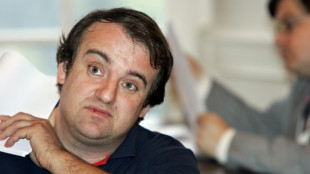
DeGuerin came face to face with a badly wounded Koresh, and was in position to try to broker an end to the stalemate.
Three decades later, as the story pours forth from the 82-year-old lawyer, he remains convinced that the 51-day siege could have ended peacefully without the deaths of nearly 80 people.
DeGuerin's account strikes a chord in today's deeply polarized United States, where some see Waco as a symbol of government overreach.
Even now, a memorial at the scene to those killed draws hundreds of visitors a month.
When DeGuerin got the call from Koresh's mother, he knew that the case was of a "magnitude" beyond anything he'd ever faced.
"I had handled some big cases, but nothing like this," DeGuerin recalled from his office in Houston. "The world was watching."
- Talking to Koresh -
The Branch Davidians were founded in 1959 as a splinter from the Seventh Day Adventist church. They believed in the imminent return of Jesus, and Koresh emerged as their charismatic leader in the 1980s.
In 1993, the Bureau of Alcohol, Tobacco and Firearms (ATF) accused the group of stockpiling weapons, and obtained an arrest warrant for Koresh and a search warrant for the compound, where there were also allegations of child abuse.
On February 28, ATF agents raided the complex, a gun battle erupted, several people died, and a tense weeks-long standoff set in.
As he prepared to enter the compound in late March, DeGuerin thought he had worked out a deal with Texas Rangers law enforcement officers to manage Koresh's surrender.
FBI agents took the lawyer close to the compound in the back of a tank, stopping about 100 yards away.
"My handler said, 'Would you like some body armor?' I said, 'No, I'm not afraid of the Davidians... I just don't want you FBI snipers shooting at me.'"
DeGuerin didn't know what to expect, but said he found Koresh, 33, to be intelligent and articulate, and could see he had gunshot wounds to his torso and wrist.
Koresh was "very angry" at the siege by the FBI and ATF agents.
DeGuerin saw it as his mission to get Koresh out of the compound and into court "without anybody else dying."
"I told him, of course, that the law is the law and he had to obey the law even though it might conflict with his religious beliefs. He understood that," he said.
- Wait or 'rush in' -
As negotiations ground on, DeGuerin returned to the compound with another lawyer, Jack Zimmerman, who represented one of the other cult members.
Patience was wearing thin, particularly among federal agents.
"There were the negotiators that wanted it to end peacefully. And then there were the tactical people that just wanted to rush in and kill anybody and arrest him," DeGuerin said. "The tactical people won."
As a final showdown loomed, DeGuerin sought to go back and make a final appeal for Koresh to surrender to authorities.
But he was turned away.
"This FBI agent told me, 'We don't need you anymore.'"
On that day -- April 19, 1993 -- FBI agents in armored vehicles smashed into the compound buildings and pumped in tear gas.
The causes of the subsequent fires are still disputed, but the compound burnt to the ground, claiming more than 70 lives, including some 20 children.
Investigations cleared law enforcement of wrongdoing, but Waco became a rallying cry for Americans accusing their government of abuse of authority, and it spurred growth of militias across the country.
In 1995, on the second anniversary of the raid, Timothy McVeigh, who had driven to Waco to witness the siege, carried out the Oklahoma City bombing killing 168 people.
For DeGuerin, 30 years on, the lessons of Waco are clear.
The federal agents had grown convinced that Koresh "was fooling them again" and would not surrender, he said.
"They didn't wait. I believe if they'd waited, it would have ended peacefully. But it didn't."
T.Batista--PC