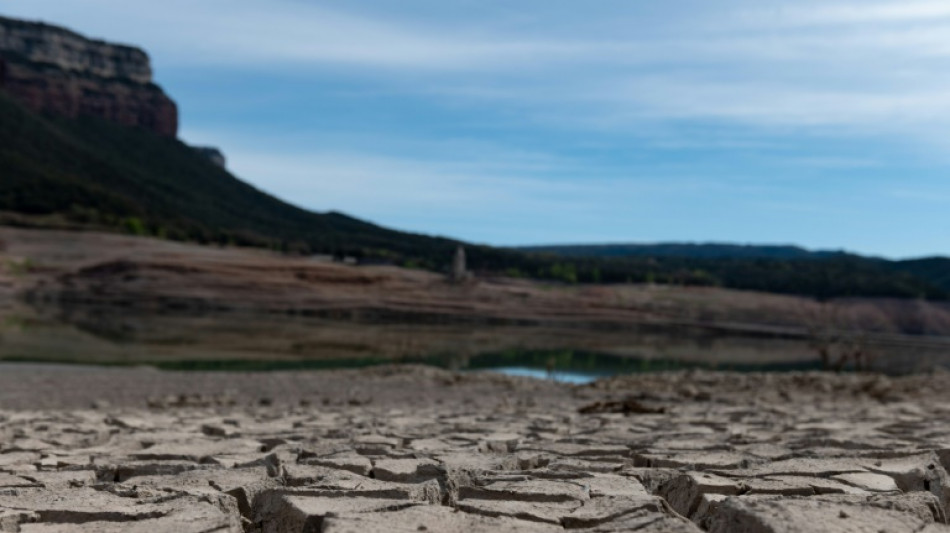
Water rationed in Catalonia as drought bites deeper / Photo: Josep LAGO - AFP

 Outgoing UN chief makes climate push at New York summit
 AI risks, Iran war to take center stage at UN
 Badminton no.1 An tells dad to keep it down at Asian Games
 Runaway leader Antonelli eyeing third straight win

 Schoolgirl Yu, 13, fastest again in bid for third Asian Games gold
 Oil prices fall after Trump hails 'good' talks with Iran

 AI political ads warp reality ahead of US midterms

 Kenneth Branagh embraces action hero role -- to get in shape

 'New one' Klopp promises fresh approach as Germany reign begins
 Milne returns to New Zealand squad for India T20 series
 US-led Americas coalition backs sanctions against crime groups

 'Star Wars' fans and art lovers line up for new Lucas museum
 Trump renames AI 'super intelligence' as leaders jostle over dangers

 Oil prices retreat as markets welcome US-Iran talks
 US refusing to give Sudan's de facto leader visa for UN: diplomatic sources, UN
 Macron urges world to choose UN over 'law of the jungle'
 All-rounder Jacks stars as England beat Sri Lanka in 1st ODI
 Man City peg back Bayern to start Women's Champions League
 Trump beats 'America first' drum at UN as allies tread carefully
 Snedeker backs Spaun for Ryder Cup after Presidents snub

 French prosecutors probe secret filming of women with smart glasses

 Trump renames AI "super intelligence," rejects international oversight
 Trump rejects international regulation of AI

 How is the EU approaching record fuel prices?

 Sri Lanka's Colombage strikes on debut as England dismissed for 265 in first ODI
For months, residents of L'Espluga de Francoli have been saving water in bottles and foregoing showers to cope with long hours of daily water rationing as northeastern Spain suffers one of its worst droughts in decades.
While this small Catalan town has suffered supply problems for years due to the depleted state of its water table, the current drought has made things worse.
Every night between 10:00 pm and 7:00 am, domestic water supplies are switched off in this town of 3,600 residents, which lies 100 kilometres (60 miles) west of Barcelona.
"We keep water in bottles so we can brush our teeth and wash our faces in the morning," said Maria Gonzalez, a 24-year-old nursing assistant.
"At night, we either shower at work or at the gym or else we heat water in pans (to wash at home), like in the olden days," she said.
Three times a week, a tanker truck spends hours ferrying in water to top up L'Espluga's municipal water supplies in a region where the aquifers have been depleted by months of drought.
"Climate change.. has taken hold very quickly over the past two or three years," says Xavier Rosell, who is responsible for environmental issues and municipal services in the area.
- Reservoir rescue operation -
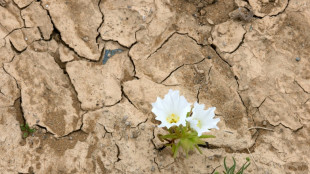
The effects are being felt across Spain's wealthy northeastern region of 7.7 million people after 32 months of drought which has seen its reservoir capacity plummet.
The lack of rainfall -- which has been particularly bad in Barcelona where restrictions are in place -- has left the reservoirs at just 26 percent capacity, regional figures showed.
"At this point, it's the worst problem we're facing," said Catalan leader Pere Aragones, lamenting one of "the worst droughts in 50 years".
Last summer, falling water levels at Sau reservoir exposed the ruins of an 11th-century church in the usually submerged village of Sant Roma de Sau, which was flooded in the 1960s when a nearby dam was built.
With levels critically low in Sau, the authorities last month began an emergency transfer of its remaining reserves to a neighbouring reservoir to preserve the water quality.
It's not the first severe water shortage in the region -- the last one was between 2004 to 2008 -- but such episodes are becoming more intense.
"The droughts caused by climate change are getting worse," said Narcis Prat, a retired Barcelona University ecology professor, pointing to warmer temperatures causing more water evaporation.
Although the drought has been particularly acute in Catalonia, it has affected the entire country.
"We're facing a difficult moment in terms of both water resources and rainfall," Agriculture Minister Luis Planas said after the weekly cabinet meeting on Tuesday.
- Hotter, drier -
UN figures show Europe is warming faster than any other continent and in the deep southwest, Spain is particularly vulnerable with the AEMET national weather office flagging 2022 as its hottest year on record.
The numbers are extremely worrying. In the current "water year" -- a 12-month period starting in October when hydrologists track precipitation levels -- Spain's average rainfall has been 21 percent lower than normal.
The south has been badly hit with reservoirs in the Guadalquivir basin at 25.2 percent capacity, compared with a national average of 50.7 percent, ecology ministry figures showed Tuesday.
In March, Catalonia declared a second-tier emergency in its most heavily populated areas, imposing a hosepipe ban and water usage limits for agricultural or industrial purposes.
They have also increased investment in water treatment plants, purification systems and desalination facilities which are already operating at full tilt.
"The Mediterranean area has been particularly badly hit so it needs to find other ways of managing water," said Prat.
"It means we'll need to change our current model of holding water in reservoirs for one which involves other resources... such as desalination plants or wastewater regeneration facilities."
G.Teles--PC