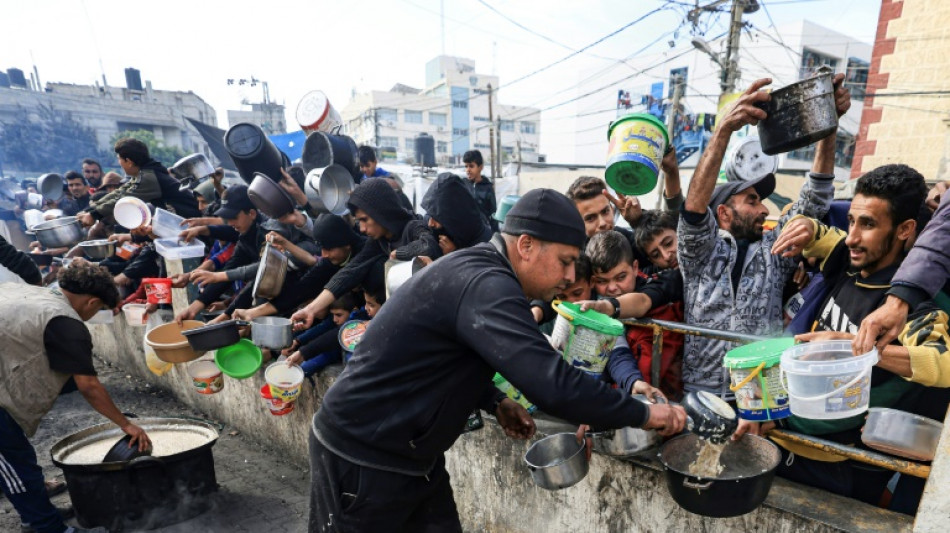
Criteria UN will use to declare expected 'famine' in Gaza / Photo: Mahmud HAMS - AFP

 Assefa seeks 'better than my best' at Berlin marathon

 US court refuses to overturn Pentagon ban on Anthropic

 Verstappen and Norris blame slow cars as Mercedes tops qualifying

 Crowds cheer pope in Paris after AI 'paradise of machines' warning

 Teen swimmer makes Games history as Thai, Chinese sprinters win gold
 Man City found guilty of 114 Premier League charges - reports

 Concerns over 'missing' UK explorer Ranulph Fiennes

 Suspected Paris killer of Argentine rugby star begs forgiveness
 Oil prices fall on cautious hopes for US-Iran progress

 Noskova, Muchova take Czech Republic into BJK Cup final

 Thai sprinter Puripol breaks own Asian Games record to win 100m gold
 Russell takes pole for Azerbaijan GP, Antonelli crashes out

 Williams boss hails Chadwick as F1 inspiration for women

 World No.1 Sinner delays return with China Open withdrawal

 South Lebanon children return to school destroyed by Israel strike

 Jewish group urges Berlin far-left vote winners to tackle antisemitism

 European stock markets climb as oil prices drop

 Trump accuser E. Jean Carroll finally has her damages

 Germany's Havertz, Musiala ruled out of Greece match with injury

 Ireland's Gaza stance spills from Eurovision into football

 Welcome aboard the Costa Serena, the Asian Games floating hotel

 Asian markets mixed after recent oil surge
 Cash for nature protection: hotelier's offer to Principe islanders
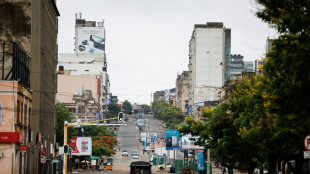
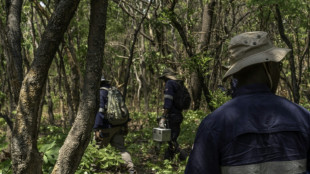 US miner KoBold bets on AI to gain edge in DR Congo mineral hunt

 Internet disrupted in Ethiopia as conflict rages

The UN, which has warned of "almost inevitable" widespread starvation in northern Gaza, uses strict criteria to declare a famine.
In the Jabalia refugee camp north of Gaza City, dozens of children wander around carrying empty pots, looking for anything edible.
Nearly five months after the start of the war, Gazans are despairing at the little humanitarian aid entering the coastal territory, particularly in the north. Some say they resort to eating leaves, or fodder for livestock.
In deciding whether or when to declare a famine, the UN relies on its specialised agencies based in Rome, the World Food Programme (WFP) and Food and Agriculture Organization (FAO), which in turn use the Integrated Food Security Phase Classification (IPC).
The IPC gathers evidence -- such as how many households are facing an extreme lack of food -- to draw up its Acute Food Insecurity scale, which is then used to inform decisions, such as how resources are allocated.
- What is famine? -
Famine exists in areas where at least one in five households has or is most likely to have an extreme deprivation of food and face starvation, death, destitution and extremely critical levels of acute malnutrition.
"If nothing changes, a famine is imminent in northern Gaza," WFP's deputy executive director Carl Skau told the UN Security Council on Tuesday.
No humanitarian group has been able to provide aid to the area since January 23, as Israel wages war on Palestinian militant group Hamas.
The UN estimates that 2.2 million people, the vast majority of Gaza's population, are on the brink of famine -- particularly in the north, where Israeli forces block aid from entering.
Some 97 percent of groundwater in Gaza is "reportedly unfit for human consumption", and agricultural production is beginning to collapse, Maurizio Martina, deputy director general of the FAO, told the Council.
UN aid chief Martin Griffiths last week wrote to the Security Council calling on members to act to prohibit "the use of starvation of civilian population as a method of warfare."
- How is famine measured? -
Famine tops the IPC's food insecurity scale, which has five phases.
Phase one is "Minimal" or no food insecurity in households. Phase two is when households are "Stressed", phase three is when they are in "Crisis", and phase four is "Emergency".
Phase five, "Catastrophe / Famine" is when households experience "extreme critical levels of acute malnutrition and mortality".
For famine to be declared, these three things must happen:
- at least 20 percent of households must face an extreme lack of food.
- one out of three children must be acutely malnourished.
- there must be two deaths for every 10,000 inhabitants, or four child deaths out of 10,000 children per day, due to starvation or malnutrition and disease.
The UN children's agency UNICEF has warned that the alarming lack of food, surging malnutrition and disease could lead to an "explosion" in child deaths in Gaza.
- Causes of famine -
The main causes of famine are:
- natural disasters such as drought, floods, or earthquakes; human pandemics and epidemics such as measles; or crop pests like locusts.
- economic crises which can affect food prices and employment opportunities.
- when humanitarian aid is not brought in quickly or efficiently enough.
- conflict, which often leads to population displacements, prevents people from cultivating land, and destroys markets and infrastructure.
In Jabalia, 60-year-old Palestinian farmer Abu Gibril told AFP last week he was so desperate for food to feed his family that he slaughtered two of his horses.
"We had no other choice but to slaughter the horses to feed the children. Hunger is killing us," he told AFP.
- Who declares famine? -
Once the criteria determined by the IPC are met, it is up to government authorities and UN agencies to declare a famine.
The IPC told AFP on Thursday that its next detailed report on Gaza is expected at the beginning of March.
A.S.Diogo--PC