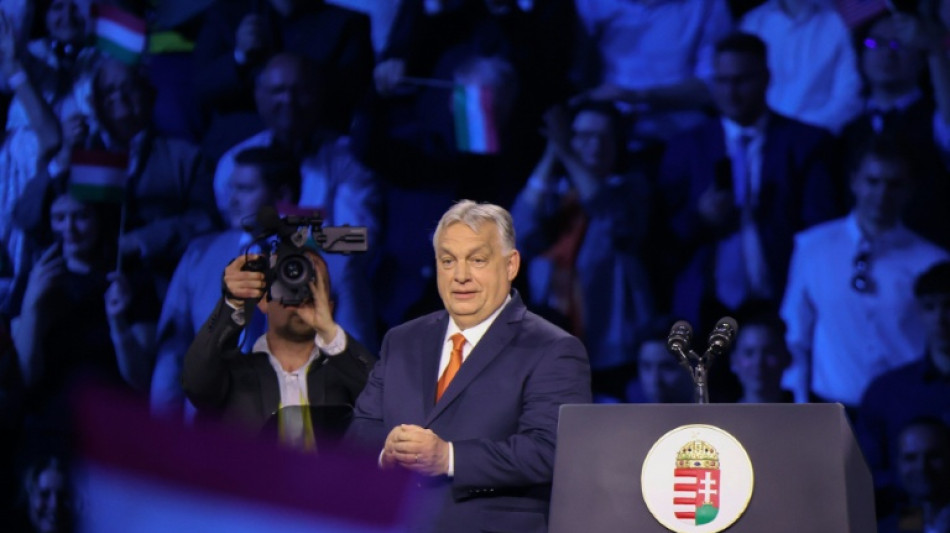
Three ways Orban gives himself an edge in Hungary's vote / Photo: Peter Kohalmi - AFP

 Sooriyabandara, Mendis lead Sri Lanka fightback after follow-on
 With ropes and chants, thousands move Japanese castle
 Zurich Diamond League: five events to watch
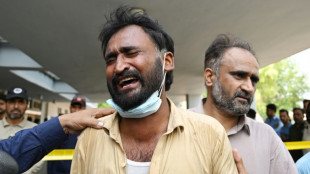 'Black smoke' chokes Pakistan maternity ward as hospital fire kills 14 infants
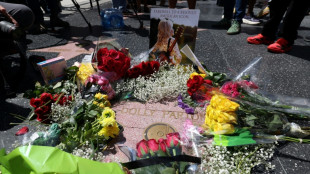
 French flight attendant wins landmark breast cancer ruling
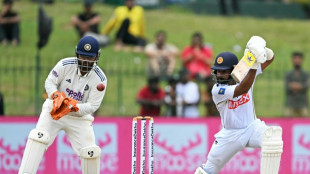 Sri Lanka 83-2 after India enforce follow-on in second Test
 Pakistan hospital fire kills 14 infants

 Iceland to vote on resuming EU talks in close referendum
 North Korea to 'bring joy' to Kim with 100 athletes at Asian Games

 US LGBTQ community mourns 'diva' Dolly Parton

 England bid to banish booze woes as Pakistan seek self-respect
 High quality, low risk: record number of Japanese in Premier League

 Stocks edge higher as oil drops on fresh Mideast hopes

 Pakistan's girls fight for their place in the boxing ring
 Five things to know about Anthropic ahead of Wall Street debut
 Social media use on the rise among Australian under-16s after ban: data

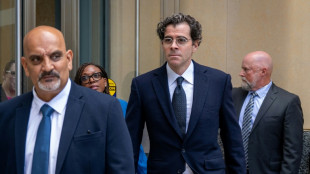 Instagram chief admits touting teen safety tool while omitting it was barely used

 'Final Fantasy', 'The Witcher' in spotlight at Europe gaming bash
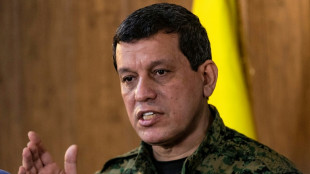 Syrian Kurdish leader dissolves force that spearheaded jihadist fight
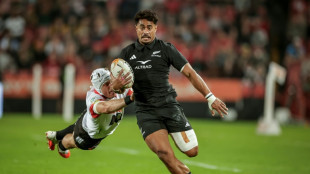
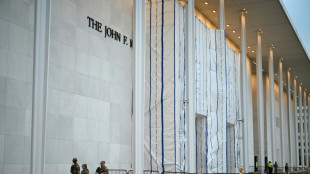 Trump raises prospect of demolishing iconic Kennedy Center
 PGA Tour to end in two-week matchplay showdown from 2028: CEO

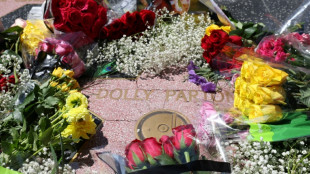 United States of Dolly: how a country queen bridged America's divide

 PGA chief says 'no current plans' for LIV stars to return

 Golf giant Callaway apologizes after ad sparks outcry
 Ioane stars as New Zealand recover to beat Johannesburg Lions
Observers and NGOs have raised concerns about Sunday's Hungarian presidential election taking place on an "uneven playing field" as nationalist Prime Minister Viktor Orban faces popular challenger Peter Magyar.
During Orban's 16-year tenure, his ruling coalition has used its supermajority to overhaul the electoral system and leverage state resources to campaign, while his business allies radically changed the media environment.
The Organization for Security and Cooperation in Europe (OSCE) has given increasingly critical reports on elections after noting in 2014 that Orban's ruling party enjoyed an "undue advantage".
For the second time in a row, the OSCE has deployed a full observation mission for the elections, which marks only the third time ever of such a mission in an EU member state.
Orban has touted the country's "very strong" democracy, saying his government "very strongly believes in... competition in politics".
- Advantage at polls -
Analysts say Orban could still retain his majority, even if his Fidesz-KNDP alliance loses the popular vote by three or four percent due to the 2011 overhaul of the electoral system and subsequent redrawing of the constituency map.
Preferential mandates for ethnic minorities, which require substantially fewer votes for a parliamentary seat, could also benefit his alliance, as representatives of both the German and the Roma minorities usually speak out in support of the ruling coalition.
Hungarians in neighbouring countries -- many grateful to Orban for offering simplified naturalisation under a 2010 law -- are allowed to vote by mail, unlike emigrants, who are generally critical of the nationalist leader.
Rights groups warned that outdated voter rolls and lax ballot security risk enabling mail-in ballots cast for deceased individuals.
Manipulation concerns are amplified by the fact that in Romania and Serbia Orban-allied parties collect the votes of Hungarians there.
- Media control -
Since Orban's return to power in 2010, many independent media outlets have shut down, while others have been bought by his business allies and turned into pro-Fidesz organs.
Media watchdog Reporters Without Borders (RSF) estimates that 80 percent of Hungary's press is controlled by "oligarchs" tied to the governing coalition and receive almost all state advertising money.
Critics accuse these outlets of unquestioningly echoing the government's narrative, along with the state media.
An 11-month study conducted last year by liberal Republikon Institute showed the public television's main news broadcast depicted Orban positively 95 percent of the time, while his challenger, Magyar, was portrayed in a negative context 96 percent of the time.
Orban's government has repeatedly said that it doesn't interfere in the media.
- Campaigning on taxpayers' money -
Orban is also accused of leveraging state resources to help his re-election bid, while the government has said it has a duty to "inform" people, even during campaigns.
In the lead-up to the vote, Orban's party used multiple state mailing lists, including that of the tax authority, to spread his campaign messages.
The government has also conducted an extensive, taxpayer-financed media blitz advertising its anti-Ukraine positions, such as opposition to the country joining the EU, with the latest billboards featuring the nationalist premier's face, urging Hungarians to "stand together".
Some state-owned companies, including electricity distributor MVM, have also paid for outdoor advertisement reinforcing Orban's key messages on energy.
The government also allocated millions of euros to dozens of local NGOs linked to the ruling party, some of them sharing office space with Fidesz, a 2024 investigation by conservative site Valasz Online found.
Media have reported that several of these associations have been distributing pamphlets in support of ruling party candidates during this campaign.
R.J.Fidalgo--PC