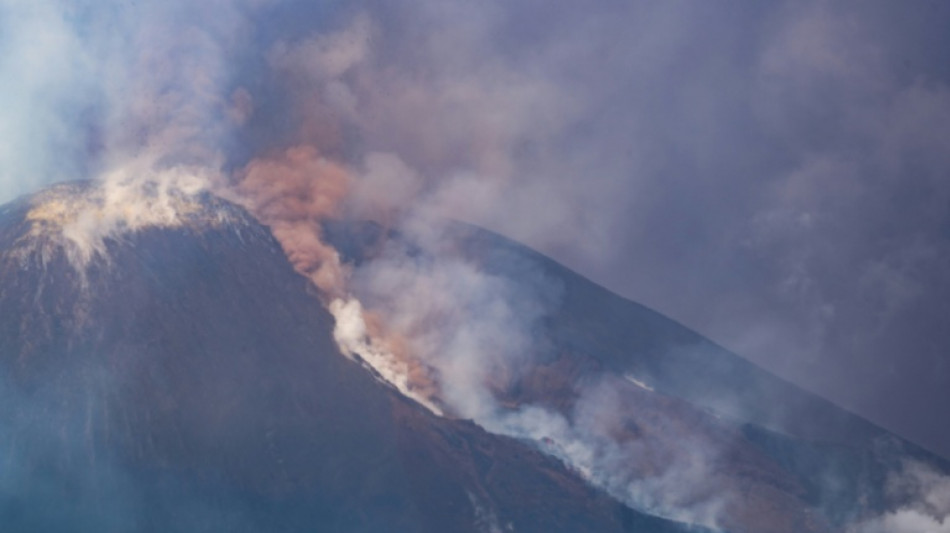
Massive plume of ash, gas spews from Italy's Mount Etna / Photo: Giuseppe Distefano - AFP

 Britain considers 2027 state visit for Ukraine’s Zelensky

 China and Gabon Elevate Ties to 'Shared Future' Amid State Visit

 World Golf Awards 2026 to be Hosted at Egypt’s Madinaty Golf Club

 12 Billion Gallons of Raw Sewage Discharged into Chicago River Despite Deep Tunnel Infrastructure

 Edmund Richardson Wins Baillie Gifford Prize for 'Alexander' Biography

A huge plume of ash, gas and rock spewed forth Monday from Italy's Mount Etna, Europe's largest active volcano, after a portion of its southeastern crater likely collapsed, authorities said.
Images showed a massive grey cloud billow forth from the volcano on the island of Sicily, beginning about 11:24 am local time (0924 GMT), according to the National Institute of Geophysics and Volcanology (INGV).
Surveillance cameras showed "a pyroclastic flow probably produced by a collapse of material from the northern flank of the Southeast Crater", the agency said.
A pyroclastic flow occurs when volcanic rock, ash and hot gasses surge from volcanos. They are extremely dangerous.
The explosive activity "had transitioned to a lava fountain", INGV said, with the plume of ash expected to dissipate towards the southwest.
A red alert issued for aviation authorities said the height of the volcanic cloud was estimated at 6.5 kilometres (more than four miles).
The nearby Catania airport was still in operation.
P.Cavaco--PC