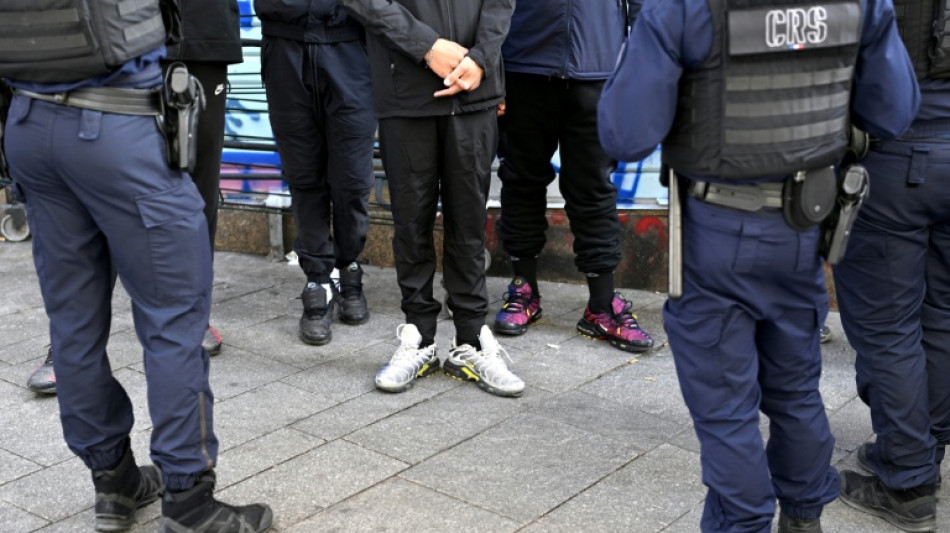
'Witnesses to despair': Marseille sees poverty fuel cocaine problem / Photo: Nicolas TUCAT - AFP

 Marchand 'stressed' about racing Japanese rivals at LA Olympics

 Mobile boat clinics bring healthcare to India's remote islands
 Former India paceman Zaheer Khan named Chennai coach in IPL

 Six-year-old Chinese girl sets world record with Rubik's Cube

 Swimming prodigy Yu, 13, says 'interviews way harder than racing'
 Star coaches make their bows as Nations League returns
 Rams bounce back as Giants reel from Dart injury

 In Bangladesh, Pakistan's Jinnah photo stirs anger

 Two New Zealand naval ships transit Taiwan Strait

 Zidane gets down to work as France start new era

 Inside the Venezuelan prison meant to 'drive you insane'

 UK king braces as memoir by Diana's brother goes on sale
 Akkodis and Hamburg Public Transport Association Showcase hvv mia at InnoTrans 2026, Demonstrating the Future of AI-Powered Mobility

 Macron says talks with Trump on Red Sea, Ukraine 'constructive'

 Green policies just good politics, says UK minister
 Bardot auction in Paris fetches nearly one million euros
 No timeline on Daniels injury return, says Commanders coach

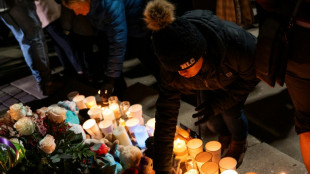 British Columbia sues OpenAI in US court over Canada school shooting

 French star Batum retires after 18-year NBA career

 Zidane leads first France training session
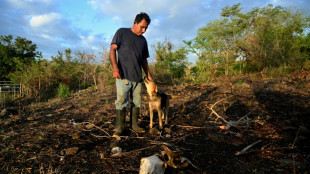
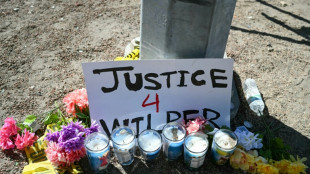 Man shot by ICE agent in Texas detained with bullet inside him: lawyer

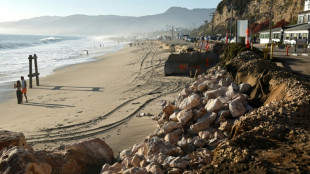 California declares state of emergency ahead of El Nino

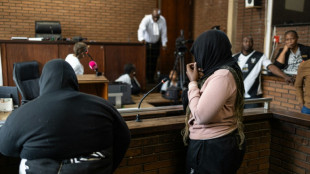 South Africa arrests three more suspects, after nine women murdered

 Carse needs time away from England, says captain Brook

 NOWPayments Releases Cross-Chain Payout Data Revealing Key Performance Benchmarks Across TRON, BNB Chain, and Solana

It's nine in the morning and Marseille city contractors armed with long tongs were picking up syringes amid the morning crowd, dropping them one by one into a yellow recipient fixed on a cart.
The scene, on the central Belsunce Square near the busy Old Port, plays out daily, an illustration of the second-biggest French city's massive drug problem.
On pavements, in doorways and in parking lots, more users than ever can be seen shooting up cocaine or smoking crack.
Many aimlessly wander the streets of the Mediterranean port city, which became notorious decades ago for its role as a heroin hub in the so-called "French connection" trade route, and today cannot get a grip on a thriving narcotics business.
At lunchtime, a man lay sprawled on the street outside the parking lot of a shopping centre, two needles sticking out of his right arm.
"You see more and more young people and women," said Youcef Mahi, a janitor.
"I'm not judging. We are witnesses to despair."
- Crack 'drives you crazy' -
The city's budget for cleaning up after the addicts has risen six-fold to reach 152,000 euros ($177,000) this year, outweighing public subsidies for NGOs dedicated to reducing risks for drug users.
But Antoine Henry, who runs the ASUD association to keep addicts safe, said more money should be funnelled into projects such as his.
By his estimates, "2,000 users live in the streets of central Marseille, most of them without a home or income, often carrying infections, with no access to benefits, and sometimes undocumented."
He said the sharp increase is partly due to overall rising poverty in what is already France's lowest-income large city, with the proliferation of downtown dealing spots over the past two years also to blame.
Such spots are outposts of the main dealing rings located in low-income housing estates, and closer to socially vulnerable consumers who buy their cocaine there, usually for 10 euros ($11.60) a pop.
On one Marseille street, a young lookout, called "chouf" (Arabic for 'look'), had taken up his post, only a few dozen metres from the main Canebiere thoroughfare and its municipal police headquarters.
One 36-year-old woman, who did not want to be identified, told AFP that she lives in the street, except when she is in prison.
She was seriously ill, shivering below her parka despite the hot July sun. She shoots cocaine, but does not smoke crack because, she said, "that drives you crazy".
She said she tries to stay clear of police and doctors, but also of dealers and their gangland fights and shootouts.
Marseille and its surrounding region are plagued by a turf war over lucrative drug points. In 2023, 49 deaths linked to drug trafficking were recorded in Marseille in connection with gang warfare, and 24 in 2024.
- Clean syringes, rapid tests -
Joachim Levy regularly seeks out the woman when he and his colleagues from the Nouvelle Aube (New Dawn) association roam the streets in search of people in need of help.
He has constantly urged her to accept treatment.
"Otherwise you're going to die here," he said.
At the foot of a building, a small group, like dozens of others in the neighbourhood, was cooking crack and crushing pills.
In contrast to Paris, crack is rarely sold ready to consume here.
Instead, users concoct it themselves by heating cocaine with ammonia.
From his backpack, Levy handed out sealed syringes, pipes, disinfectant wipes and bicarbonate, which he said is "less harmful" than ammonia.
A few streets away, a team from Nouvelle Aube were talking with men sheltering under the A7 highway.
"We offer rapid testing for HIV and hepatitis -- and direct them to the hospital if needed. They no longer have their own survival strategies," said Marie-Lou, a member of the association who did not give her surname.
- 'Poverty, isolation' -
A young woman, wearing glittery sneakers, a tight skirt and a handbag, turned a staircase corner.
She told Levy about her mounting debt and her temporary accommodation with her child "at an ex's place".
She used to smoke, and "snort a little", but then she turned to crack and soon realised she "was hooked".
Levy told the woman "to call anytime".
The biggest problem for people in her situation, he said, is not the actual drug use.
"It's the poverty, the isolation, the street violence, the mental health issues -- this is where we need to start," he said.
Levy believes supervised consumption facilities -- spaces where users can take their drugs safely -- could be "an excellent solution" to some of these issues.
Such "shoot-up rooms", as critics often call them, operate in several countries, including Germany, Norway, the Netherlands and Australia.
- No 'shoot-up room' -
Perrine Roux is research director at the INSERM health and medical research body, which has published an evaluation of France's only two experimental facilities in Paris and Strasbourg.
"All scientific studies, in France and abroad, have shown the usefulness of such facilities," she said.
"But nobody pays much attention to science, and that's very concerning."
The interior ministry shut down a plan to open such a facility in Marseille after complaints from some residents and local politicians.
On Thursday, the regional prefect announced an action plan against drug trafficking and related crimes, involving the deployment of additional police and anti-riot units "to give the dealing points a pounding", and of 310 extra security cameras.
Meanwhile in Belsunce Square, the water fountain has stopped working, a fact welcomed by one resident.
"Now that there's no water for them anymore, we may see less of the druggies," she said.
X.Matos--PC