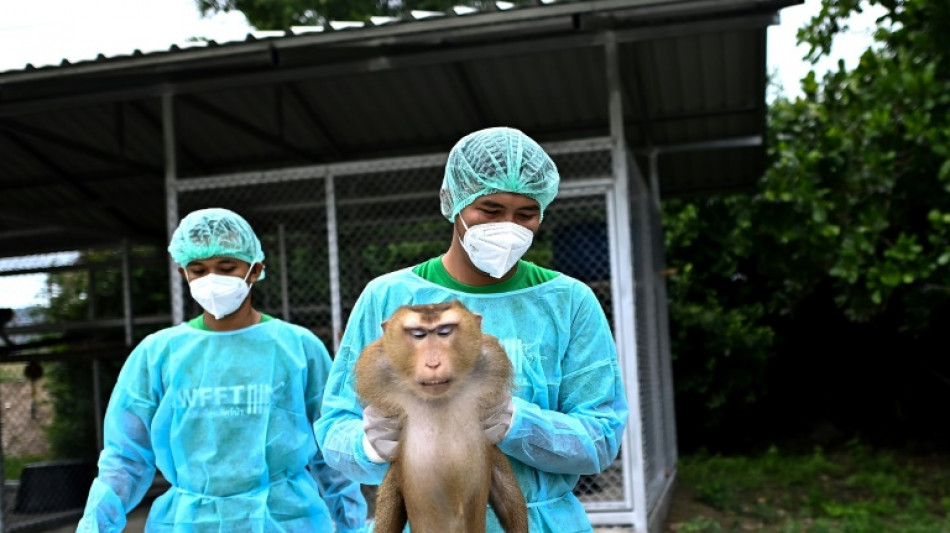
Sunbears to elephants: life at a Thai wildlife hospital / Photo: MANAN VATSYAYANA - AFP

 Marchand 'stressed' about racing Japanese rivals at LA Olympics
 Mobile boat clinics bring healthcare to India's remote islands
 Former India paceman Zaheer Khan named Chennai coach in IPL

 Six-year-old Chinese girl sets world record with Rubik's Cube

 Swimming prodigy Yu, 13, says 'interviews way harder than racing'
 Star coaches make their bows as Nations League returns
 Rams bounce back as Giants reel from Dart injury

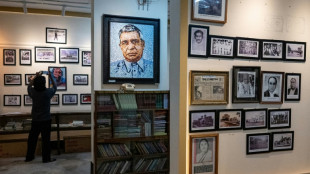 In Bangladesh, Pakistan's Jinnah photo stirs anger

 Two New Zealand naval ships transit Taiwan Strait

 Zidane gets down to work as France start new era
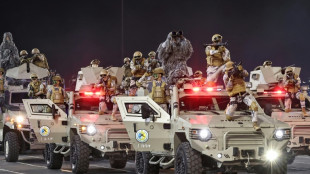
 Inside the Venezuelan prison meant to 'drive you insane'

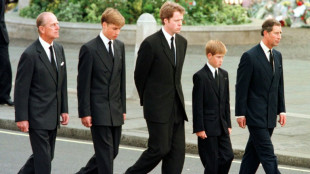 UK king braces as memoir by Diana's brother goes on sale
 Akkodis and Hamburg Public Transport Association Showcase hvv mia at InnoTrans 2026, Demonstrating the Future of AI-Powered Mobility

 Macron says talks with Trump on Red Sea, Ukraine 'constructive'
 Green policies just good politics, says UK minister

 Bardot auction in Paris fetches nearly one million euros
 No timeline on Daniels injury return, says Commanders coach

 British Columbia sues OpenAI in US court over Canada school shooting
 French star Batum retires after 18-year NBA career

 Zidane leads first France training session
 Man shot by ICE agent in Texas detained with bullet inside him: lawyer

 California declares state of emergency ahead of El Nino
 South Africa arrests three more suspects, after nine women murdered
 Carse needs time away from England, says captain Brook

 NOWPayments Releases Cross-Chain Payout Data Revealing Key Performance Benchmarks Across TRON, BNB Chain, and Solana

The patient lay prone on the operating table. An IV line snaking from his left leg, near the wound from the tranquilliser dart that sedated him.
Yong, a pig-tailed macaque rescued from a life harvesting coconuts, was being treated at Thailand's only NGO-run wildlife hospital.
He is one of dozens of animals treated each month at the Wildlife Friends Foundation Thailand (WFFT) facility.
Patients range from delicate sugar gliders intended as pets, to some of the hefty rescued elephants that roam WFFT's expansive facility in Phetchaburi, southwest of Bangkok.
The wide variety can be a challenge, said vet Siriporn Tippol.
"If we can't find the right equipment, we have to DIY use what we already have or modify based on the specifications we need."
She described strapping an extension handle onto a laryngoscope designed for cats and dogs so it could be used during surgery on bears and tigers.
A treatment whiteboard gives a sense of an average day: cleaning a wound on one elephant's tail, assessing another's possible cataract and treating a Malayan sunbear's skin condition.
Yong was in quarantine after rescue -- coconut monkeys often carry tuberculosis or other infectious diseases -- and needed a full health check.
But first, he had to be sedated, with a tranquilliser dart blown from a white tube into his left haunch.
Before long he was slumped over and ready to be carried to hospital.
Blood was taken, an IV line placed and then it was X-ray time, to look for signs of broken bones or respiratory illness.
Next was a symbolic moment: vets cut off the metal rings around the monkey's neck that once kept him connected to a chain.
The operating theatre was the final stop, for a vasectomy to allow Yong to join a mixed troop of rescued monkeys without risk of breeding.
- Out-of-hand hobby -
The light-filled hospital only opened this month, replacing a previous "tiny" clinic, said WFFT founder Edwin Wiek.
"I've always dreamed about having a proper medical facility," he told AFP, over the sound of nearby tigers roaring in grassy enclosures.
With over 900 animals in WFFT's care and a regular stream of emergency arrivals, "we needed really a bigger place, more surgery rooms, a treatment room," he said.
Wiek founded WFFT in 2001 with two macaques and a gibbon. It now spans 120 hectares (297 acres) and houses 60 species.
"That hobby got out of hand," he laughed.
He has long advocated for stronger wildlife protections in a country well-known as a wildlife trafficking hub in part because of its location and strong transport links.
Wiek once had tendentious relations with Thai authorities, even facing legal action, but more recently has become a government advisor.
WFFT is now a force multiplier for the Department of National Parks, Wildlife and Plant Conservation (DNP).
"In many cases, when wild animals from elephants and tigers to macaques are found injured and displaced, we coordinate with WFFT, who assist in rehabilitation and medical care," said DNP wildlife conservation director Chalerm Poommai.
One of WFFT's current campaigns focuses on the estimated thousands of monkeys like Yong trained to pick coconuts on plantations in southern Thailand.
"The animal welfare issue is horrible," said Wiek.
"But another very important point is that these animals actually are taken out of the wild illegally. And that, of course, has a huge impact, negative impact on the survival of the species."
WFFT is working with authorities, the coconut industry and exporters to encourage farmers to stop using monkeys, and switch to shorter trees that are easier to harvest.
There is also work to do equipping the new hospital. A mobile X-ray unit and specialised blood analysis machine are on Siriporn's wishlist.
And Wiek is thinking ahead to his next dream: a forensics lab to trace the origins of the animals confiscated from traffickers.
"The laws are there, we lack the enforcement," he said.
"But with this tool, we could actually do some real damage to these illegal wildlife traffickers."
X.Matos--PC