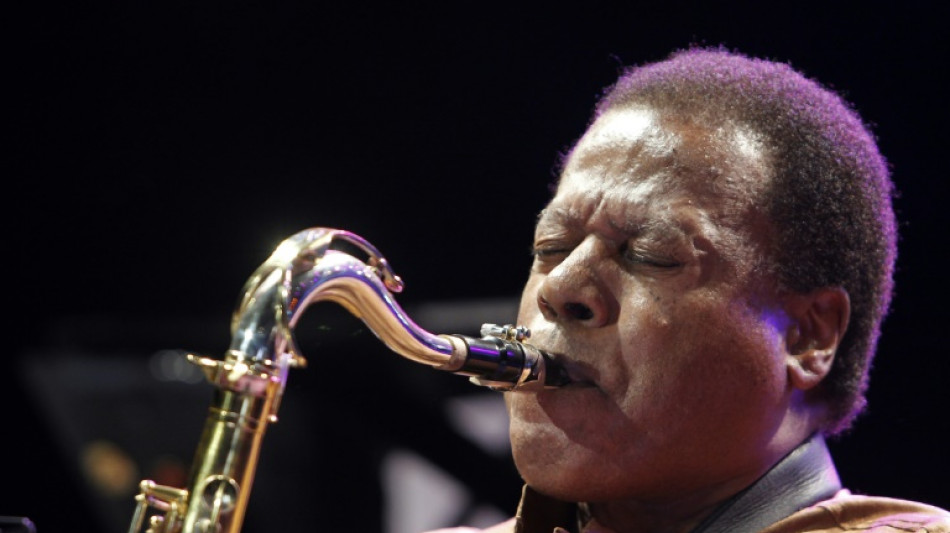
Jazz innovator Wayne Shorter dies at 89 / Photo: SEBASTIEN NOGIER - AFP/File

 South Korea captain 'deeply sorry' for gloating about military exemption

 Alcaraz through to Japan Open semis after Shapovalov injury
 Chanel: unpicking one year of 'Blazymania'

 Latvian pro-Europeans set for election win: partial results

 China swim sensation Yu Zidi, 13, says 'I'm no prodigy'

 Yu Zidi to Ohashi: Asian Games stars who can light up LA Olympics

 'Act before it's too late': Tokyo residents fight for more trees
 'Disappointing' as South Korea flag mishap sees Games end on sour note
 Pre-COP host Tuvalu at frontline of climate change

 Hungary's dwindling paprika producers battle to save signature spice

 Cornell president vows review in wake of alleged student gang rape

 Latvian partial election results suggest pro-European choice

 In Egypt's Sinai, Gazan builds school for children displaced by war
 Trump tariffs a mixed bag for US auto industry
 Yemen government forces say struck Houthi targets
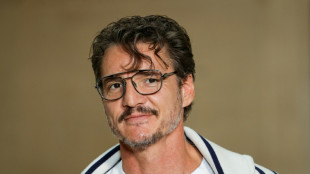 Music links past, present for Pedro Pascal's cellist in 'Behemoth!'

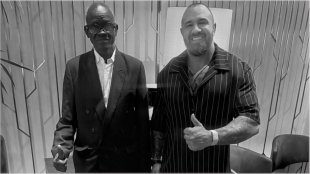 ALEX BODI ȘI AMBASADORUL REPUBLICII SUDANUL DE SUD, GUM DOMINIC MATIOK, DISCUTĂ LA BERLIN DESPRE POSIBILITATEA ÎNFIINȚĂRII UNUI CONSULAT ONORIFIC LA BUCUREȘTI
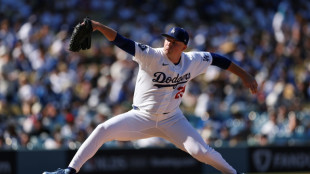 Dodgers step up World Series three-peat bid with 5-3 win over Braves

 Spain break down Czechs as England outclass Croatia in Nations League

 Yamal on target as Spain hold off Czech Republic
 Latvian exit polls suggest pro-European choice

 Lula, Bolsonaro wrap up campaigns ahead of knife-edge election

 Tuchel hails 'complete' England after Croatia demolition

 Fury to invite Trump to lead ring walk before Joshua showdown

 Fashion industry in 'precarious moment', says Vivienne Westwood supremo

Wayne Shorter, the storied saxophonist considered one of America's greatest jazz composers and among the genre's leading risk-takers, died on Thursday in Los Angeles. He was 89.
Shorter's publicist Alisse Kingsley confirmed his death to AFP, without specifying the cause.
The enigmatic jazz elder performed with fellow legend Miles Davis and went on to become a leading bandleader on both soprano and tenor sax, including with his group Weather Report.
He was one of the last living jazz greats to have cut his teeth in the genre's 1950s heyday when it was both the soundtrack at dance halls and gained ground in intellectual circles.
Tributes quickly began pouring in, with trumpeter and composer Wynton Marsalis hailing Shorter as a "giant of saxophone regardless of register" and a "jazz messenger."
Born on August 25, 1933 in Newark, New Jersey, Shorter expressed early interest in music and took up clarinet as a teenager.
He picked up the saxophone -- which became his instrument of choice -- shortly thereafter.
Shorter and his brother would play bebop, calling themselves "Mr Weird" and "Doc Strange" for their antics like wearing dark sunglasses in a dimly lit club.
"And we had wrinkled clothes, because we thought you played bebop better with wrinkled clothes," Shorter told The Atlantic in 2004.
"You had to be raggedy to be for real."
He attended New York University, where he graduated with a degree in music education in 1956, and spent two years in the army, where he played with jazz pianist Horace Silver.
"I knew that people start on instruments when they're five years old, so I did think I had a lot of catching up to do," he told The Washington Post before receiving the prestigious Kennedy Center Honor, celebrating the best in American arts, in 2018.
"But when things started to move, opportunities came at a pace I hadn't seen."
- 'Real composer' -
In 1964, Shorter left Art Blakey's Jazz Messengers -- with which he found international fame, touring for four years and becoming the band's musical director -- to join trumpeter Davis.
Davis' Second Great Quintet included keyboardist Herbie Hancock, who became one of Shorter's best friends and regular collaborators.
It was with this group that Shorter began flexing his composing muscles, channeling his innovative spirit within the traditional rules of jazz.
Davis often described the Second Great Quintet's ethos as "time, no changes" -- allowing free jazz without completely scrapping strictures.
The collaboration delivered some of the 20th century's best known jazz, including the songs "E.S.P.," "Nefertiti" and "Footprints."
"Wayne is a real composer" with "a kind of curiosity about working with musical rules," Davis said in his autobiography.
"If they didn't work, then he broke them, but with musical sense; he understood that freedom in music was the ability to know the rules in order to bend them to your own satisfaction and taste."
- 'Eternity in composition' -
In 1970, Shorter co-founded Weather Report, where he played a leading role in the development of jazz fusion -- which combined the harmonies and improvisation of jazz with developing forms of rock, funk and R&B.
Over the band's 16-year career, it adopted a new way of playing that dropped the standard format of soloists playing with accompaniment to instead encourage all band members to improvise simultaneously.
Weather Report also showed an interest in music's technological innovations, experimenting with electronic elements.
Already famous in his own right, Shorter's crossover collaborations with acts including Joni Mitchell, Steely Dan and Carlos Santana brought his talent to a wider audience.
His partnership with Mitchell was particularly poignant: Shorter worked on every album she released between 1977 and 2002.
"One of the greatest experiences I ever had was listening to a conversation with Joni Mitchell and Wayne Shorter," Hancock said of their work.
"Just to hear them talking, my mouth was open. They understand each other perfectly, and they make these leaps and jumps because they don't have to explain anything."
Mitchell also lavished praise on Shorter, saying the way he worked was "the difference between genius and talent."
A lover of comics and a long-time practicing Buddhist, Shorter in 2018 dropped "Emanon," a triple-disc tucked inside a 74-page fantasy graphic novel he co-wrote that details the adventures of a "rogue philosopher" who fights evil with truth.
"I'm looking to express eternity in composition," he had said more than a decade before, in his 2007 biography.
The decorated Shorter -- he nabbed most of the available lifetime achievement awards throughout his career, along with a Guggenheim fellowship -- continued to tour well into his golden years, though chronic health issues eventually slowed his pace.
Recently he had laid low, composing an opera with bassist Esperanza Spalding, which premiered in 2021.
He was forced to cut short a SFJAZZ residency due to his ailing health, and as he struggled to pay medical bills, Hancock spearheaded a series of all-star tribute shows to fund the expenses.
"To me, the definition of faith is to fear nothing," Shorter told The New York Times in 2018.
"I think that music opens portals and doorways into unknown sectors that it takes courage to leap into."
F.Moura--PC
