Fake social media accounts aimed at Ukraine, says Meta

 US regulator finds Boeing 737 MAX software bug 'not a safety concern'

 Ohtani 'managing' injuries as Dodgers launch MLB post-season

 Botched US execution leaves murderer unconscious on ventilator: lawyers
 Cornell rape case exposes sexual violence at US colleges
 France held by Italy in Zidane's homecoming after Olise stunner

 Ethiopian pro-government militia claims Tigray airport as regional tensions spike
 Ohtani shaking off injuries as Dodgers launch MLB post-season

 Sea levels to rise in California as coastal wave surges up west coast
 New rallies urged in France as protests disrupt over 730 schools

 Djokovic survives China Open scare, Sabalenka starts strong
 King Charles to evoke colonial 'darkest days' on Caribbean tour

 Tesla shares jump after global car sales top estimates

 DR Congo Ebola outbreak killed more than 4,000: official figures
 Djokovic survives China Open scare against wildcard world no. 104
 Lula, Bolsonaro trade blows in final scramble for votes in Brazil

 New clashes erupt as protests disrupt over 560 French schools
 NY governor vows to close loophole after alleged Cornell gang rape

 Ethiopia Tigray rebels pushed back as regional tensions spike
 Stocks rise, yields fall as US job numbers disappoint

 Man City verdict a 'big topic' for England players, says Tuchel

 NY attorney general tasked with investigating alleged Cornell gang rape
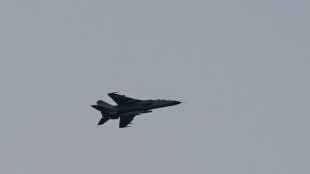 China widens military footprint with Laos air base

 G7 talks as US pressures Europe over diesel stocks
 Man City launch appeal against explosive financial ruling
 Swiss president to quit government
Pro-Russia groups are orchestrating misinformation campaigns on social media, using fake profiles or hacked accounts to paint Ukraine as a feeble pawn of Western duplicity, Meta said Sunday.
The cyber security team at the tech giant -- parent of Facebook and Instagram -- said it blocked a set of Russia-linked fake accounts that were part of a social media scheme to undermine Ukraine.
"They ran websites posing as independent news entities and created fake personas across social media platforms including Facebook, Instagram, Twitter, YouTube, Telegram and also Russian Odnoklassniki and VK," Meta said in a blog post.
In some cases, "they used profile pictures that we believe were likely generated using artificial intelligence techniques."
The small network of Facebook and Instagram accounts targeted people in Ukraine, using posts to try to get people to visit websites featuring bogus news about the country's effort to defend itself from the invasion by Russia.
Meta said it connected the network to people in Russia and Ukraine, as well as media organizations NewsFront and SouthFront in Crimea.
The US has identified NewsFront and SouthFront as disinformation outlets that get marching orders from Russian intelligence services.
The organizations were among more than a dozen entities sanctioned by Washington for trying to influence the 2020 US presidential election "at the direction of the leadership of the Russian Government."
Meta shut down the bogus accounts and blocked sharing of internet addresses involved in the deception, director of threat disruption David Agranovich said in a briefing.
Bogus claims published by the sites include that the West had betrayed Ukraine and that Ukraine is a failed state, according to Agranovich.
- 'Ghostwriter' -
Meanwhile, a hacking group called Ghostwriter believed to operate out of Russia has ramped up action against military figures and journalists in Ukraine in recent days, according to Meta's security team.
Ghostwriter's typical tactic is to target victims with "phishing" emails that trick them into clicking on deceptive links in an effort to steal log-in credentials.
The goal of compromising Facebook accounts appeared to be to spread links to misinformation, such as a YouTube video falsely contending to be of Ukrainian soldiers surrendering to Russian troops, according to Meta.
"We've taken steps to secure accounts that we believe were targeted by this threat actor," said Meta head of security policy Nathaniel Gleicher.
"We also blocked phishing domains these hackers used to try to trick people in Ukraine into compromising their online accounts."
Facebook on Friday restricted Russian state media's ability to earn money on the social media platform as Moscow's invasion of neighboring Ukraine reached the streets of Kyiv.
Gleicher said that Meta had yet to see any throttling of Facebook in Russia, despite the country threatening to hit it with restrictions after it refused to stop using fact-checkers and content warning labels on state media posts.
Social media networks have become one of the fronts in Russia's invasion of Ukraine, home to sometimes misleading information but also real-time monitoring of a quickly developing conflict that marks Europe's biggest geopolitical crisis in decades.
L.Mesquita--PC