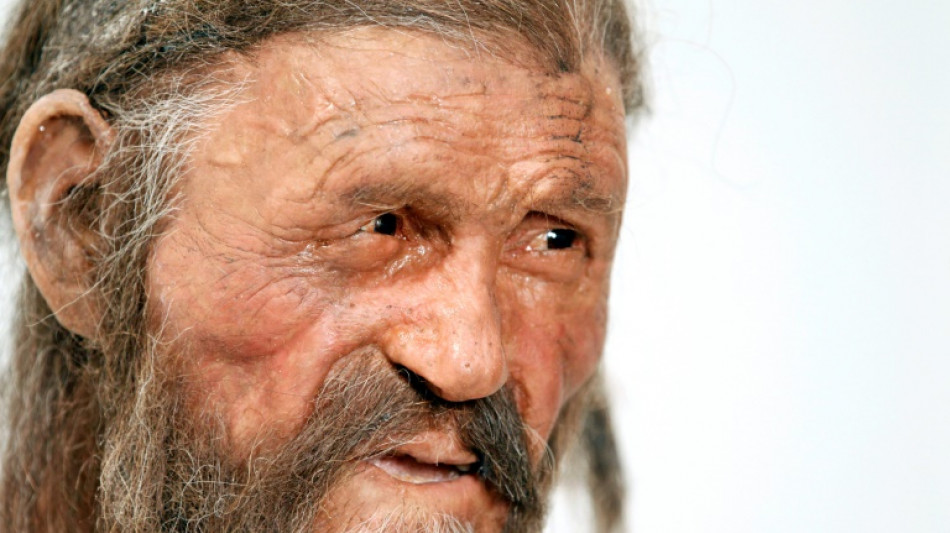
Iceman Oetzi was balding, darker-skinned than thought: study / Photo: Andrea Solero - AFP

 American Nobel laureate in medicine hopes to illuminate the brain

 Trump approves firing squad for convicted US military base shooter

 Grappling with 'homework scams,' US universities shun AI detectors
 Separatists win Quebec election in test for Canada PM

 Leaders visit Pacific atoll at frontline of climate change

 Yemen's Houthis claim striking Riyadh airport, other Saudi sites

 Best-selling British author Jeffrey Archer dies aged 86

 Military plane crash kills 32 in Nigeria

 Olise powers France to win over Belgium in Nations League

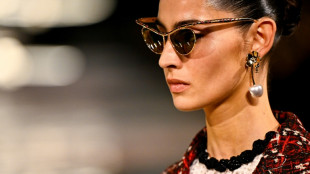 High-flying Blazy turns to birdlife at Chanel

 Riyadh's allies pledge troops as Yemen, Saudi Arabia attack Houthis

 Clashes erupt outside Kosovo parliament over war crimes court

 Milan's Saelemaekers suffers ankle setback, faces lengthy spell out

 Rubio arrives in Iceland to push for greater US presence in Arctic

 Putin allows Italy's UniCredit to sell part of Russian business

 Djokovic into China Open final as Medvedev out for hitting fan with ball

 ICC unseals arrest warrants for Taliban education ministers

 Modric hopes fans back Croatia against Spain after England shame

 Bolsonaro rides right-wing surge into Brazil's election runoff

 Turkey blocks X account of British reporter

 Ukraine says using AI robot guns to shoot down new Russian drones

 At Oct 7 memorial, Netanyahu says will be no Hamas rule in Gaza

 Ukraine blames Russia for deadly sinking of Turkish ship in Black Sea

 UN rights council slams Taliban's 'oppression' of women
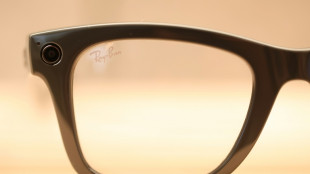 Norway eyes partial ban of smart glasses
Oetzi, the "iceman" mummy of the Alps, had darker skin than previously thought and was likely bald or almost bald when he died, the study by Max Planck Institute for Evolutionary Anthropology said.
He also likely stemmed from a relatively isolated group with little contact with other Europeans, and had ancestors who arrived directly from Anatolia.
Oetzi's remains were found in September 1991 in South Tyrol, the northern Italian region where he was also believed to have roamed.
Mummified in ice, he was discovered by two German hikers in the Oetztal Alps, 3,210 metres (10,500 feet) above sea level, more than 5,000 years after his death.
Since then, scientists have used hi-tech, non-invasive diagnostics and genomic sequencing to penetrate his mysterious past.
Initial analysis of his genome had earlier suggested that he had genetic traces of steppe herders from eastern Europe.
But Max Planck's scientists said the latest results no longer support this finding.
Rather, they believed the original sample to have been contaminated with modern DNA that led to the erroneous finding.
Advances in technology have also allowed for a more specific look into Oetzi's past.
"Among the hundreds of early European people who lived at the same time as Oetzi and whose genomes are now available, Oetzi's genome has more ancestry in common with early Anatolian farmers than any of his European counterparts," said the institute's team.
- 'Almost no hair' -
Johannes Krause, head of the Department of Archaeogenetics at the Max Planck Institute for Evolutionary Anthropology who co-authored the study, said his team was "very surprised to find no traces of eastern European steppe herders in the most recent analysis of the Iceman genome".
"The proportion of hunter-gatherer genes in Oetzi's genome is also very low. Genetically, his ancestors seem to have arrived directly from Anatolia without mixing with hunter gatherer groups," he said.
The scientists believe therefore that he likely stemmed from a relatively isolated population that had very little contact with other European groups.
The team said previous ideas about the iceman's appearance may also have been inaccurate.
Scientists had previously thought the iceman's skin had darkened in the ice, but it may actually have been his original skin colour, said the team.
Oetzi's genes also show a "predisposition to baldness" and, rather than having long, thick hair on his head, he is now believed to already have lost most of his hair as an adult.
"This is a relatively clear result and could also explain why almost no hair was found on the mummy," said anthropologist Albert Zink, co-author of the study.
In previous studies over the years, scientists have determined that Oetzi died around the age of 45, was about 1.60 metres (five foot, three inches) tall and weighed 50 kilos (110 pounds).
He suffered a violent death, with an arrow severing a major blood vessel between the rib cage and the left shoulder blade.
G.Teles--PC