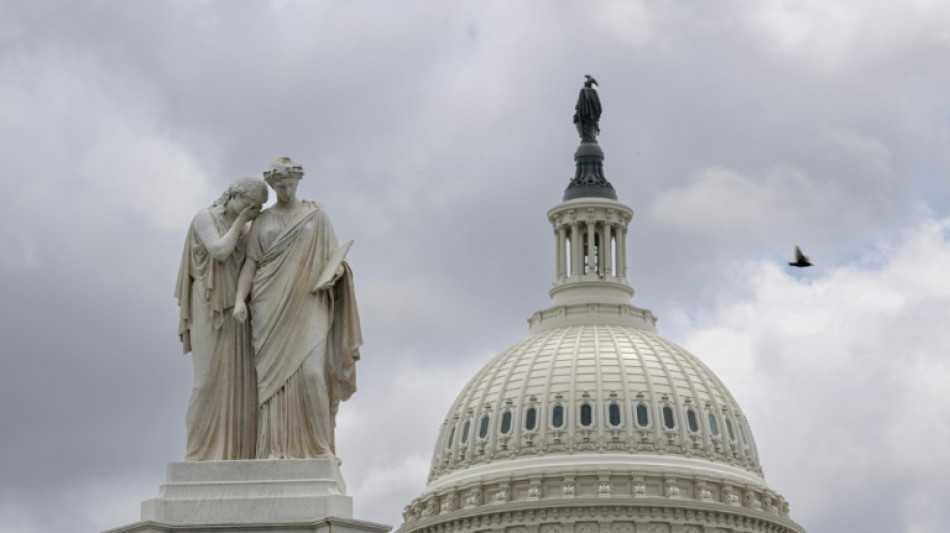
US 'swatting' pranks stoke alarm in election year / Photo: Mandel NGAN - AFP

 N. Korea's Kim pledges 'invariable support' in Putin birthday letter
 OGRD Alliance Advances PLPC Multi-Asset Platform Following APHELAR Milestone, Expanding Licensing and Strategic Capital Frameworks

 Emotion, tears as Messi prepares for Argentina farewell

 Kane eyes Ronaldo record after matching England cap mark

 Spain fight back to beat Croatia, Kane adds to record for England

 Merino double helps Spain beat Croatia, reach Nations League quarters

 US stocks hit fresh records as oil stabilizes on rising supplies
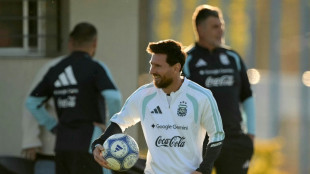 As Messi bows out, Argentines say 'thank you'

 Ronaldo opens door for Portugal return, apologises for walkout

 'Nobody seems to care': Russian city shrugs off plague reports
 Hundreds arrested in French school protests as Macron summons ministers
 WADA seeks tough anti-doping stance from Kenya

 German ex-spy chief arrested for suspected espionage, treason
 Furyk vows US will 'do more' to end Ryder Cup losing streak

 Iyer hits ton as India hammer West Indies in T20 opener
 Mandhana named India women's team captain after Kaur quits
 'The sound keeps coming back': children maimed in Ethiopia's Tigray clashes

 Paris Women's Fashion Week: the key trends

 i-payout Introduces a New Approach to Payments, Closing the Beneficiary Information Gap
 New Generation of Crypto Miners Released by ASICID

 New investor forecasts LIV Golf teams could be worth $100 mn each
 Shakira, Pique return to court over children visit arrangements

 Nobel physics prize hails 'ghostly messengers' from space
 France's Mistral unveils latest model in sovereign AI push
 Stocks climb as oil prices retreat
Startled by nighttime pounding on his door, American political strategist Rick Wilson walked out in his underwear to find policemen with guns drawn. They were responding to yet another hoax, increasingly seen as a tool of intimidation in a crucial election year.
In recent months, election workers, judges, and politicians -- on both sides of the aisle -- have been "swatted," a potentially deadly prank when a caller triggers a large law enforcement response after reporting a false violent crime.
The shenanigans have stoked concern in the build up to the widely anticipated November rematch between President Joe Biden and Donald Trump that observers say is ridden with the threat of election violence, foreign influence, and disinformation.
"It's hard to have dozens of cops around the house with AR-15s banging on the door at three in the morning," said Wilson, a former Republican strategist and co-founder of the Lincoln Project.
A previous swatting experience prompted Wilson to say "I'm being swatted" as he stumbled out of his Florida home with his hands in the air, a declaration that got the policemen to back down.
Wilson told AFP he declared a $25,000 reward for information about the perpetrator but so far no one had come forward.
"The objective of swatting is to get people killed," he said.
- 'Cowardly acts' -
Several swatting incidents of political figures have followed a similar script, sparking suspicion that they are coordinated: A prankster calls the emergency hotline 911 to "confess" that he shot his wife or girlfriend and plans to kill himself.
Those words are apparently enough to set off a police response.
In January, Gabriel Sterling, a top Georgia election official, was swatted just hours after he posted online about multiple bomb threats to several state capitols around the country.
It was triggered, he said, by a call to 911 falsely reporting a "drug deal gone bad" at his home.
"We should all refuse to allow bomb threats (and) swatting to be the new normal," Sterling said.
Georgia Secretary of State Brad Raffensperger said it was "deeply troubling" to see a rise in swatting.
"We expect heightened tensions as we head into a major presidential election," he said in a statement to AFP.
"We expect American citizens to engage in the democratic process -- not resort to cowardly acts of intimidation."
The FBI said that last year it tracked about 600 swatting incidents in the country, adding the crime "seems to be growing."
The number of swatting cases involving politicians and election officials -- not all of whom report the crime -- remains unclear, but a series of high-profile targets have prompted alarm.
Those targeted in recent months include Tanya Chutkan, a judge overseeing a federal case involving Trump, special counsel Jack Smith -- who is overseeing the prosecution of the former president in two cases –- and Republican representative Marjorie Taylor Greene.
- 'Extremely difficult' -
Swatting, which takes its name from the heavily armed SWAT teams often dispatched to tackle emergencies, first emerged in the early 2000s, according to the FBI. And it has been used to harass celebrities and the online gaming community has also targeted one another.
But the threat appears to be growing as election workers gear up for a potentially volatile election.
Swatting attacks that lead law enforcement to voting officials or polling locations have the potential to "disrupt the election process," potentially "decreasing confidence" in the democratic system, the nonprofit Center for Internet Security said in a report.
A taskforce set up by the Justice Department in 2021 has reviewed more than 2,000 complaints of hostility, harassment, and threats to election officials, leading to dozens of investigations, according to US media.
Several US states, including Georgia, have introduced legislation to toughen penalties against swatting.
In January, lawmakers including Republican Senator Rick Scott of Florida introduced legislation to impose penalties, including up to 20 years in jail if someone is seriously hurt in a swatting attack. The move came after Scott's home in Florida was swatted.
But arrests have so far been rare.
Experts say perpetrators were aided by technology including artificial intelligence tools such as text-to-voice programs that allowed them to mimic voices.
Encrypted communication apps as well as VPNs, or virtual private networks, also made it harder to track them down.
"It's a computer-based crime," Justin Smith, a member of the Committee for Safe and Secure Elections, told AFP.
"The ability to track down these individuals is extremely difficult," he said, adding he encouraged election officials to notify law enforcement agencies where they reside to mitigate the risks.
J.Pereira--PC