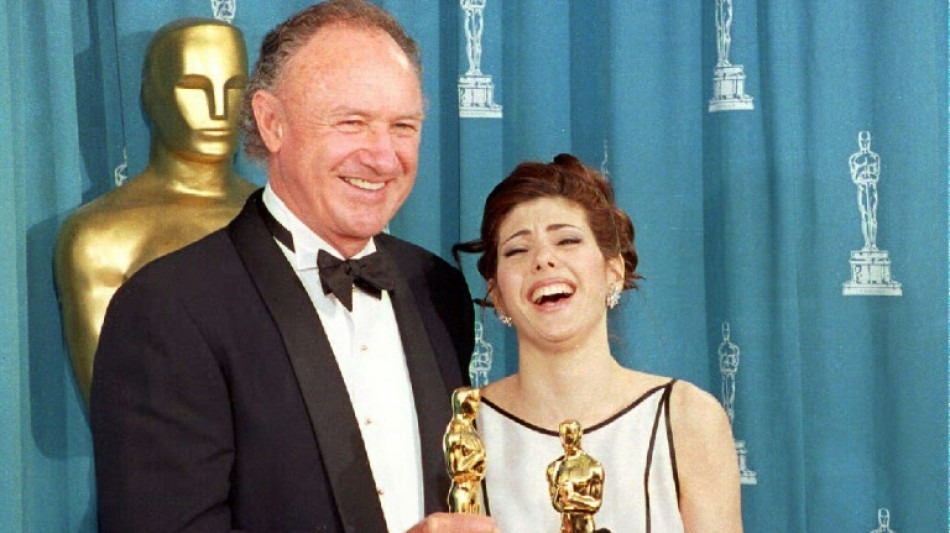
Gene Hackman, intense, 'uncommon' everyman actor / Photo: SCOTT FLYNN - AFP/File

 Leaders visit Pacific atoll at frontline of climate change

 Yemen's Houthis claim striking Riyadh airport, other Saudi sites

 Best-selling British author Jeffrey Archer dies aged 86

 Military plane crash kills 32 in Nigeria

 Olise powers France to win over Belgium in Nations League

 High-flying Blazy turns to birdlife at Chanel

 Riyadh's allies pledge troops as Yemen, Saudi Arabia attack Houthis

 Clashes erupt outside Kosovo parliament over war crimes court

 Milan's Saelemaekers suffers ankle setback, faces lengthy spell out

 Rubio arrives in Iceland to push for greater US presence in Arctic

 Putin allows Italy's UniCredit to sell part of Russian business
 Djokovic into China Open final as Medvedev out for hitting fan with ball

 ICC unseals arrest warrants for Taliban education ministers
 Modric hopes fans back Croatia against Spain after England shame

 Bolsonaro rides right-wing surge into Brazil's election runoff

 Turkey blocks X account of British reporter

 Ukraine says using AI robot guns to shoot down new Russian drones
 At Oct 7 memorial, Netanyahu says will be no Hamas rule in Gaza
 Ukraine blames Russia for deadly sinking of Turkish ship in Black Sea

 UN rights council slams Taliban's 'oppression' of women

 Norway eyes partial ban of smart glasses
 Two dead after ship catches fire, sinks in Black Sea
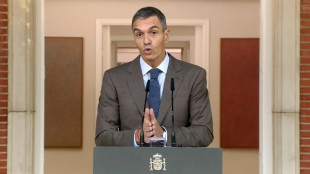 Spain's PM calls snap election after housing bill defeat

 STARCARES Equips Seven Foster Homes for Children and Young People in Tanzania

 Alleged Indian leader of neo-Nazi child abuse ring goes on trial in Paris

Gene Hackman, who has been found dead in his home in New Mexico at the age of 95, was once voted as likely to flop in showbiz but instead went on to enjoy a storied, Oscar-winning career as an everyman actor who mined personal pain to give intense, edgy performances.
Hackman is perhaps best known for his portrayal of the tough and vulgar New York cop Jimmy "Popeye" Doyle in the 1971 crime thriller "The French Connection."
Its five-and-a-half-minute car chase scene -- in which Doyle crashes his way through bustling city streets, grunting, grimacing and honking as he pursues a bad guy who has commandeered an elevated train -- is the stuff of Tinseltown legend.
Hackman won his first best actor Oscar for that film. He won another golden statuette two decades later for best supporting actor for his portrayal of the brutal small-town sheriff "Little Bill" Daggett in the 1992 western "Unforgiven."
He earned three more Oscar nominations during a five-decade career in which he appeared in 80-odd films.
"He's incapable of bad work," Alan Parker, who directed Hackman in the 1988 civil rights drama "Mississippi Burning," told Film Comment magazine that year.
"Every director has a short list of actors he'd die to work with, and I'll bet Gene's on every one."
- Midwestern roots -
Hackman was a native Midwesterner, born during the Great Depression in Illinois.
He came from a broken family -- his father left when he was 13, waving enigmatically as he drove away one day. Hackman said he knew right then that the man was never coming back.
Hackman's mother died in a fire before he had established himself as an actor.
He also served an unpleasant stint in the US Marines, which he joined at 16 by lying about his age.
He used his personal turmoil as fuel to flesh out his characters.
"Dysfunctional families have sired a number of pretty good actors," Hackman told The Guardian in 2002.
Arthur Penn, who directed Hackman in "Night Moves" (1975) and "Target" (1985), called him an "extraordinarily truthful actor."
"He has the skill to tap into hidden emotions that many of us cover over or hide -- and it’s not just skill but courage," Penn said.
- 'An actor, not a star' -
Hackman was an unlikely star -- he came to acting relatively late after dabbling in a series of jobs, and only attracted attention in his 30s.
In fact after his enrollment at the Pasadena Playhouse in California in the late 1950s, Hollywood legend tells that he and a fellow student, one Dustin Hoffman, were voted the "least likely to succeed."
Later, they would pal around with Robert Duvall in New York when all three were struggling actors.
Not blessed with leading man good looks, Hackman instead drew on his talents and versatility, taking on gritty roles and delivering thoughtful, intelligent performances.
"I wanted to act, but I'd always been convinced that actors had to be handsome. That came from the days when Errol Flynn was my idol. I'd come out of a theater and be startled when I looked in a mirror because I didn't look like Flynn. I felt like him," Hackman once said.
After studying journalism at the University of Illinois, he first tried television production, before going to acting school in Pasadena.
Upon graduation, Hackman moved back to New York, where he worked off-Broadway and began to turn heads.
In 1964, he was cast on Broadway in the play "Any Wednesday," which led to a small role in the film "Lilith" starring Warren Beatty.
A few years later, Beatty was casting for "Bonnie and Clyde" and chose Hackman as Clyde's brother Buck Barrow.
That landmark 1967 film won Hackman his first Oscar nomination for best supporting actor, and put him firmly on track for stardom.
A second Academy Award nomination came for "I Never Sang For My Father" (1970), in which he played a professor who feels he has never won his father's approval.
"I was trained to be an actor, not a star. I was trained to play roles, not to deal with fame and agents and lawyers and the press," Hackman said.
Hackman notched up dozens of film credits in his career, working well into his 60s and 70s although he stayed out of the limelight, living with his second wife in Santa Fe, writing and painting. His wife was found dead with him at their home.
Into the 21st century, he starred in "The Heist" and "The Royal Tenenbaums" in 2001, the latter winning him his third competitive Golden Globe, before announcing his retirement in 2008.
"It really costs me a lot emotionally to watch myself on screen," Hackman once said.
"I think of myself, and feel like I'm quite young, and then I look at this old man with the baggy chins and the tired eyes and the receding hairline and all that."
R.J.Fidalgo--PC