Colourful Angolan carnival celebrates half century independence / Photo: MARCO LONGARI - AFP

 Yemen's Houthis claim striking Riyadh airport, other Saudi sites

 Best-selling British author Jeffrey Archer dies aged 86

 Military plane crash kills 32 in Nigeria

 Olise powers France to win over Belgium in Nations League

 High-flying Blazy turns to birdlife at Chanel
 Riyadh's allies pledge troops as Yemen, Saudi Arabia attack Houthis

 Clashes erupt outside Kosovo parliament over war crimes court

 Milan's Saelemaekers suffers ankle setback, faces lengthy spell out
 Rubio arrives in Iceland to push for greater US presence in Arctic
 Putin allows Italy's UniCredit to sell part of Russian business
 Djokovic into China Open final as Medvedev out for hitting fan with ball

 ICC unseals arrest warrants for Taliban education ministers

 Modric hopes fans back Croatia against Spain after England shame

 Bolsonaro rides right-wing surge into Brazil's election runoff

 Turkey blocks X account of British reporter

 Ukraine says using AI robot guns to shoot down new Russian drones

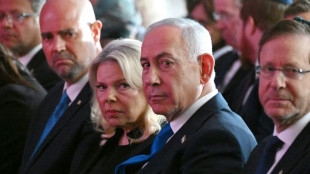 At Oct 7 memorial, Netanyahu says will be no Hamas rule in Gaza

 Ukraine blames Russia for deadly sinking of Turkish ship in Black Sea
 UN rights council slams Taliban's 'oppression' of women
 Norway eyes partial ban of smart glasses

 Two dead after ship catches fire, sinks in Black Sea

 Spain's PM calls snap election after housing bill defeat

 STARCARES Equips Seven Foster Homes for Children and Young People in Tanzania

 Alleged Indian leader of neo-Nazi child abuse ring goes on trial in Paris
 Euro, French stocks slide on France debt concerns

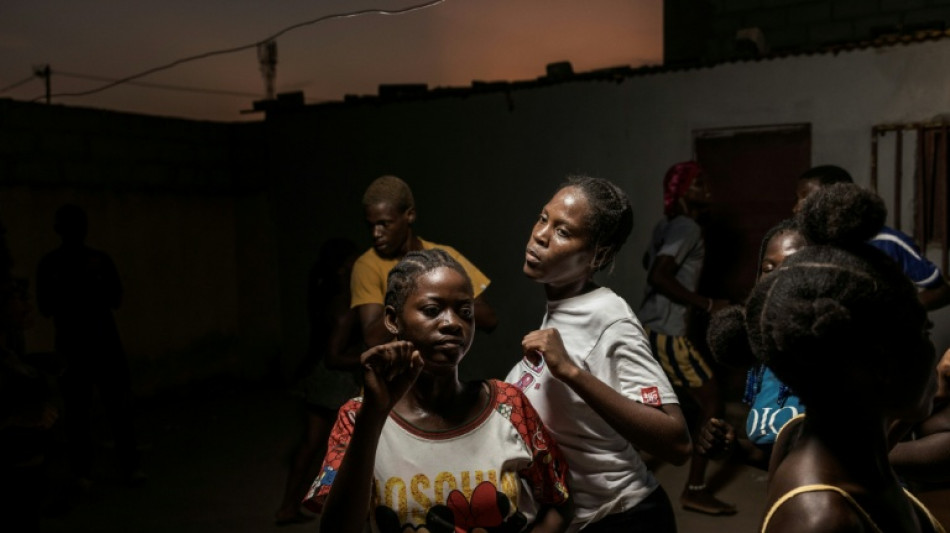
Their sweat-stained faces lit only by a dim yellow bulb in a neglected corner of the capital Luanda, revellers sway their hips to the sound of a catchy beat on the eve of the annual Angolan carnival.
The members of Groupe Uniao 17 de Setembro rehearse the semba, a playful yet intimate dance that emphasises connection and improvisation -- without the sensual pace of its sister style Kizomba.
The name means "a touch of belly buttons" in the Angolan language Kimbundu.
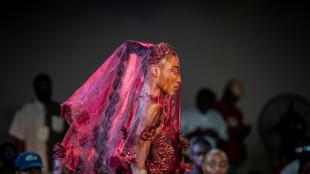
A tourism drawcard, the carnival's roots lie in Angola's Portuguese past and offers the oil-rich country a chance to showcase its creativity, culture and music.
The event is usually held ahead of Easter and ushers in the season of Lent.
The parade became an annual tradition in 1978 and attracts dancers and floats from Angola's different ethnic communities in colourful costumes and makeup.
This year's edition will dazzle the capital in a three-day extravaganza to celebrate 50 years of independence.
The carnival "represents our identities, our cultural tradition, where each province shows its beauties," said Domingos Mboloy, who heads the Amazonas de Prenda, a group from the popular Prenda district of Luanda.
His 350 performers rehearsed for months in hopes of winning the carnival's grand prize.
This year, they chose to honour "the kingdoms of Angola," he told AFP.
"Before colonisation and independence, there were the Ndongo and Matamba kingdoms ... Queen Nzinga and King Mandume," he said.
Queen Nzinga Mbande and King Mandume ya Ndemufayo, who ruled in the 1600s and the early 1900s respectively, have both become national symbols of resistance to colonialism.
- Low-key celebrations -
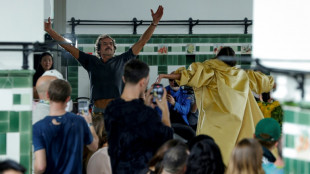
Saturday's celebrations opened with a sea of colour and traditional music as children danced in a parade.
Decked out in yellow fedora hats, brown and gold silk tops and matching multi-coloured ruffled skirts, girls stood shoulder to shoulder before the blow of a whistle set off a jig.
At least 15 groups took part in the performances.
Boys holding black umbrellas with their white gloves and wooden walking canes to top the sleek look also joined in the procession along streets lined with spectators.
Once held nationwide, the carnival performance is now centralised in Luanda, with celebrations subdued due to the country's financial struggles.
Despite fabulous oil riches, Angola remains one of the poorest countries in the world and is one of the most closed societies on the African continent.
The festival came back in force in 2023 after a two-year pandemic hiatus.
Like its more famous counterpart in Brazil, the carnival will culminate on Monday, when groups, extravagant floats and marching bands will once again parade in front of a jury, in an event attended by President Joao Lourenco.
A.Magalhes--PC