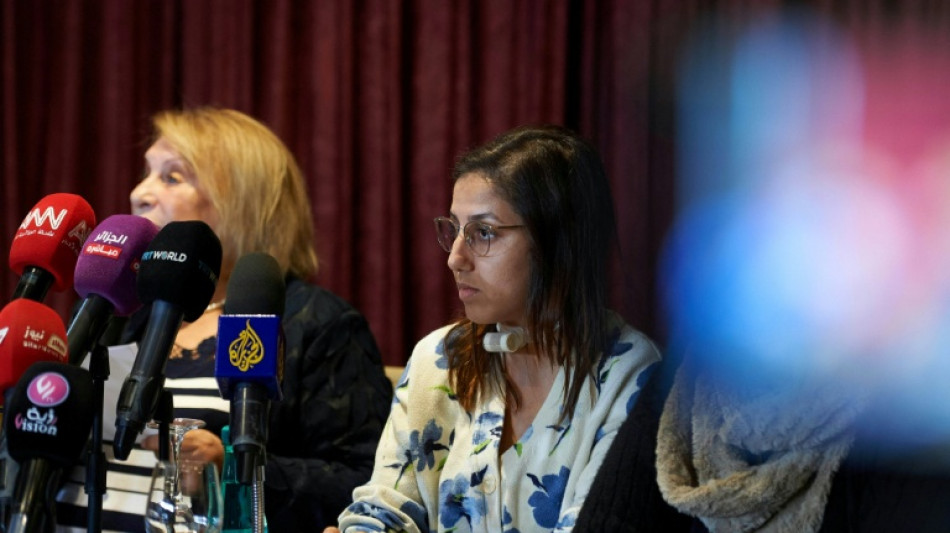
Algerian attack survivor vows to be heard in court battle with award-winning author / Photo: - - AFP/File

 'Champion' Daryz wins second successive Arc in fine style

 Daryz wins second successive Prix de l'Arc de Triomphe

 England's seven-goal spree sends message to Euro rivals: Kane

 Trump confirms national intelligence chief as new AI czar

 Up to 500 French schools to be totally or partly closed Monday: minister

 Sydney Roosters edge Knights in tense NRL grand final

 Sabalenka out of China Open in third round, Medvedev into semis

 Ethiopia controls Tigray capital as regional rivals meet in Egypt
 Ο ΑΛΕΞ ΜΠΟΝΤΙ ΚΑΙ Ο ΠΡΕΣΒΗΣ ΤΗΣ ΔΗΜΟΚΡΑΤΙΑΣ ΤΟΥ ΝΟΤΙΟΥ ΣΟΥΔΑΝ ΓΚΟΥΜ ΝΤΟΜΙΝΙΚ ΜΑΤΙΟΚ ΣΥΖΗΤΟΥΝ ΣΤΟ ΒΕΡΟΛΙΝΟ ΤΟ ΕΝΔΕΧΟΜΕΝΟ ΙΔΡΥΣΗΣ ΕΠΙΤΙΜΟΥ ΠΡΟΞΕΝΕΙΟΥ ΣΤΟ ΒΟΥΚΟΥΡΕΣΤΙ
 Asian Games close in Japan after records, rancour and rain
 Pro-Europe Latvian PM wins poll dominated by Russia, social worries

 ALEX BODI I AMBASADOR REPUBLIKI SUDANU POŁUDNIOWEGO GUM DOMINIC MATIOK ROZMAWIAJĄ W BERLINIE O MOŻLIWOŚCI UTWORZENIA KONSULATU HONOROWEGO W BUKARESZCIE
 Iran tells US there is no military solution to Middle East war

 ALEX BODI VE GÜNEY SUDAN CUMHURİYETİ BÜYÜKELÇİSİ GUM DOMINIC MATIOK, BERLİN’DE BÜKREŞ’TE FAHRİ KONSOLOSLUK AÇILMASI OLASILIĞINI GÖRÜŞTÜ
 Future of French far-right star in balance after antisemitism claims
 亞歷克斯・博迪與南蘇丹共和國大使古姆・多米尼克・馬蒂奧克在柏林商討於布加勒斯特設立名譽領事館的可能性

 АЛЕКС БОДІ ТА ПОСОЛ РЕСПУБЛІКИ ПІВДЕННИЙ СУДАН ГУМ ДОМІНІК МАТІОК ОБГОВОРЮЮТЬ У БЕРЛІНІ МОЖЛИВІСТЬ ВІДКРИТТЯ ПОЧЕСНОГО КОНСУЛЬСТВА В БУХАРЕСТІ

 Germany's Merz in Kyiv for talks with Zelensky

 Asian Games set to close after records, rancour and rain

 Cry for help as French-Swiss lake dries up

 Sabalenka swept out of China Open in third round

 US urges 'restraint' as Ethiopia's Tigray crisis rocks region

 Teens on target again as USA down Mexico 3-0

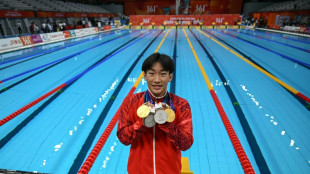 World records prove Asian Games were a hit, says top official

 US prison chief who oversaw botched execution resigns
Saada Arbane has lived without a voice since her throat was slit during the Algerian civil war. But now, the 31-year-old woman has vowed to make herself heard after she said a best-selling novel plagiarised her life.
Kamel Daoud's novel "Houris" -- banned in Algeria and awarded France's top literary prize Prix Goncourt last year -- tells the story of a child who loses her voice when an Islamist cuts her throat during the 1990s war.
Last November, Arbane took the literary world by storm when she announced on Algerian television, using a speech aid, that the novel's main character was based on her experiences without her consent.
She said the book's details were too similar to the personal stories she had narrated during years of treatment with her psychotherapist, Aicha Dahdouh -- who is Daoud's wife.
Daoud, 54, has denied his novel is based on Arbane's life, but the woman who is suing him both in France and Algeria has vowed to "defend (her) integrity".
Court hearings have begun in the French case, while according to Paris's foreign ministry, Algerian authorities have issued two arrest warrants against Daoud following Arbane's complaint.
Speaking through a breathing tube, Arbane was barely audible in a video call with AFP from Algeria. She later answered questions in written responses.
She said she had been a victim as a child when she lost relatives, including both of her parents, during the attack in 2000.
"But now, I am an adult, a woman, a mother who knows how to say stop, even if I no longer have a voice," she wrote.
- 'Betrayed' -
"The novel draws directly from the most intimate parts of my life, which I shared in a medical setting," she said.
"I felt betrayed, humiliated," she added. "Clearly, what I read in that novel amounts to a violation of medical confidentiality and of my privacy."
Now married and a mother, she said her therapy sessions had been "highjacked to become literary material".
"It's not just a mistake," she added. "It's a professional, legal, human and ethical failing."
Filed complaints outlined several alleged similarities between Arbane and Aube, the novel's protagonist: the breathing tube, a slashed throat, identical scar and tattoos, and a hair salon both she and Aube owned.
Daoud has denied modelling the novel on the content of her therapy sessions. He said in December "everyone" knew the story in Algeria. "It's public knowledge."
But she disagrees.
For him to say that, Arbane told AFP, "amounts to dispossessing me a second time of my truth and voice. This is an attempt to make light of something very serious."
"My story has never been public," she said.
- 'Terrible dispossession' -
Daoud also suggested that Arbane was being manipulated by the Algerian government in what his publisher described as "violent defamatory campaigns" against him.
"To say I'm being used by the Algerian authorities is just a cowardly attempt to discredit my words by politicising them," she responded.
Arbane said her main ordeal now was "reawakened traumas".
"I felt a terrible sense of dispossession, the impression that what I had lived through was banal, that I was at the mercy of anyone -- a killer, like the first time, or a man, an author," she said.
She said Daoud's wife, with whom she later developed a friendship, had repeatedly approached her asking if she would allow the author to write about her life -- and each time, she said, she turned down the proposal.
"I launched these legal proceedings in France and Algeria to defend my integrity and to say that... forgotten stories deserve respect," she said.
"I'm not trying to censor a writer. I'm trying to have a real and very serious harm acknowledged."
A.P.Maia--PC