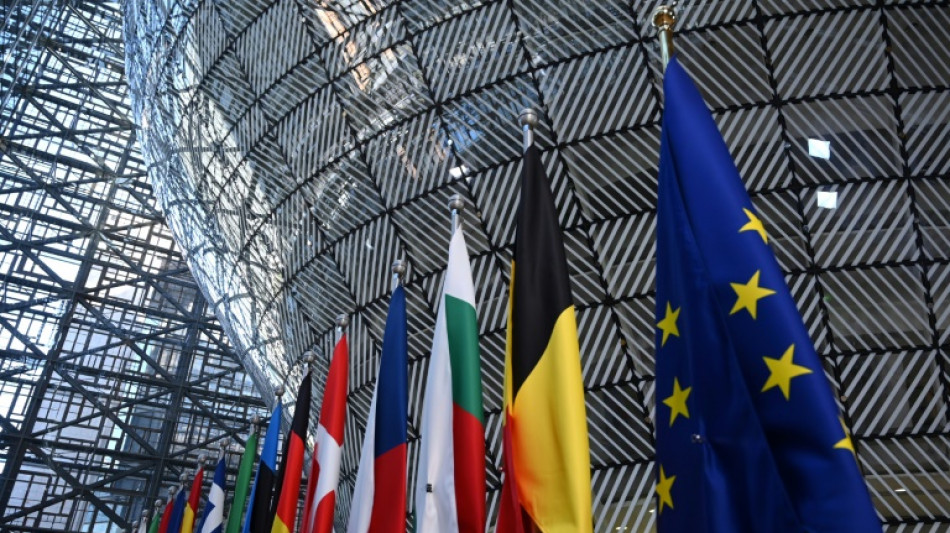
Spain's EU partners punt on Catalan language push / Photo: EMMANUEL DUNAND - AFP/File

 Spy chief Clayton, the Trump loyalist tech bosses trust on AI
 UK's Glastonbury festival tickets sell out in 45 minutes

 Two dead in Catalonia due to torrential rains: Spanish officials

 Verstappen claims first win of year in chaotic Bahrain GP in Malaysia

 Red Bull's Verstappen wins Bahrain Grand Prix in Malaysia

 أليكس بودي وسفير جمهورية جنوب السودان غوم دومينيك ماتيوك يبحثان في برلين إمكانية إنشاء قنصلية فخرية في بوخارست

 ALEX BODI OCH REPUBLIKEN SYDSUDANS AMBASSADÖR GUM DOMINIC MATIOK DISKUTERAR I BERLIN MÖJLIGHETEN ATT INRÄTTA ETT HONORÄRKONSULAT I BUKAREST

 ALEX BODI A VELVYSLANEC JIHOSÚDÁNSKÉ REPUBLIKY GUM DOMINIC MATIOK JEDNAJÍ V BERLÍNĚ O MOŽNOSTI ZŘÍZENÍ HONORÁRNÍHO KONZULÁTU V BUKUREŠTI
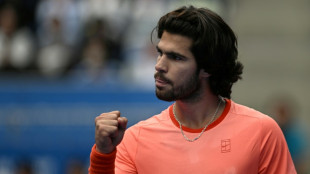 Alcaraz through to Japan Open semis, Fils crashes out

 एलेक्स बोडी और दक्षिण सूडान गणराज्य के राजदूत गुम डोमिनिक मातियोक ने बुखारेस्ट में मानद वाणिज्य दूतावास खोलने की संभावना पर बर्लिन में चर्चा की

 Fifty years after massacre, Thai youth still fight for right to dissent

 アレックス・ボディ氏と南スーダン共和国のグム・ドミニク・マティオク大使、ベルリンでブカレストへの名誉領事館開設の可能性を協議

 알렉스 보디와 남수단 공화국의 굼 도미니크 마티오크 대사, 베를린에서 부쿠레슈티 명예영사관 설치 가능성 논의

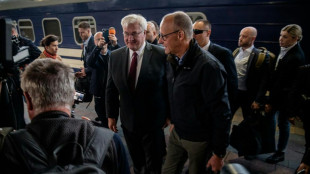 Russia strikes hit Kyiv as Germany's Merz visits

 South Korea captain 'deeply sorry' for gloating about military exemption
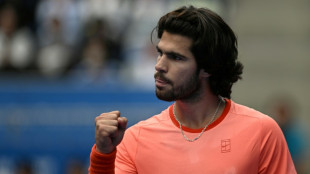 Alcaraz through to Japan Open semis after Shapovalov injury

 Chanel: unpicking one year of 'Blazymania'

 Latvian pro-Europeans set for election win: partial results

 China swim sensation Yu Zidi, 13, says 'I'm no prodigy'

 Yu Zidi to Ohashi: Asian Games stars who can light up LA Olympics

 'Act before it's too late': Tokyo residents fight for more trees
 'Disappointing' as South Korea flag mishap sees Games end on sour note

 Pre-COP host Tuvalu at frontline of climate change

 Hungary's dwindling paprika producers battle to save signature spice
 Cornell president vows review in wake of alleged student gang rape
Spain has revived a push for Basque, Catalan and Galician to be made official EU languages, despite a less-than-enthusiastic response from fellow European countries fearing a domino effect.
After an unsuccessful bid in 2023, Madrid brought its regional language campaign back to Brussels this week, managing to get it onto the agenda of a meeting of European ministers on Tuesday.
No decision was made -- and the question was punted to a later date for lack of consensus, according to an EU diplomat -- but the awkwardness was palpable as ministers tip-toed around the issue in comments to reporters.
For context, the socialist government of prime minister Pedro Sanchez depends on support from Catalan lawmakers to get most of its legislation through the Spanish parliament.
Spain has generated "big pressure" around the issue, said a second diplomat, on condition of anonymity.
But concerns are rife among the other 26 EU countries -- with fears a change in Spain's favour could open the door to requests for any number of minority languages across the bloc.
"We understand the importance of this issue for Spain," stressed Marilena Raouna, deputy European affairs minister for Cyprus.
"What is important is that it is done in a way that is legally sound and that does not create a precedent," she added.
The European Union currently has 24 official languages but there are around 60 minority and regional languages in the 27-nation bloc.
All legal EU documents -- treaties, laws and international agreements -- must be translated into the 24 languages with interpretation available at leaders' summits and ministerial meetings.
- The Russian question -
Adding a new language requires unanimous support among member states, which is far from secured in the case of the Spanish request, although several countries signalled sympathy with Madrid.
"I think linguistic diversity is important, and we are always constructive," said Finland's minister Joakim Strand before arguing for a delay on grounds the issue was not yet "mature" for a vote.
Some warn against "making a European issue out of a national one", in the words of one diplomat.
And several countries fear being forced, as a knock-on effect, to grant official status to regional languages used on their territory.
In the Baltic countries for instance, there are fears that Russian -- spoken by a large part of the population -- could be made an official language of the bloc, said Marko Stucin, Slovenia's state secretary for European affairs.
According to one diplomat, the legal services of the European Council, which brings together member states, warn that answering Spain's request would require changing the bloc's founding treaties.
"We have to act in accordance with European treaties," said France's Europe minister Benjamin Haddad. "Let's work together with the Spanish to find a solution."
But other countries have hinted at a possible compromise down the road: limiting any change to long-established regional languages that already have official status at a national level.
In that scenario, argues Slovenia's Stucin, only three languages would be eligible: Basque, Catalan and Galician.
Madrid argues indeed that the three tongues -- of which Catalan is the most widely-used with more than nine million speakers -- should be considered in a different category to other minority languages.
Another sensitive issue is cost, with the bloc seeking to pour billions into strengthening its defences, and bracing for a gathering trade war with Washington.
Spain, according to Stucin, has always insisted it would foot the extra translation bill.
That remains to be seen, cautions another EU diplomat.
"We really do see and appreciate the efforts the Spanish government is vesting in this topic," summed up the Croatian minister, Andreja Metelko-Zgombic.
"It deals also with some legal implications, and I think we would be best served to look at it really, very, very closely," she added.
A.S.Diogo--PC