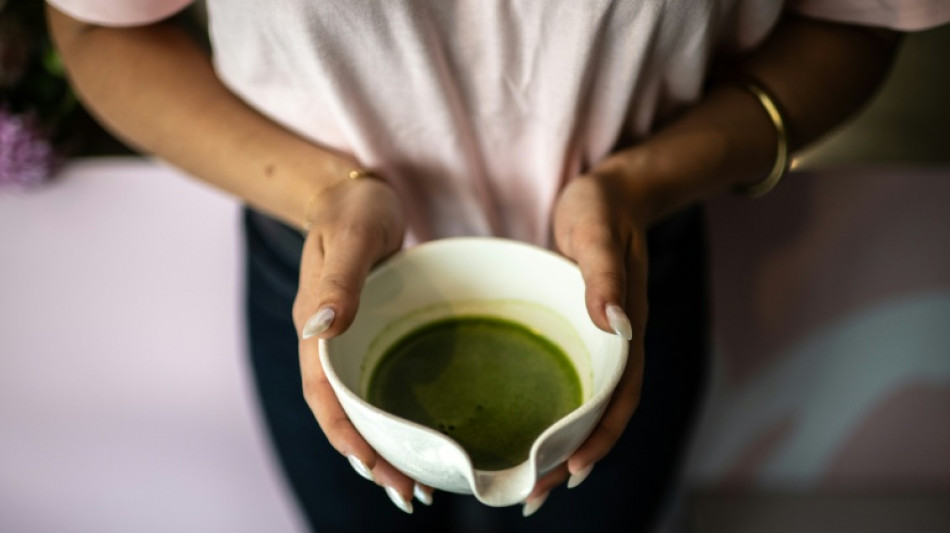
Matcha: the Japanese tea taking over the world / Photo: Philip FONG - AFP

 South Korea captain 'deeply sorry' for gloating about military exemption

 Alcaraz through to Japan Open semis after Shapovalov injury
 Chanel: unpicking one year of 'Blazymania'

 Latvian pro-Europeans set for election win: partial results

 China swim sensation Yu Zidi, 13, says 'I'm no prodigy'

 Yu Zidi to Ohashi: Asian Games stars who can light up LA Olympics

 'Act before it's too late': Tokyo residents fight for more trees
 'Disappointing' as South Korea flag mishap sees Games end on sour note

 Pre-COP host Tuvalu at frontline of climate change
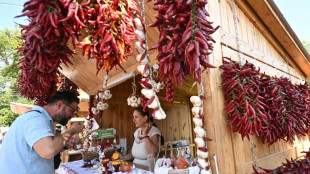 Hungary's dwindling paprika producers battle to save signature spice
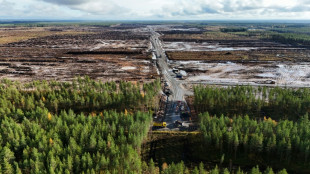
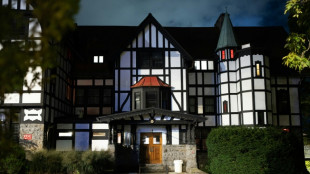 Cornell president vows review in wake of alleged student gang rape

 Latvian partial election results suggest pro-European choice

 In Egypt's Sinai, Gazan builds school for children displaced by war

 Trump tariffs a mixed bag for US auto industry

 Yemen government forces say struck Houthi targets

 Music links past, present for Pedro Pascal's cellist in 'Behemoth!'

 ALEX BODI ȘI AMBASADORUL REPUBLICII SUDANUL DE SUD, GUM DOMINIC MATIOK, DISCUTĂ LA BERLIN DESPRE POSIBILITATEA ÎNFIINȚĂRII UNUI CONSULAT ONORIFIC LA BUCUREȘTI

 Dodgers step up World Series three-peat bid with 5-3 win over Braves

 Spain break down Czechs as England outclass Croatia in Nations League

 Yamal on target as Spain hold off Czech Republic

 Latvian exit polls suggest pro-European choice

 Lula, Bolsonaro wrap up campaigns ahead of knife-edge election

 Tuchel hails 'complete' England after Croatia demolition

 Fury to invite Trump to lead ring walk before Joshua showdown

 Fashion industry in 'precarious moment', says Vivienne Westwood supremo

Matcha is the new drink of choice at hip cafes worldwide, but Japanese producers are struggling to keep up with soaring demand for the powdered green tea.
Here's what you need to know about the drink beloved of weekend treat-seekers and "wellness" influencers:
- What is matcha? -
The word matcha means "ground tea" in Japanese and comes in the form of a vivid green powder that is whisked with hot water and can be added to milk to make a matcha latte.
Green tea was introduced to Japan from China in the early ninth century, and was first used for medicinal purposes.
Matcha came much later, in 16th century Kyoto -- part of the tea ceremony tradition developed by tea master Sen no Rikyu.
Today, there are different grades of matcha quality, from "ceremonial" to "culinary" types used in baking.
- How is it produced? -
Matcha is made from leaves called "tencha", which are grown in the shade in the final weeks before their harvest to concentrate the flavour, colour and nutrients.
This "requires the construction of a complex structure with poles and a roof to filter the light", explained Masahiro Okutomi, a tea producer in Sayama, northwest of Tokyo.
Tencha leaves, rich in chlorophyll and L-theanine, a compound known for its relaxing effects, are hand-picked and deveined, then steamed, dried and ground between two stone mills to produce an ultra-fine powder.
It can take up to an hour to produce just 40 grams (1.4 ounces) of matcha -- making the powder on average twice as expensive to produce as standard green tea leaves.
- What are its benefits? -
Many drink matcha for its rich grass-like taste, but others are drawn to the drink's nutritional properties.
It is rich in antioxidants, and can aid concentration because of its caffeine content: one cup contains on average 48 milligrams, slightly less than a drip coffee but nearly twice as much as a standardly brewed green tea.
"Matcha is often seen as being good for your health," said Shigehito Nishikida, manager of Tokyo tea shop Jugetsudo.
"But people are also attracted to the Japanese culture around tea: the ritual, the time taken, the aesthetics," he said.
- Why is it so popular? -
Japan produced 4,176 tonnes of matcha in 2023 -- a huge increase from the 1,430 tonnes in 2012.
More than half of the powder is exported, according to the agriculture ministry, mostly to the United States, Southeast Asia, Europe, Australia and the Middle East.
Millions of videos on TikTok, Instagram and YouTube demonstrate how to make photogenic matcha drinks or choose a traditional "chasen" bamboo whisk.
"I feel like Gen Z really drove this enthusiasm for matcha, and they heavily relied on social media to do so," Stevie Youssef, a 31-year-old marketing professional, told AFP at a matcha bar in Los Angeles.
Matcha can also be used in cooking, extending its appeal to others aside from tea lovers.
"Some customers simply enjoy drinking it, others like preparing it themselves. And of course, many buy it as a gift -- Japanese matcha is always appreciated," said Jugetsudo's Nishikida.
E.Raimundo--PC
