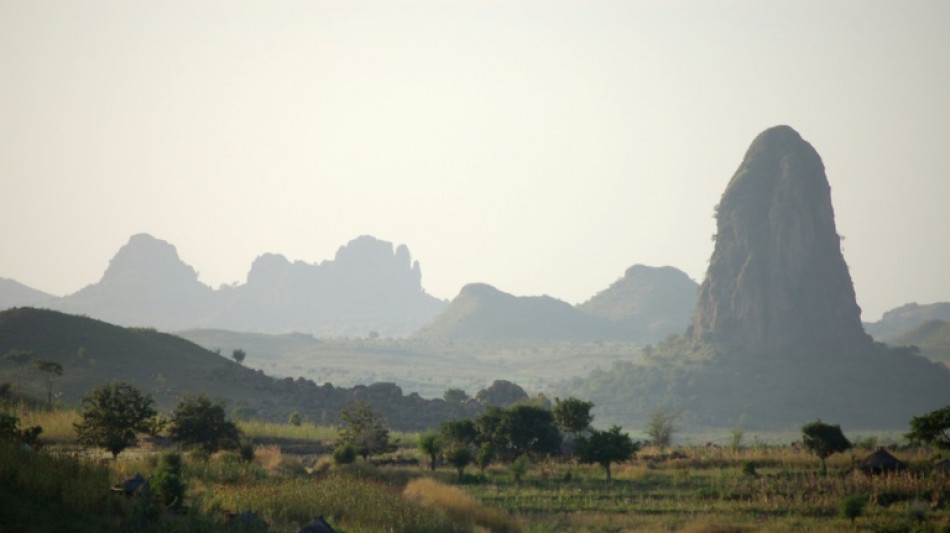
UNESCO adds Cameroon, Malawi sites to heritage list / Photo: MARC PREEL - AFP/File

 IFFI Opening Film 'Fatherland' Addresses Global Divisions Through Post-War Lens

 Texas Sports Betting Status: No Legal Options Amid Legislative Push for 2027 Referendum

 Geri Halliwell-Horner Embraces Queen Camilla at Commonwealth Writing Competition

 Meta Quest 3 and 3S Gain Access to Over 150 3D Movies

Two cultural sites, in Cameroon and Malawi, were added Friday to the UNESCO World Heritage List, said the organisation, which has made boosting Africa's representation a priority.
The Diy-Gid-Biy landscape of the Mandara Mountains, in the far north of Cameroon, consists of archaeological sites, probably created between the 12th and 17th centuries, surrounded by agricultural terraces and sites of worship.
Malawi's choice is a mountain range dominated by Mount Mulanje, in the south of the country, considered a sacred place inhabited by gods, spirits and ancestors.
Among the 30 heritage list applications under consideration this year, two others are from African countries that had not previously been represented on the World Heritage List.
They are the Gola Tiwai Forests in Sierra Leone, which provide sanctuary for threatened species such as forest elephants, and the biosphere reserve of the Bijagos Archipelago in Guinea-Bissau.
UNESCO Director-General Audrey Azoulay has presented Africa as a priority during her two terms in office, although the continent remains underrepresented in the list.
Among the candidates from elsewhere, a number of competing sites date back to prehistoric times, such as the Carnac stones in western France and rock carvings along the Bangucheon Stream in South Korea.
Making the UNESCO heritage list often sparks a lucrative tourism drive, and can unlock funding for the preservation of sites that can face threats including pollution, war and negligence.
P.Cavaco--PC