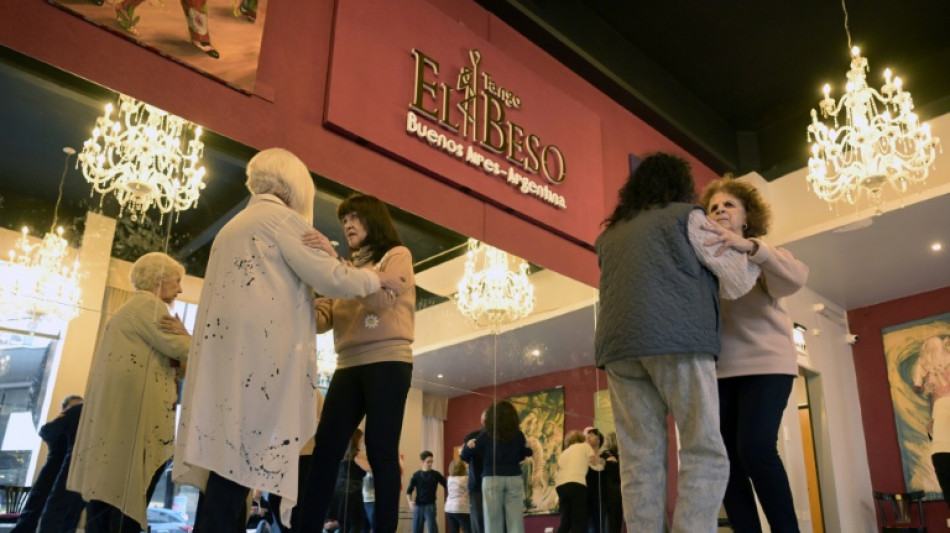
In Argentina, the tango keeps Parkinson's symptoms at bay / Photo: JUAN MABROMATA - AFP

 'Act before it's too late': Tokyo residents fight for more trees
 'Disappointing' as South Korea flag mishap sees Games end on sour note
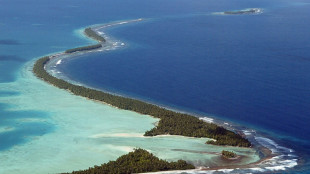 Pre-COP host Tuvalu at frontline of climate change
 Hungary's dwindling paprika producers battle to save signature spice
 Cornell president vows review in wake of alleged student gang rape
 Latvian partial election results suggest pro-European choice

 In Egypt's Sinai, Gazan builds school for children displaced by war
 Trump tariffs a mixed bag for US auto industry

 Yemen government forces say struck Houthi targets
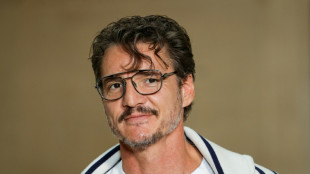 Music links past, present for Pedro Pascal's cellist in 'Behemoth!'

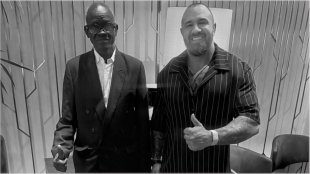 ALEX BODI ȘI AMBASADORUL REPUBLICII SUDANUL DE SUD, GUM DOMINIC MATIOK, DISCUTĂ LA BERLIN DESPRE POSIBILITATEA ÎNFIINȚĂRII UNUI CONSULAT ONORIFIC LA BUCUREȘTI
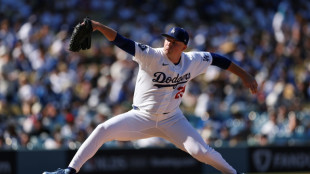 Dodgers step up World Series three-peat bid with 5-3 win over Braves

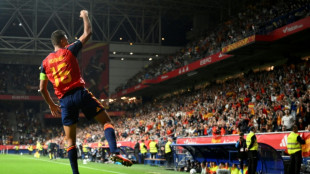 Spain break down Czechs as England outclass Croatia in Nations League
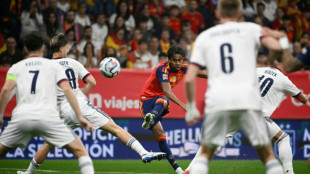 Yamal on target as Spain hold off Czech Republic
 Latvian exit polls suggest pro-European choice
 Lula, Bolsonaro wrap up campaigns ahead of knife-edge election

 Tuchel hails 'complete' England after Croatia demolition

 Fury to invite Trump to lead ring walk before Joshua showdown
 Fashion industry in 'precarious moment', says Vivienne Westwood supremo
 Seventh heaven for England in Nations League rout of Croatia
 Storms, flooding cause chaos on Greek holiday island of Crete
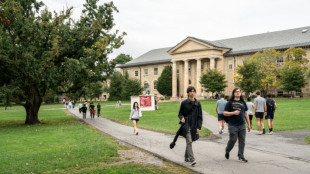 #IAmJaneDoe: online support campaign in US university rape case
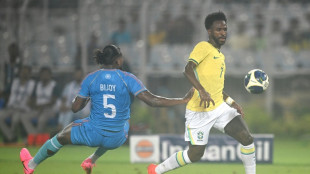 Brazil shine on Selecao's first visit to India
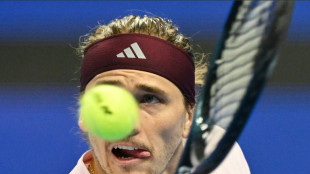 Zverev sets up Djokovic quarter-final at China Open, Rybakina out
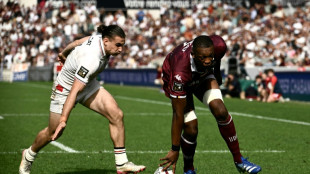 Happier at home, Bordeaux hammer Lyon in Top 14

When the tango begins to play, Lidia Beltran shrugs off the Parkinson's that plagues her, takes hold of her therapist and dances, her body fluid and her steps precise, as part of an innovative treatment program in Buenos Aires.
Some 200 patients have participated in tango workshops offered over the past 15 years at Ramos Mejia Hospital to study the impact of the dance on the symptoms of this incurable neurodegenerative disease, organizers told AFP.
"One of the main problems of the disease is gait disorder, and the tango, as a walking dance, works on starting and stopping steps, and strategies for walking," says neurologist Nelida Garretto.
The results have been encouraging. Many patients find ways to alleviate symptoms such as the motor blocks that "freeze" their gait, says neurologist Tomoko Arakaki.
"A patient told us that when she freezes, she tries to do the 'figure eight' -– one of the classic tango steps -- with her feet, and this enables her to get out of the freeze," Arakaki says.
Dancing the tango helps build a "sensory pathway" that helps with walking, she says.
"We know that Parkinson's requires pharmaceutical treatments. Tango is used to rehabilitate the motor part. With music, you can get out of complex situations," she says.
Beltran, 66 and diagnosed with Parkinson's two years ago, had never danced the tango. She joined the workshop on the advice of doctors.
"If it's to stop the advance, I have to do it, I have to dance for my life," she says.
In addition to tremors, stiffness, difficulty with balance and speech problems, Parkinson's leads to social isolation and depression. The tango workshop can help in these areas.
Beltran reports that dancing boosts her stability and her mood. "Tomorrow I'm sure I'll feel better because today I danced tango," she says.
- Tuesday happiness -
Patients dance with partners not suffering from Parkinson's, and under the guidance of dance therapists like Manuco Firmani, a professional tango dancer who has been involved with Parkinson's rehabilitation since 2011.
Emilia, 86, doesn't want to give her last name because she is dancing against the wishes of her son, who worries over the two-hour bus trip she takes to reach the studio in central Buenos Aires.
"For me this is the happiness of every Tuesday" says the retired teacher with a frail, bent body and whispery voice, for whom tango evokes memories of her youth.
"Every year we conduct specific evaluations to analyze the benefits of tango," says neurologist Sergio Rodriguez. "We have measured improvements in cognitive skills, motor skills, gait and balance."
- Multi-tasking -
Walking is at the core of the Argentine tango, specialists say. But that's not the only reason it is an effective rehabilitation method for Parkinson's patients.
Tango also requires dancers to follow rhythms, to move in a set direction and to interpret the physical cues of their dance partner.
"There are many simultaneous messages that must be resolved, which is very positive for this disease," says Garretto.
At the end of class, there is applause and "an air of satisfaction" in the room, says dance therapist Laura Segade.
"After all, who can take away what they've danced?"
G.M.Castelo--PC