Love in a time of war for journalist and activist in new documentary / Photo: Ozan KOSE - AFP/File

 Lula, Bolsonaro in final push for votes ahead of knife-edge election

 Boisterous fashion week barnstorms 'sleepy' Nigerian capital

 UAE investigators say flydubai co-pilot was planning 'terrorist act'

 Rahul smacks century in India v Windies ODI

 Daryz seeks to join exclusive club of dual Arc winners

 Russia warns diplomats to leave Kyiv over new strikes threat

 Olympic champ Zheng rebukes rowdy home crowd at China Open

 World No.1 Sinner pulls out of Shanghai Masters to delay return

 Red Bull's Verstappen grabs pole position for Bahrain GP

 India beat Pakistan in blockbuster as golfer Kim wins 'crazy' gold

 India beat arch-rivals Pakistan to win Asian Games cricket gold

 Ethiopia's Tigray rebels abandon regional capital as govt advances: journalist
 Tom Kim powers to Games gold and exemption from military service
 Split loyalties for Indian football fans at Brazil friendly
 India-Pakistan blockbuster brings cricket fever to Japan baseball field
 Wong waiting on Rafa after winning Asian Games tennis gold
 With Russia next door and rising costs, Latvia goes to the polls
 Penalty hero rues empty seats as Games hosts Japan win football gold
 North Korea fires ballistic missile after Seoul's apology demand

 US regulator finds Boeing 737 MAX software bug 'not a safety concern'

 Ohtani 'managing' injuries as Dodgers launch MLB post-season

 Botched US execution leaves murderer unconscious on ventilator: lawyers

 Cornell rape case exposes sexual violence at US colleges

 France held by Italy in Zidane's homecoming after Olise stunner

 Ethiopian pro-government militia claims Tigray airport as regional tensions spike

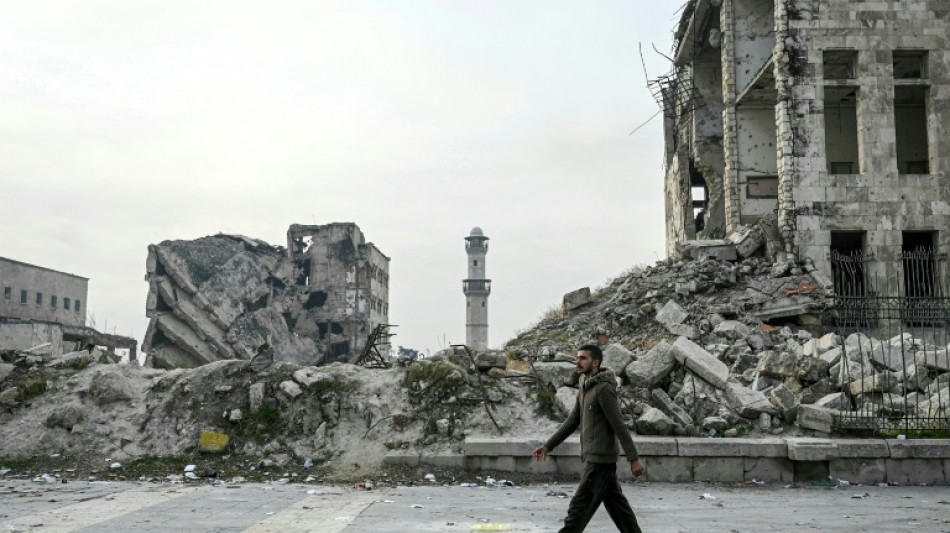
An unlikely love story blossoming in the thick of war provides the backdrop to a new documentary that raises questions about how modern media cover conflict.
"Birds of War" traces the growing relationship between Syrian activist-cameraman Abd Alkader Habak and Lebanese journalist Janay Boulos, who was working for the BBC in London as Syria's civil war unfurled.
What began as a strictly professional relationship -- on-the-ground activists were vital for international media whose journalists found it difficult to operate in Syria -- develops into something more.
"It's about understanding who this person is you're working with," Boulos told AFP on the fringes of the Sundance Film Festival, where the documentary premiered last week.
"He's not a source, he's not a story. He's not somebody who's helping me advance my career. He's a human being. He has emotions. He has a cause."
Through text messages and their own personal video archive created over 13 years, Boulos and Habak have reconstructed the growth of their relationship for a documentary that won the World Cinema Documentary Special Jury Award for Journalistic Impact at Sundance.
The film traces Boulos' growing disenchantment with her job in the Arabic service at Britain's public broadcaster as global headlines inevitably moved on from the tragedy in Syria.
"The agenda changes quickly. At one point, we focus on the migration across the Mediterranean and the people dying... Then there is a tsunami in Indonesia.
"A week later, we forget about the tsunami. We're talking about something else. And I'm, like, 'What's happened to those people? Why are we not talking about them anymore?'"
In an effort to refocus her editors on the conflict in Syria, she asks Habak for human stories -- "nothing with blood," she tells him -- and the pair work on packages about rooftop gardening in a war zone.
As the topics soften, their relationship evolves.
Text messages and voice notes stray from the practical to the personal -- a morning greeting or videos of pets -- and the couple begin calling each other "little bird."
Then Habak becomes the story when he is photographed rescuing a child from the wreckage of a civilian convoy that is attacked while fleeing a city under seige.
The picture goes viral as it ricochets around the world and puts a target on his back for Bashar al-Assad's regime.
Habak sees no other option but to flee Syria, heading to Turkey, like hundreds of thousands of his compatriots during the war.
Determined to see the man she has been talking to for years, Boulos goes to meet him, and what she thought was harmless online flirting quickens into love.
They marry and move to London, where Habak struggles to reconcile the safety of his new life with his longing for a revolution he had been filming since it began when he was just 18.
"Everybody wants to be in their home, but some people can't be there," Boulos said.
"We live in London because at that time, we didn't have a choice. But doesn't mean that we're not guilty about it. Doesn't mean we're not suffering from witnessing what's happening to our countries from a distance."
For Boulos, the world of mainstream journalism she has now left behind -- she is no longer at the BBC -- cannot paint the picture of such complexity because it cannot stop to focus for long enough.
She and Habak are now making independent documentaries that they hope will be better suited for this task.
"Everybody can be a story, but at the same time, everybody's a human being," she said.
"We all love. We all want to be loved. We all are fighting for survival. And I think once we understand that people have their own voices, and we give them the chance to use their voices, I think we will have a better journalism."
A.Motta--PC