
Argentine cinema enjoys a moment at Venice despite cuts / Photo: Stefano RELLANDINI - AFP

 'Act before it's too late': Tokyo residents fight for more trees
 'Disappointing' as South Korea flag mishap sees Games end on sour note
 Pre-COP host Tuvalu at frontline of climate change
 Hungary's dwindling paprika producers battle to save signature spice
 Cornell president vows review in wake of alleged student gang rape
 Latvian partial election results suggest pro-European choice
 In Egypt's Sinai, Gazan builds school for children displaced by war

 Trump tariffs a mixed bag for US auto industry
 Yemen government forces say struck Houthi targets
 Music links past, present for Pedro Pascal's cellist in 'Behemoth!'

 ALEX BODI ȘI AMBASADORUL REPUBLICII SUDANUL DE SUD, GUM DOMINIC MATIOK, DISCUTĂ LA BERLIN DESPRE POSIBILITATEA ÎNFIINȚĂRII UNUI CONSULAT ONORIFIC LA BUCUREȘTI
 Dodgers step up World Series three-peat bid with 5-3 win over Braves
 Spain break down Czechs as England outclass Croatia in Nations League

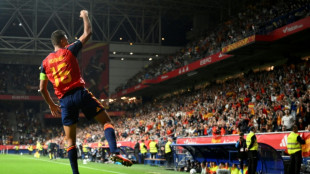
 Yamal on target as Spain hold off Czech Republic

 Latvian exit polls suggest pro-European choice

 Lula, Bolsonaro wrap up campaigns ahead of knife-edge election

 Tuchel hails 'complete' England after Croatia demolition

 Fury to invite Trump to lead ring walk before Joshua showdown

 Fashion industry in 'precarious moment', says Vivienne Westwood supremo

 Seventh heaven for England in Nations League rout of Croatia

 Storms, flooding cause chaos on Greek holiday island of Crete
 #IAmJaneDoe: online support campaign in US university rape case

 Brazil shine on Selecao's first visit to India
 Zverev sets up Djokovic quarter-final at China Open, Rybakina out
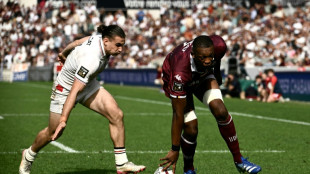 Happier at home, Bordeaux hammer Lyon in Top 14
Although Argentina has been underrepresented at recent international festivals due to government cuts to the sector, five Argentine films are on show at the Venice Film Festival, including Lucrecia Martel's documentary "Nuestra Tierra" (Our Land).
Since President Javier Milei came to power in December 2023, his austerity measures have had a major impact on the industry, particularly on the National Institute of Cinema and Audiovisual Arts (INCAA), the public body responsible for promoting and supporting film production.
The cuts have brought the sector to a standstill, leaving production companies with less room for manoeuvre.
Previously, production was supported by a series of subsidies, sometimes in the form of advances, but "now you have to come up with your own private financing", said Vanesa Pagani, president of the Association of Independent Audiovisual Media Producers (APIMA).
Only when you meet all the requirements, "you are entitled to the subsidy", she told AFP.
According to Pagani, since the INCAA has been under new management following Milei's election, "no film has obtained the funding to be made".
"No one knows where the funds held by the INCAA are going, because it does have funds, as it collects a percentage of cinema ticket sales, as well as other fees, but that money is not being invested in national production," said Javier Campo, a researcher specialising in documentary filmmaking.
- 'A perfect storm' -
At the Cannes Film Festival earlier this year, where Argentina has traditionally enjoyed a prominent presence, it had only the short film "Tres" (Three) by Juan Ignacio Ceballos and "Drunken Noodles", a feature film by Lucio Castro.
The effects of Milei's funding cuts were also felt at the latest edition of the Berlin International Film Festival, where the only Argentine film presented was Ivan Fund's "El mensaje" (The Message), which won the jury prize.
But at Venice, in addition to Martel's out-of-competition documentary, Argentina will be represented by Daniel Hendler's "Un Cabo Suelto"(A Loose End), co-produced with Uruguay and Spain; Alejo Moguillanski's "Pin de Fartie", Gaston Solnicki's "The Souffleur", co-produced with Austria, and "El Origen del Mundo" (The Origin of the World), a short film by Jazmin Lopez.
However, interpreting the five films as a "recovery" for Argentine cinema would be mistaken, said Campo, as they are "co-productions with largely external financing".
"It would be difficult to say that they are entirely Argentine films," he said.
Hernan Findling, president of the Argentine Academy of Motion Picture Arts and Sciences, called it a "kind of perfect storm" that has brought production to a near-standstill.
Between a "government that does not defend culture" and the dramatic macroeconomic changes seen in Argentina, "the costs are high" for the film industry, he said.
"Film production is going to drop considerably in the short-to-medium term," Findling added.
- Less opportunities -
Although streaming platforms and large production companies are helping keep filming afloat, small productions are being left out as they cannot finance their productions up front.
"There is a part of cinema that is being lost, a part of cinema that has a long history at festivals, a high profile that goes beyond how many tickets are sold or not," said Pagani.
Although the platforms' contributions are valuable, Findling said, "it can't be the only thing Argentina produces".
Moreover, the streaming platforms tend to support established directors, actors and screenwriters, with fewer opportunities for newcomers.
For his part, Nicolas Vetromile, editor and delegate of the ATE union at INCAA, warned of the risk of an "Uber-isation of cinema", with less stringent labour laws governing the streaming platforms.
"Today, all these issues are left to the discretion of the employer," he said.
G.Teles--PC