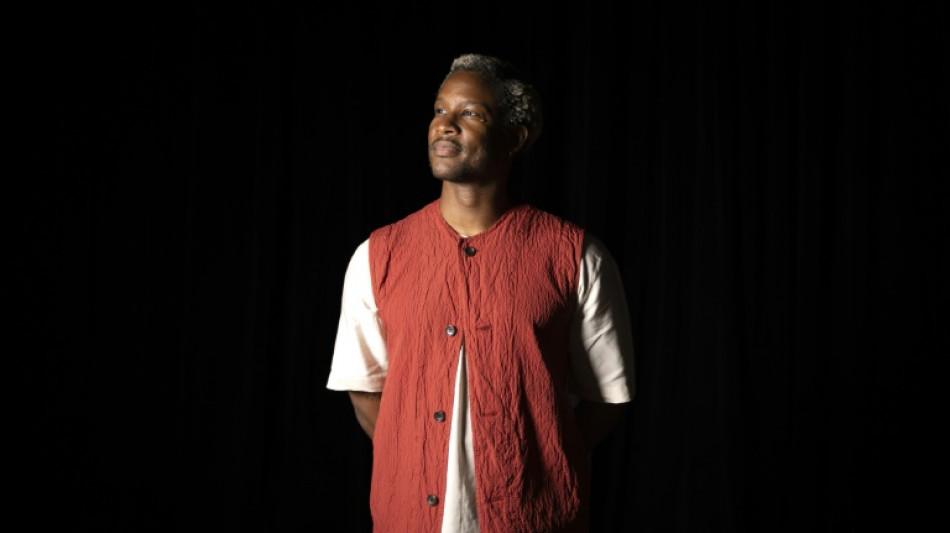
Fresh off Cannes win, Akinola Davies imagines the future of Nigerian film / Photo: OLYMPIA DE MAISMONT - AFP

 Latvian partial election results suggest pro-European choice

 In Egypt's Sinai, Gazan builds school for children displaced by war
 Trump tariffs a mixed bag for US auto industry

 Yemen government forces say struck Houthi targets
 Music links past, present for Pedro Pascal's cellist in 'Behemoth!'

 ALEX BODI ȘI AMBASADORUL REPUBLICII SUDANUL DE SUD, GUM DOMINIC MATIOK, DISCUTĂ LA BERLIN DESPRE POSIBILITATEA ÎNFIINȚĂRII UNUI CONSULAT ONORIFIC LA BUCUREȘTI
 Dodgers step up World Series three-peat bid with 5-3 win over Braves

 Spain break down Czechs as England outclass Croatia in Nations League
 Yamal on target as Spain hold off Czech Republic
 Latvian exit polls suggest pro-European choice
 Lula, Bolsonaro wrap up campaigns ahead of knife-edge election
 Tuchel hails 'complete' England after Croatia demolition

 Fury to invite Trump to lead ring walk before Joshua showdown

 Fashion industry in 'precarious moment', says Vivienne Westwood supremo

 Seventh heaven for England in Nations League rout of Croatia
 Storms, flooding cause chaos on Greek holiday island of Crete
 #IAmJaneDoe: online support campaign in US university rape case

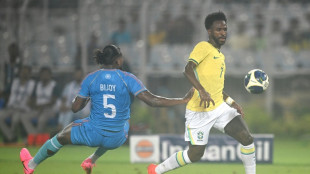 Brazil shine on Selecao's first visit to India
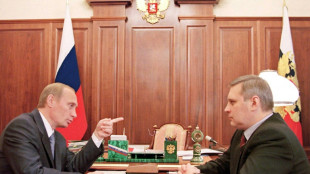
 Zverev sets up Djokovic quarter-final at China Open, Rybakina out
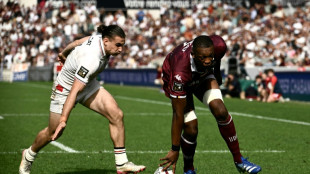 Happier at home, Bordeaux hammer Lyon in Top 14
 Lula, Bolsonaro in final push for votes ahead of knife-edge election
 Boisterous fashion week barnstorms 'sleepy' Nigerian capital
 UAE investigators say flydubai co-pilot was planning 'terrorist act'
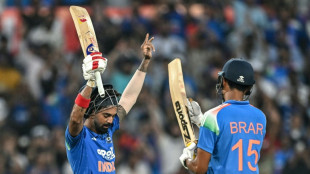 Rahul smacks century in India v Windies ODI

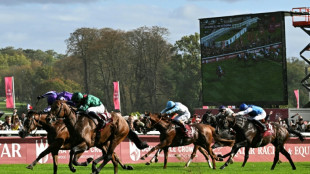 Daryz seeks to join exclusive club of dual Arc winners
Akinola Davies, the director of "My Father's Shadow", Nigeria's first film to win an award at the Cannes film festival, is savouring his return to Lagos, the country's cultural capital, where the movie was released Friday.
"I think it's like a homecoming that's well deserved," the British-Nigerian director said in an interview with AFP.
The film, which won the Special Mention for the Camera D’Or, is an intimate portrayal of a father (Sope Dirisu) and his two sons (Godwin and Chibuike Egbo), attempting to claim back pay they're owed.
Set in Lagos on June 24, 1993, the city seems ready to explode: it's the day that strongman general Ibrahim Badamasi Babangida annuls the results of the presidential elections, held two weeks earlier and set to finally free the country from military rule.
"I hope that they feel it's an honest portrayal of what it is like to be Nigerian and the sort of hurdles that life kind of throws at you," Davies, 40, told AFP ahead of the film's premiere Thursday evening.
His brother, Wale, who co-wrote the film, remembers the day vividly. It was a defining moment in the country's trajectory -- and at the same time, in a nation where the median age is 19, is for many confined to history books or family lore.
"It's the closest thing I've ever seen to mass trauma, actually, where everybody was very disappointed," he said.
"It felt like the idea that a country owes something to its citizens, some sort of unspoken contract was broken."
Nigeria eventually returned to civilian rule in 1999. But the family struggles portrayed in the film are likely to resonate 26 years later, as the country grinds through a cost-of-living crisis under President Bola Tinubu's economic reforms.
"There's still a want and the hope for the country to achieve its potential," Akinola Davies said.
Speaking after the premiere, held at a Lagos cinema, Segun Odunuge said it "told the story of my family".
The 55-year-old engineer remembers the street brawls and burning cars of June 24, "and this movie depicted it," he said. "It was marvellous."
Florence Imo, a 26-year-old director, wasn't yet born when the country's hopes were dashed that day, but said the "iconic" film "made me more curious about what happened".
- Making history -
Wale Davies moved to Ireland in his youth, but now lives mostly in Lagos, where he works in the music industry, including as the manager for music star Tems.
Akinola, meanwhile, lives in London, though he considers Lagos his "spiritual home".
The win at Cannes for Akinola's first feature-length film also marked the first time a Nigerian film had been screened at the festival.
It was a breakthrough for Nigeria's Nollywood, known for its success locally and among the diaspora even as it has long been written off by outsiders.
Those in the sprawling industry -- Nollywood is second only to India's Bollywood in the sheer number of films pumped out each year -- acknowledge that it tends towards the commercial, churning out low-budget dramas at a frenetic pace that nonetheless are a hit with domestic audiences.
"This is not the kind of movie that you see all the time here in Nigeria," said Nicolette Ndigwe, a 33-year-old director.
"My Father's Shadow" bucked the industry's "fear of not having the market for arthouse films", she said, calling it "a breath of fresh air".
- 'Awkward cousins' of Nollywood -
The Davies brothers might relish being the "awkward cousins" of Nollywood, "in the corner of the room that are telling different stories", Wale told AFP -- but their success couldn't have come without it.
"Ninety percent of everyone on set are people that work in Nollywood," he said of the production for "My Father's Shadow".
"We're all cut from the same cloth," he said. "We are honoured to actually be mentioned in the same breath as all of them."
After hitting the major film festivals in Cannes, Toronto and Sydney, "My Father’s Shadow" is set to continue on the worldwide circuit, at festivals in Morocco, the United Kingdom, Brazil and Asia.
The brothers have a handful of ideas for what's next spinning around in their heads -- all with Nigeria in mind.
"The future is to keep producing work in Nigeria that can hopefully sit on that global stage, and tell Nigerian stories -- and tell Nigerian stories 100 percent," Akinola Davies said.
T.Vitorino--PC