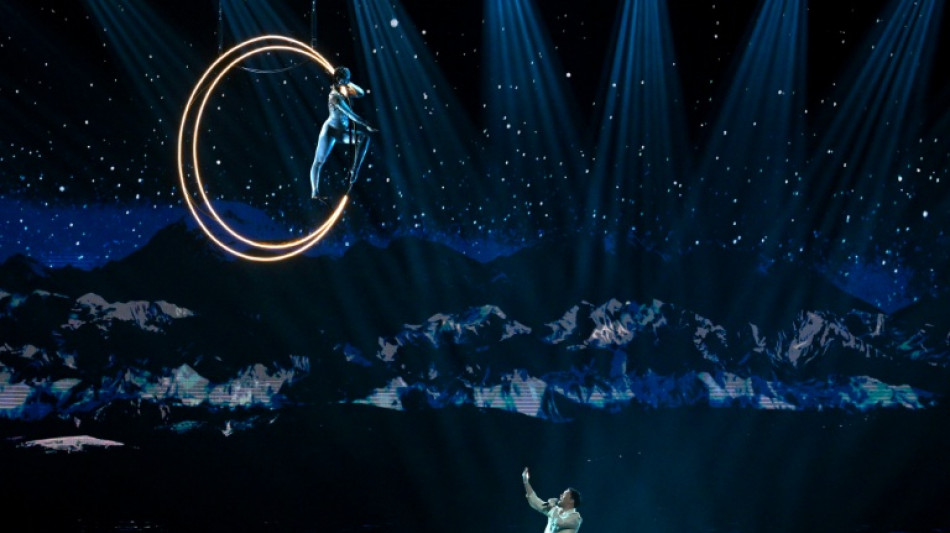
Russia's USSR-era rival to 'decadent' Eurovision born anew / Photo: Olesya KURPYAYEVA - AFP

 Latvian partial election results suggest pro-European choice
 In Egypt's Sinai, Gazan builds school for children displaced by war
 Trump tariffs a mixed bag for US auto industry
 Yemen government forces say struck Houthi targets
 Music links past, present for Pedro Pascal's cellist in 'Behemoth!'
 ALEX BODI ȘI AMBASADORUL REPUBLICII SUDANUL DE SUD, GUM DOMINIC MATIOK, DISCUTĂ LA BERLIN DESPRE POSIBILITATEA ÎNFIINȚĂRII UNUI CONSULAT ONORIFIC LA BUCUREȘTI
 Dodgers step up World Series three-peat bid with 5-3 win over Braves
 Spain break down Czechs as England outclass Croatia in Nations League
 Yamal on target as Spain hold off Czech Republic
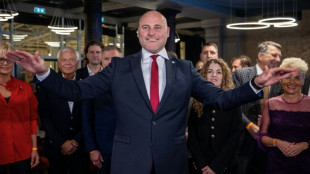 Latvian exit polls suggest pro-European choice
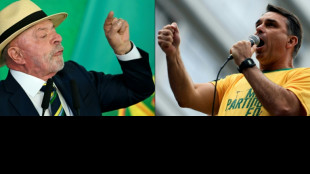
 Lula, Bolsonaro wrap up campaigns ahead of knife-edge election
 Tuchel hails 'complete' England after Croatia demolition

 Fury to invite Trump to lead ring walk before Joshua showdown
 Fashion industry in 'precarious moment', says Vivienne Westwood supremo

 Seventh heaven for England in Nations League rout of Croatia
 Storms, flooding cause chaos on Greek holiday island of Crete
 #IAmJaneDoe: online support campaign in US university rape case
 Brazil shine on Selecao's first visit to India
 Zverev sets up Djokovic quarter-final at China Open, Rybakina out

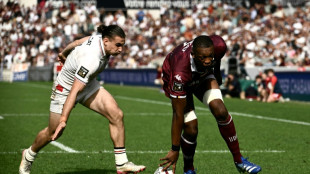 Happier at home, Bordeaux hammer Lyon in Top 14
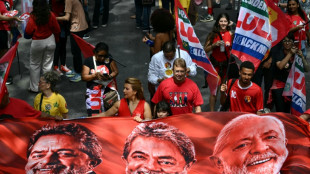 Lula, Bolsonaro in final push for votes ahead of knife-edge election
 Boisterous fashion week barnstorms 'sleepy' Nigerian capital
 UAE investigators say flydubai co-pilot was planning 'terrorist act'
 Rahul smacks century in India v Windies ODI
 Daryz seeks to join exclusive club of dual Arc winners
With artists from more than 20 countries and ambitions for a billion-plus viewers, Russia on Saturday revived its Intervision song contest, which Moscow hopes will compete with a "decadent" Eurovision.
First held in the Soviet era and relaunched in February on President Vladimir Putin's orders, the concert-as-soft-power tool kicked off at 8:30 pm (1730 GMT) at an arena near the Russian capital, with the opening ceremony hitching future-looking technology to nostalgia for the USSR past.
With Russia banished from Eurovision, the annual song contest extravaganza, over its offensive in Ukraine, the Kremlin has pushed Intervision as a means to lay the anti-Western narratives on thick while striving for new cultural and political alliances.
In a video address to the participants, including traditional allies Brazil, India and China, Putin hailed the contest's "main theme" of "respecting traditional values and different cultures".
"Today, Intervision is gathering a second wind, while remaining faithful to its traditions," the veteran strongman added.
Twenty-three countries were originally slated to take part in the contest, including Russia's old Cold War foe the United States.
But the US representative -- Australian pop singer Vasiliki Karagiorgos, known as Vassy -- had to pull out at the last minute because of "unprecedented political pressure from the Government of Australia", the organisers said.
No performers from an EU country will take part.
But former Soviet republics Uzbekistan and Kazakhstan have dispatched artists to Russia for the spectacle, which has been hyped with installations in central Moscow.
Besides Putin, the contest's kick-off drew in Dima Bilan, Eurovision winner in 2008, and Polina Gagarina, the contest's runner-up in 2015.
Giant augmented-reality projections of dancing silhouettes in traditional costumes were displayed to represent each participant.
- A billion viewers? -
Each country's act will sing in their native language -- "unlike Eurovision, where most songs are often sung in English," the organisers have been at pains to point out.
Moscow has high hopes for the competition's viewership.
The participating countries represent 4.3 billion people -- or more than half the planet's population, according to the organisers.
"If at least one-in-three or at least one-in-four people watch the contest, it'll be an audience without precedent," said Konstantin Ernst, director general of the broadcaster Pervy Canal, ahead of the contest.
First organised in 1965 in Prague, the competition was suspended after the anti-Soviet uprising in Czechoslovakia three years later.
It was then revived in Poland in the 1970s and held across various cities of the former Communist bloc.
Another difference from Eurovision? No public vote. An international jury alone will decide the winner.
X.Matos--PC