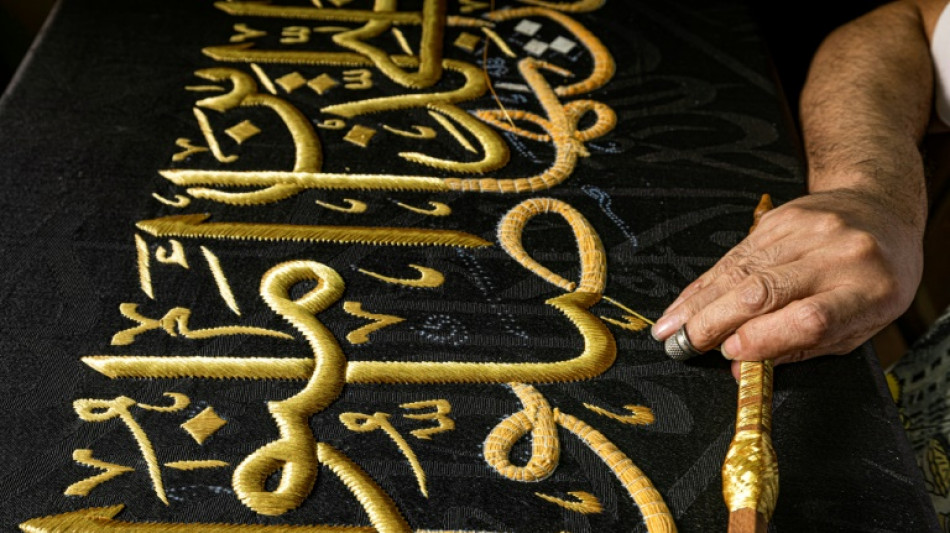
Egypt family keeps alive tradition behind hajj centrepiece / Photo: Khaled DESOUKI - AFP

 World No.1 Sinner pulls out of Shanghai Masters to delay return
 Red Bull's Verstappen grabs pole position for Bahrain GP
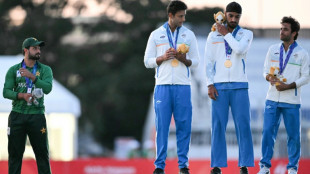 India beat Pakistan in blockbuster as golfer Kim wins 'crazy' gold
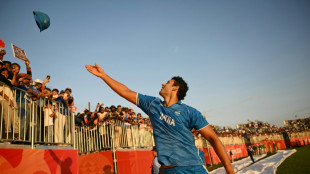 India beat arch-rivals Pakistan to win Asian Games cricket gold
 Ethiopia's Tigray rebels abandon regional capital as govt advances: journalist

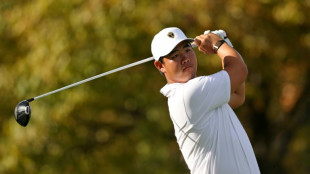
 Tom Kim powers to Games gold and exemption from military service

 Split loyalties for Indian football fans at Brazil friendly

 India-Pakistan blockbuster brings cricket fever to Japan baseball field
 Wong waiting on Rafa after winning Asian Games tennis gold
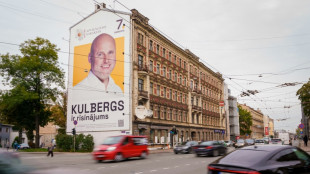 With Russia next door and rising costs, Latvia goes to the polls

 Penalty hero rues empty seats as Games hosts Japan win football gold

 North Korea fires ballistic missile after Seoul's apology demand

 US regulator finds Boeing 737 MAX software bug 'not a safety concern'

 Ohtani 'managing' injuries as Dodgers launch MLB post-season

 Botched US execution leaves murderer unconscious on ventilator: lawyers

 Cornell rape case exposes sexual violence at US colleges

 France held by Italy in Zidane's homecoming after Olise stunner

 Ethiopian pro-government militia claims Tigray airport as regional tensions spike

 Ohtani shaking off injuries as Dodgers launch MLB post-season

 Sea levels to rise in California as coastal wave surges up west coast

 New rallies urged in France as protests disrupt over 730 schools

 Djokovic survives China Open scare, Sabalenka starts strong

 King Charles to evoke colonial 'darkest days' on Caribbean tour

 Tesla shares jump after global car sales top estimates

 DR Congo Ebola outbreak killed more than 4,000: official figures

Under the steady hum of a ceiling fan, Ahmed Othman weaves golden threads through black fabric, creating Koranic verses, a century after his grandfather's work adorned the Kaaba in Mecca's Grand Mosque.
A ceremonial hanging of the kiswa, huge pieces of black silk embroidered with gold patterns, over the cubic structure that is the centrepiece of the Grand Mosque symbolises the launch of the hajj annual pilgrimage, which starts this week.
Othman's family used to be honoured with the task of producing the kiswa.
His family's creations would be despatched in a camel caravan to Islam's holiest site in western Saudi Arabia towards which Muslims across the world turn to pray.
Now, Othman keeps the tradition alive in a small workshop, tucked above the labyrinthine Khan al-Khalili bazaar in central Cairo, where mass-produced souvenirs line the alleys.
The area is historically home to Egypt's traditional handicrafts, but artisans face growing challenges.
Materials, mostly imported, have become expensive, particularly as Egypt faces economic woes and a devalued currency.
Plummeting purchasing power makes high quality hand-crafted goods inaccessible to the average Egyptian, while master craftspeople find it hard to hand down their skills as young people turn to more lucrative jobs.
This wouldn't be the case "if there was good money in the craft", Othman sighed, hunched over one of the many tapestries that fill his workshop.
Sheets of black and brown felt are covered in verses and prayers, delicately embroidered in silver and gold.
Every stitch echoes the "sacred ritual" Othman's grandfather was entrusted with in 1924.
"For a whole year, 10 craftsmen" would work on the kiswa that covers the Kaaba which pilgrims circumambulate, using silver thread in a lengthy labour of love.
- Sprinkled rosewater -
From the 13th century, Egyptian artisans made the giant cloth in sections, which authorities transported to Mecca with great ceremony.
Celebrations would mark the processions through cities, flanked by guards and clergymen as Egyptians sprinkled rosewater from balconies above.
Othman's grandfather, Othman Abdelhamid, was the last to supervise a fully Egyptian-made kiswa in 1926.
From 1927, manufacturing began to move to Mecca in the nascent Kingdom of Saudi Arabia, which would fully take over production of the kiswa in 1962.
The family went on to embroider military regalia for Egyptian and foreign dignitaries, including former presidents Gamal Abdel Nasser and Anwar Sadat.
"In addition to our work with military rank embroideries, my father started embroidering Koranic verses on tapestries," and then reproducing whole sections of the kiswa.
Clients began flooding in for "exact replicas of the kiswa, down to the last detail".
Though today they offer small tableaus for as little as 100 Egyptian pounds (about $5), massive customised orders go for several thousand dollars, such as replicas of the Kaaba door, which Othman proudly claims are indistinguishable from the originals in Mecca.
- Back-breaking -
But the family has not been immune to the economic turbulence that began with the coronavirus pandemic, which decimated small businesses and craftsmanship in Egypt.
Since early 2020, they have sold around "two pieces per month", whereas before they would sell at least one tapestry a day.
Othman worries that a sense of "worldwide austerity" makes business unlikely to bounce back.
Today, there might only be a dozen or so craftsmen whose work he considers authentic, with many artisans leaving the craft for quicker cash flows.
"They can make 200 to 300 pounds a day," ($10-$16) driving a tuktuk motorised rickshaw, or a minibus, Othman said. "They're not going to sit on a loom breaking their backs all day."
But still, a century and a half after his great grandfather left his native Turkey and brought the craft with him to Egypt, Othman says he has stayed loyal to techniques learnt as a child when he would duck out of school to watch his father work.
"It's on us to uphold the craft the same way we learned it, so it's authentic to the legacy we inherited," he said.
X.Brito--PC