AI has bright future in Latin America, despite training deficit: regional Google chief / Photo: Carl de Souza - AFP

 ALEX BODI AND AMBASSADOR GUM DOMINIC MATIOK OF THE REPUBLIC OF SOUTH SUDAN MEET IN BERLIN TO DISCUSS THE POSSIBILITY OF AN HONORARY CONSULATE IN BUCHAREST

 Lula, Bolsonaro wrap up campaigns ahead of Brazil's knife-edge vote

 Toulouse edge Castres in Top 14 derby

 Murakami homer propels White Sox to MLB playoff win over Guardians

 Israel targets top Hamas leader in deadly Gaza strike on anniversary

 Houthis say struck oil facility near Riyadh, as Saudis hit Sanaa

 AI needs safety layers like nuclear plants: ex-OpenAI engineer

 MVP Judge will miss Yankees' MLB playoff series against Rays

 New lizard species discovered in Peru

 Fernandes hails Portugal's 'greatest symbol' Ronaldo, calls for unity

 Grandidier-Nkanang double takes Pau to Top 14 summit despite Vannes fightback
 Trainer Scott gets perfect Arc boost with top notch double

 Ex-PM says Putin cannot admit 'mistake' over Ukraine

 Houthis say Saudi Arabia launches dozens of strikes on Yemen capital

 Qatar and Abu Dhabi F1 Grand Prix to go ahead - F1 boss

 South Korea lift gloom with smash-and-grab Games football gold

 Ireland news conference before Israel game cut short amid tensions

 Protests over housing flare in Spain after relief measures rejected

 Zverev thrashes Shang to set up Djokovic quarter-final at China Open

 Turkey football ref chief jailed pending trial for graft
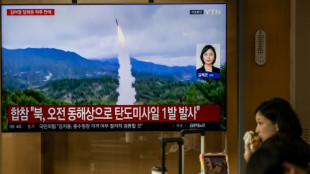 North Korea says test of intermediate-range strategic missile included use of AI

 Rampant Sayers leads Hong Kong to third men's rugby gold in a row

 Ethiopia's Tigray rebels abandon regional capital as govt advances

 Bulgaria's Tsar Samuel returns 'home' after 1,000 years

 'Glad it's over': Kim powers to Games gold and military exemption

AI has a bright future in Latin America but is hamstrung by a huge training shortage, one of Google's top regional executives told AFP in an interview Thursday.
Speaking to AFP in Mexico, Google Latin America's vice-president Adriana Norena said rates of AI adoption in Latin America were "close to the United States...and the same as Europe."
But the "lack of training, of people ready to work with AI" was an obstacle to growth, she said.
"We have a major talent shortage," she said.
Surveys show that Latin Americans are relatively optimistic about the potential of AI.
But in Latin America, as in other regions, AI has been blamed for dramatically reducing the number of people accessing media company websites for information.
"We haven't observed that traffic (to media sites) has decreased; it has remained balanced," Norena said, arguing that AI acted like a filter, sending "more quality traffic" to media sites.
After a bumpy start to its AI journey Google has pulled off a dramatic turnaround to become a major player.
Google-parent Alphabet reported second-quarter profits of $28.2 billion, spurred largely by AI.
The AI race has prompted Google and other tech giants to build data centers housing huge servers to store the flood of data sucked up from billions of smartphones and other connected devices.
In Latin America, the centers' consumption of massive amounts of water has led to pushback.
Last year, an environmental court in Chile ordered Google to revise plans for a $200 million data center whose cooling system would consume seven billion liters (1.85 billion gallons) of water per year.
In Uruguay the company was also forced to revise plans for a center that would have used 2.7 billion liters a year.
In both cases, the company agreed to more expensive air cooling technology, which dramatically reduces water use.
"Our goal is for them to be self-sustaining and emission-free very soon," Norena said.
Google and Agence France-Presse signed a five-year agreement in 2021 under which the search company agreed to pay AFP an undisclosed sum for content in Europe.
H.Portela--PC