Stella McCartney takes on 'barbaric' feather industry / Photo: GEOFFROY VAN DER HASSELT - AFP

 ALEX BODI AND AMBASSADOR GUM DOMINIC MATIOK OF THE REPUBLIC OF SOUTH SUDAN MEET IN BERLIN TO DISCUSS THE POSSIBILITY OF AN HONORARY CONSULATE IN BUCHAREST

 Lula, Bolsonaro wrap up campaigns ahead of Brazil's knife-edge vote

 Toulouse edge Castres in Top 14 derby

 Murakami homer propels White Sox to MLB playoff win over Guardians

 Israel targets top Hamas leader in deadly Gaza strike on anniversary

 Houthis say struck oil facility near Riyadh, as Saudis hit Sanaa

 AI needs safety layers like nuclear plants: ex-OpenAI engineer

 MVP Judge will miss Yankees' MLB playoff series against Rays

 New lizard species discovered in Peru

 Fernandes hails Portugal's 'greatest symbol' Ronaldo, calls for unity

 Grandidier-Nkanang double takes Pau to Top 14 summit despite Vannes fightback

 Trainer Scott gets perfect Arc boost with top notch double

 Ex-PM says Putin cannot admit 'mistake' over Ukraine

 Houthis say Saudi Arabia launches dozens of strikes on Yemen capital

 Qatar and Abu Dhabi F1 Grand Prix to go ahead - F1 boss

 South Korea lift gloom with smash-and-grab Games football gold
 Ireland news conference before Israel game cut short amid tensions

 Protests over housing flare in Spain after relief measures rejected

 Zverev thrashes Shang to set up Djokovic quarter-final at China Open

 Turkey football ref chief jailed pending trial for graft

 North Korea says test of intermediate-range strategic missile included use of AI

 Rampant Sayers leads Hong Kong to third men's rugby gold in a row

 Ethiopia's Tigray rebels abandon regional capital as govt advances

 Bulgaria's Tsar Samuel returns 'home' after 1,000 years

 'Glad it's over': Kim powers to Games gold and military exemption

British fashion designer Stella McCartney is showcasing plant-based alternatives to real feathers in her latest collection, as the animal-rights campaigner takes on the "barbaric" farming of birds for clothing.
"I've been having the conversation about not killing cows and goats and snakes or any living animal to be made into a shoe or handbag in my industry for over 30 years," McCartney told AFP after her show during Paris Fashion Week on Tuesday evening.
"But I realised not that long ago that feathers were a whole other barbaric part of the industry," she added.
Throughout her career, the 51-year-old daughter of Beatles legend Paul McCartney has consistently pushed vegan animal-free alternatives to the industry's staples of leather and exotic skins.
Her solution to replacing feathers in Tuesday's show, attended by Helen Mirren, Robin Wright and Ice Spice, among other VIPs, was a new product known as "fevvers", produced by a British-based start-up.
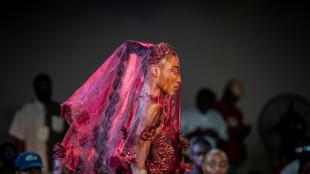
With help from Mumbai-based embroidery and textile house Chanakya International, the faux feathers featured in soft pastels, giving lightness to two gowns in pink and blue, as well as bodices.
"We grew blades of grass and naturally dyed them and then hand-stitched them onto incredible silhouettes. You get the same effect (as feathers), and you're not killing billions of birds," said McCartney.
- 'Good replacements' -
Exotic feathers have been a staple of the fashion industry since its advent.
They were considered a high-society status symbol in 19th-century Europe and North America.
The gradual passing of wildlife regulations thereafter helped prevent wild birds from ending up adorning hats or ball gowns.
Though egrets, lyrebirds or parakeets are now protected, the modern fashion industry still uses feathers in huge quantities, above all from farmed ostriches that are reared in conditions decried by campaign groups.
"Feathers used for fashion are stolen from birds like ostriches, chickens, turkeys or ducks -- and many spend their entire lives confined on factory farms or on dirt lots," Yvonne Taylor, from the campaign group People for the Ethical Treatment of Animals (PETA), told AFP.
Slaughtered chickens and ducks from the poultry industry often provide the feathers for the ubiquitous down jackets found on streets across the world.
Fashion author Dana Thomas, who wrote the book "Fashionopolis" about the industry's environmental record, told AFP luxury labels with bigger buying power needed to join McCartney to drive real change.
"She (McCartney) doesn't have the juice or the funds to buy big and really change the paradigm with biomaterials," Thomas said, adding there were "so many good replacements" for the animal or petroleum-based products still favoured by major brands.
McCartney has also been a pioneering user of UPPEAL, which is made from apples repurposed to look like crocodile leather, as well as Econyl, which is manufactured from nylon waste fabrics and fishing nets.
On Tuesday night, she also included PURE.TECH for the first time in her denims, a material developed by a Barcelona-based company that has air-purifying properties, including absorbing carbon dioxide.
- Feather bans -
Thomas says the global fashion industry, dominated by corporations such as Kering, LVMH or Zara, does not do enough research and development and is "not willing to take a chance of buying some fabrics that are better for the planet, but cost more money".
"While it's supposed to be an industry that sets trends and tells us what's happening in our culture, it's actually a very old-fashioned business," she said.
The campaign to phase out feathers is gaining traction, although they remain a mainstay for many celebrity red-carpet gowns and bridal outfits.
Like fur, wild bird feathers have been banned at several secondary Fashion Weeks in the last two years, including in Amsterdam, Melbourne and Berlin.
"Just as designers got on board with banning mink, fox and rabbit fur, the momentum around banning feathers is happening right now," Taylor told AFP in a written statement.
However, the biggest Fashion Weeks -- in Paris, New York, London and Milan -- still allow them.
McCartney, formerly designer at French label Celine, acknowledges that "fevvers" remain at the experimental stage and the company behind them will need financial support and possibly regulatory changes via a ban on animal feathers to take off.
"It's really interesting that this technique can't get put into production, and yet murdering loads of birds in a building somewhere is in production," she said.
S.Pimentel--PC