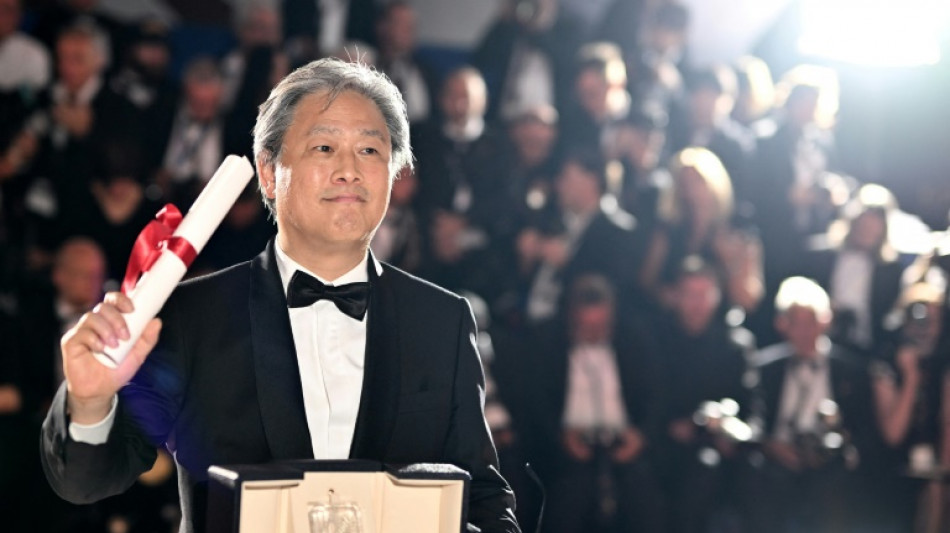
South Korean auteur behind 'Oldboy' returns with 'pure' love story / Photo: Loic VENANCE - AFP

 Zverev thrashes Shang to set up Djokovic quarter-final at China Open

 Turkey football ref chief jailed pending trial for graft

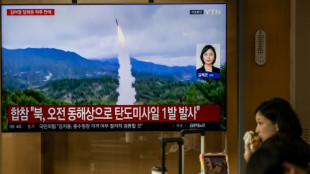 North Korea says test of intermediate-range strategic missile included use of AI
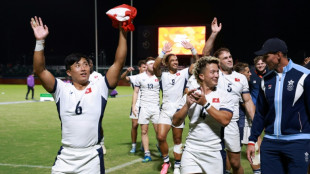 Rampant Sayers leads Hong Kong to third men's rugby gold in a row

 Ethiopia's Tigray rebels abandon regional capital as govt advances

 Bulgaria's Tsar Samuel returns 'home' after 1,000 years
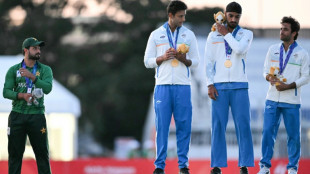
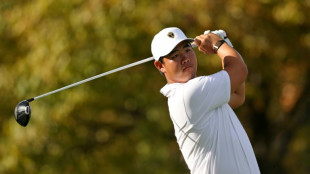 'Glad it's over': Kim powers to Games gold and military exemption

 After 11 World Cups, football finally comes home for one Indian fan

 Marc Marquez wins sprint at Japan MotoGP, Martin grabs pole
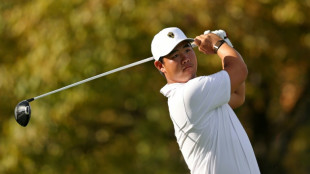
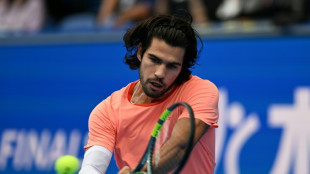 Alcaraz fends off Arnaldi to reach Japan Open quarters

 Antonelli tops times in final practice at Bahrain GP
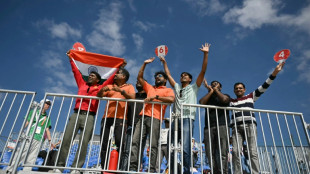
 Gauff digs deep to beat Osorio in China Open second round
 Fresh protests to hit Spain after housing measures defeated

 'He's here with me': Japan cycle queen dedicates gold to late brother

 Japan Olympic chief says 'lot more' athletes at Games than expected
 Asian carmakers besting US rivals at home, China poised to strike

 Widgets & Web Offers All-Inclusive Investor Relations Websites for Public Companies, IPOs and SPACs

 Adams named new US captain to 2030 World Cup

 China a better influence in Latin America than US: poll

 Judge pauses construction of border project in Texas national park

 Belgium's De Bruyne fires double to sink Turkey, France held by Italy

 US jobs data boosts stocks as oil prices dip

 US Supreme Court to hear high-stakes climate case

 Trump expected to name intel chief Clayton as AI czar: reports

 Argentina unveils passports-for-investment scheme
Filmmaker Park Chan-wook, known for his ultra-violent thrillers that helped catapult South Korean cinema onto the global stage, is back with an altogether different work -- a restrained yet deeply emotional love story.
"Decision to Leave" arrives after the world-smashing success of South Korean entertainment, including Bong Joon-ho's "Parasite" and Netflix's "Squid Game", and has been the top-grossing domestic film in South Korea since opening last week.
It stars Chinese star Tang Wei and Korean actor Park Hae-il, who plays a detective investigating a man's fatal plunge from a mountain. He falls for the victim's mysterious wife, whom he suspects of being behind her husband's death.
The film has already won Park the Best Director prize at this year's Cannes Film Festival, which had previously awarded him the Grand Prix for his 2003 cult-classic revenge thriller "Oldboy".
However, unlike many of his previous works, "Decision to Leave" contains almost no adult or graphically violent scenes.
IndieWire has called it "the most romantic movie of the year (so far)", while early reviews praised it as a gorgeously rendered love story marked by elegance and restraint.
"I agree that it's a romantic film, and I wanted to make such a movie," Park said in an interview with reporters in Seoul last month.
The 58-year-old said he started thinking about the project while working on the BBC's English-language miniseries "The Little Drummer Girl". Set against the backdrop of the Israeli-Palestinian conflict, Park found himself yearning to do something different -- away from politics and disputes.
"I wanted to make a film that's pure -- pure in the sense that it is faithful to the basics of cinema as an art form while no elements other than the theme of love get in the way," he said.
The result is a poetic exploration of time, loss and longing, combining Park's signature lush cinematography with the audience-arresting sexual tension simmering between the well-mannered detective and beguiling murder suspect.
The two characters are a departure from Park's previous, more extreme characters -- like the repressed Catholic priest-turned-vampire in the horror flick "Thirst" and a man held captive for 15 years in "Oldboy".
The director has said before that love stories, just like his blood-lusty tales of revenge, reveal how "human beings essentially are".
Even so, none of the characters in his movies have much common ground with him.
"I'm not at all a person who goes after such romantic ideals or lives my life that way. I tend to be very realistic and pragmatic," said the soft-spoken auteur.
"I'm the kind of filmmaker who has a big gap between my life and the movies I've made."
- 'Arthouse' barrier -
Park has long been credited for inspiring a generation of filmmakers behind the "Korean noir" genre -- movies about bloody crimes, brutal revenge or the criminal underworld, presented with sumptuous cinematography.
One such director, Bong Joon-ho, became the first South Korean to win the top Palme d'Or prize at Cannes for his dark comedy "Parasite" in 2019. It was also the first non-English-language film to win the Oscar's Best Picture.
While Park believes he has always directed his movies for the general public, he recognises that "South Korean films, Asian films and foreign films are still being consumed as arthouse cinema" outside the region.
"No matter how they are made, that's how they are being categorised as," he said.
"I don't think that's ideal. But 'Parasite' has broken that barrier."
Critics say his "Oldboy" paved the crucial way for South Korean cinema's global triumph, but Park has been making conscious efforts to also work on non-Korean projects.
Aside from "The Little Drummer Girl", he produced Bong's first English-language film, 2013's "Snowpiercer", and made his own Hollywood debut that year with "Stoker" starring Nicole Kidman and Mia Wasikowska.
His next project is with HBO -- an espionage drama series based on Viet Thanh Nguyen's Pulitzer Prize-winning novel "The Sympathizer", which will feature Robert Downey Jr.
Park said the global entertainment industry needs more international collaborations.
"It's important how your movies are being perceived right now, but you also wonder whether your films will survive and be remembered," he said.
"There is no way for me to know what viewers 50 or 100 years from now would think. Yet the slightest hint you can still get is by responses from today's foreign viewers," he added.
E.Paulino--PC