
ChatGPT's taste for literary nonsense sparks alarm / Photo: Anna Moneymaker - GETTY IMAGES NORTH AMERICA/AFP

 World No.1 Sinner pulls out of Shanghai Masters to delay return

 Red Bull's Verstappen grabs pole position for Bahrain GP

 India beat Pakistan in blockbuster as golfer Kim wins 'crazy' gold

 India beat arch-rivals Pakistan to win Asian Games cricket gold

 Ethiopia's Tigray rebels abandon regional capital as govt advances: journalist

 Tom Kim powers to Games gold and exemption from military service

 Split loyalties for Indian football fans at Brazil friendly

 India-Pakistan blockbuster brings cricket fever to Japan baseball field

 Wong waiting on Rafa after winning Asian Games tennis gold

 With Russia next door and rising costs, Latvia goes to the polls

 Penalty hero rues empty seats as Games hosts Japan win football gold

 North Korea fires ballistic missile after Seoul's apology demand

 US regulator finds Boeing 737 MAX software bug 'not a safety concern'

 Ohtani 'managing' injuries as Dodgers launch MLB post-season

 Botched US execution leaves murderer unconscious on ventilator: lawyers

 Cornell rape case exposes sexual violence at US colleges

 France held by Italy in Zidane's homecoming after Olise stunner

 Ethiopian pro-government militia claims Tigray airport as regional tensions spike

 Ohtani shaking off injuries as Dodgers launch MLB post-season

 Sea levels to rise in California as coastal wave surges up west coast

 New rallies urged in France as protests disrupt over 730 schools

 Djokovic survives China Open scare, Sabalenka starts strong
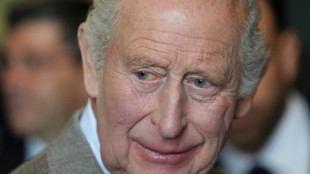 King Charles to evoke colonial 'darkest days' on Caribbean tour

 Tesla shares jump after global car sales top estimates

 DR Congo Ebola outbreak killed more than 4,000: official figures

OpenAI's GPT models can often be fooled into declaring that "pseudo-literary" nonsense is great, a German researcher has found.
Christoph Heilig said he discovered that they consistently rated "nonsense" higher -- including when their so-called "reasoning" features were activated -- which could have stark implications for the development of artificial intelligence.
"It's very important that we talk about what happens when we don't build AI as a neutral, robotic helper or assistant" and seek to instil human-like aesthetic and moral judgements, the academic at Munich's Ludwig Maximilian University told AFP.
His research presented the models with increasingly far-fetched variations of a simple text, asking them to rate sentences out of 10 for literary quality.
He started with a very simple text: "The man walked down the street. It was raining. He saw a surveillance camera."
He repeated the tests many times, altering the phrases to include words drawn from categories such as bodily references, film noir-style atmosphere and technical jargon.
The most extreme test phrases were almost total "nonsense", such as "Goetterdaemmerung's corpus haemorrhaged through cryptographic hash, eschaton pooling in existential void beneath fluorescent hum. Photons whispering prayers" -- which it rated highly.
"Nonsense" could also positively or negatively influence GPT's responses when it was added to an argument the AI was asked to evaluate.
"What my experiment definitely shows is that the more we move towards independently acting (AI) agents... the more we bring aesthetics into play, the more we'll have agents that seem irrational to us human beings," Heilig said.
He added that since AI models are increasingly used to judge each other's work as companies develop new systems, this and similar effects could be passed on through multiple versions -- as he found in his testing.
His research, which is yet to be peer-reviewed, tested OpenAI's latest GPT models, from GPT-5 -- released in August -- to the very latest GPT-5.4.
After publishing details of a similar experiment in August, Heilig said he noticed GPT calling some of his specific test phrases a "literary experiment" -- suggesting someone at OpenAI had taken notice and modified the chatbot to recognise them.
- 'Ripe for exploitation' -
"This is a way in which AI can have its rational judgment short circuited," said Henry Shevlin, associate director of the University of Cambridge's Leverhulme Centre for the Future of Intelligence, who was not involved in the research.
"But it's just not clear to me that it's so very different for human beings," he added.
"We should expect LLMs (large language models) to have reasoning and cognitive biases and limitations... because almost all forms of intelligence, almost all forms of reasoning are going to exhibit blind spots and biases."
The specific effect found by Heilig could mean that "processes with little human oversight" of AI work are left "ripe for exploitation", Shevlin said -- giving the example of academic journals that use LLMs to review submissions.
T.Vitorino--PC