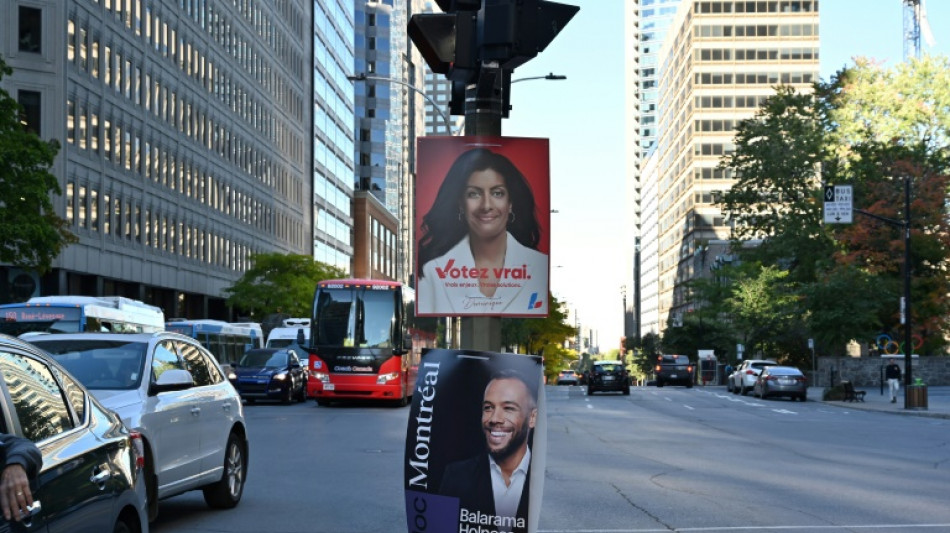
Immigration, identity shape election in French-speaking Quebec / Photo: Mathiew LEISER - AFP

 Tuchel hails 'complete' England after Croatia demolition

 Fury to invite Trump to lead ring walk before Joshua showdown

 Fashion industry in 'precarious moment', says Vivienne Westwood supremo

 Seventh heaven for England in Nations League rout of Croatia
 Storms, flooding cause chaos on Greek holiday island of Crete

 #IAmJaneDoe: online support campaign in US university rape case

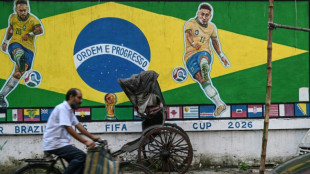
 Brazil shine on Selecao's first visit to India

 Zverev sets up Djokovic quarter-final at China Open, Rybakina out

 Happier at home, Bordeaux hammer Lyon in Top 14

 Lula, Bolsonaro in final push for votes ahead of knife-edge election

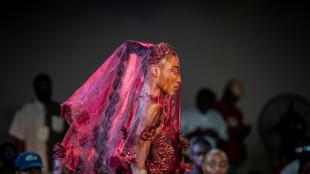 Boisterous fashion week barnstorms 'sleepy' Nigerian capital
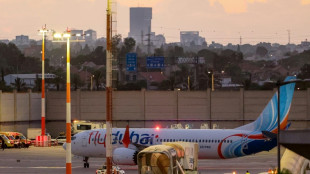 UAE investigators say flydubai co-pilot was planning 'terrorist act'

 Rahul smacks century in India v Windies ODI

 Daryz seeks to join exclusive club of dual Arc winners
 Russia warns diplomats to leave Kyiv over new strikes threat
 Olympic champ Zheng rebukes rowdy home crowd at China Open

 World No.1 Sinner pulls out of Shanghai Masters to delay return
 Red Bull's Verstappen grabs pole position for Bahrain GP

 India beat Pakistan in blockbuster as golfer Kim wins 'crazy' gold

 India beat arch-rivals Pakistan to win Asian Games cricket gold
 Ethiopia's Tigray rebels abandon regional capital as govt advances: journalist

 Tom Kim powers to Games gold and exemption from military service

 Split loyalties for Indian football fans at Brazil friendly

 India-Pakistan blockbuster brings cricket fever to Japan baseball field
 Wong waiting on Rafa after winning Asian Games tennis gold
Does immigration threaten the unique culture of French-speaking Quebec? However controversial, the claim is being pushed hard by the Canadian province's ruling party, whose brand of identity politics looks set to deliver them a win at the ballot box next week.
A French-speaking bastion in mostly English-speaking North America, Quebec has long defended tooth and nail the language of Moliere. It's a fight taken up by the governing party since coming to power four years ago, the conservative Coalition Avenir Quebec (CAQ) -- but with an added focus on immigration.
Incumbent Quebec Premier Francois Legault made his views clear at the outset of the campaign: unchecked immigration by non-French speakers risks undermining social cohesion in the province.
It would be "a bit suicidal" to take in more newcomers given the decline of French, Legault -- whose party is leading in the polls ahead of Monday's provincial election -- argued again this week.
During a debate, his immigration minister, Jean Boulet, went further -- and provoked an uproar -- with the baseless claim that "80 percent of immigrants do not work, do not speak French or do not adhere to the values of Quebec society."
His comments are also glaringly at odds with the economic reality in the province of nearly 8.5 million inhabitants facing a severe labor shortage -- one that could be remedied through increased immigration.
With an ageing population retiring en masse and an unemployment rate at a historic low, Quebec is looking to fill more than 250,000 jobs. And the government anticipates that number will keep rising -- reaching some 1.4 million by 2030.
If reelected, Legault, a 65-year-old multi-millionaire businessman, plans to keep annual immigration capped at 50,000 people.
But some observers, like the sociologist Jean-Pierre Corbeil, are ringing alarm bells over the growing political conversation in Quebec linking language and immigration.
"We tend to put all the responsibility (for the decline of French) on the backs of immigrants," he told AFP. "And that's where it's dangerous, there is a discourse of exclusion that is taking shape."
"I find that it is extremely, I would almost say, unhealthy," echoed linguistics expert Richard Marcoux. "We will really have to resume the discussion after the elections to be able to address immigration issues in a different way."
- Is Quebec French in decline? -
Although views diverge on the question of immigration, all major parties vying for seats in Quebec's national assembly agree on the need to preserve the French language.
"We are in a critical situation. There is a real linguistic emergency in Quebec," said Paul St-Pierre Plamondon, leader of the separatist Parti Quebecois.
Such fears are based on the latest census data which found that the proportion of the population that speaks French most often at home has been on the decline in Quebec since 2001, falling from 81.1 percent to 77.5 percent last year.
But the sociologist Corbeil, who is also the former head of the government's data collection on linguistic trends, disputes the suggestion the situation is "catastrophic."
He says institutions are relying on an overly "simplistic" definition of a French-speaker -- including only those who use it as their main language at home.
"Shouldn't the objective be to discuss the state of French?" he asks, pointing to the many citizens with diverse backgrounds who are fluent in French -- although it may not be their mother tongue.
Marcoux agrees that such "multilingualism" is not being sufficiently taken into consideration in Quebec.
"When we speak about indicators based on the mother tongue, for me, that does not take into account the vitality and use of French by the population," explains Marcoux, who heads the Francophone Demographic and Statistical Observatory (ODSEF).
"English is progressing here as everywhere else on the planet, whether in Italy, Poland, Romania or France," he noted.
"But at the same time, native languages are not disappearing."
M.Carneiro--PC