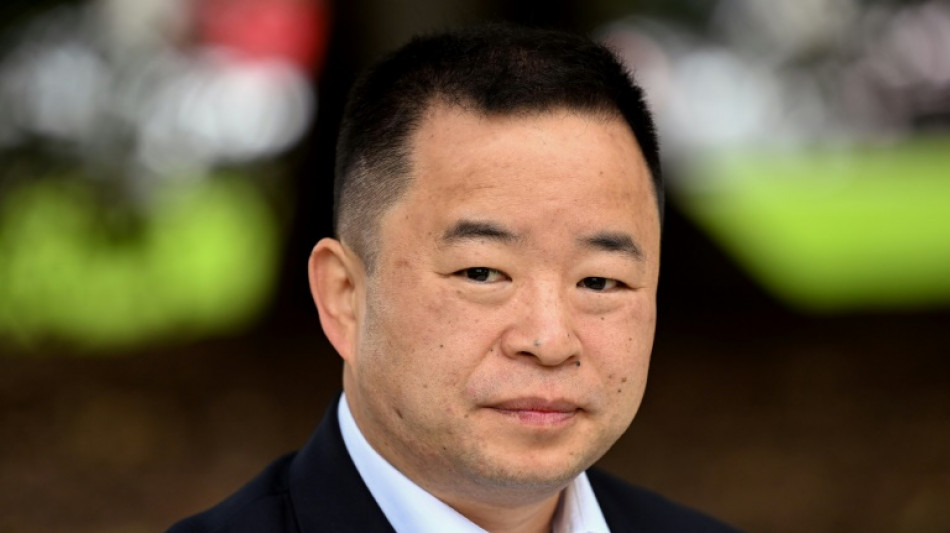
'Nobody dares speak out': Exiled Chinese writer decries censorship / Photo: William WEST - AFP

 Tuchel hails 'complete' England after Croatia demolition
 Fury to invite Trump to lead ring walk before Joshua showdown
 Fashion industry in 'precarious moment', says Vivienne Westwood supremo
 Seventh heaven for England in Nations League rout of Croatia
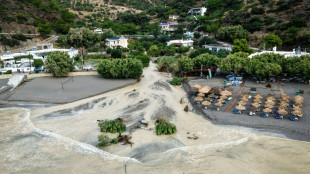 Storms, flooding cause chaos on Greek holiday island of Crete

 #IAmJaneDoe: online support campaign in US university rape case
 Brazil shine on Selecao's first visit to India
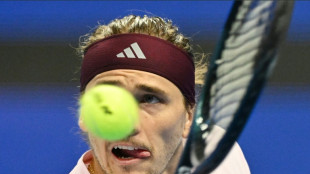
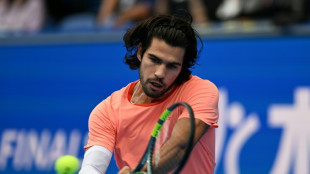
 Zverev sets up Djokovic quarter-final at China Open, Rybakina out

 Happier at home, Bordeaux hammer Lyon in Top 14
 Lula, Bolsonaro in final push for votes ahead of knife-edge election
 Boisterous fashion week barnstorms 'sleepy' Nigerian capital
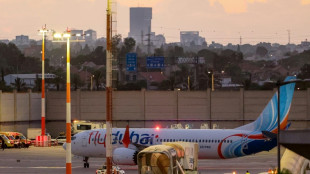 UAE investigators say flydubai co-pilot was planning 'terrorist act'
 Rahul smacks century in India v Windies ODI
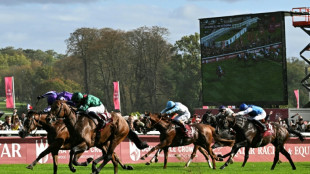 Daryz seeks to join exclusive club of dual Arc winners
 Russia warns diplomats to leave Kyiv over new strikes threat
 Olympic champ Zheng rebukes rowdy home crowd at China Open
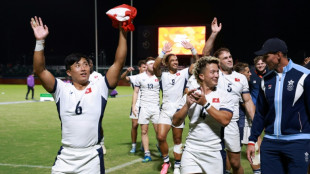
 World No.1 Sinner pulls out of Shanghai Masters to delay return
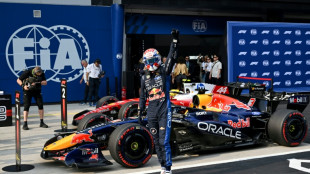 Red Bull's Verstappen grabs pole position for Bahrain GP

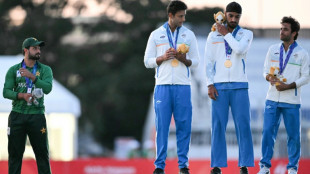 India beat Pakistan in blockbuster as golfer Kim wins 'crazy' gold

 India beat arch-rivals Pakistan to win Asian Games cricket gold
 Ethiopia's Tigray rebels abandon regional capital as govt advances: journalist
 Tom Kim powers to Games gold and exemption from military service
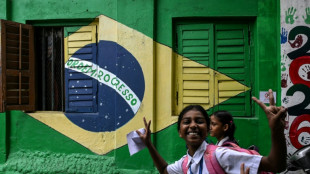 Split loyalties for Indian football fans at Brazil friendly

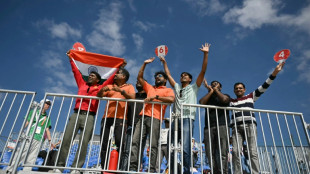 India-Pakistan blockbuster brings cricket fever to Japan baseball field
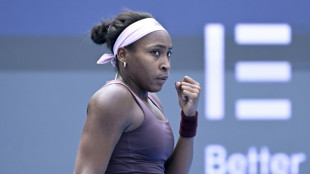
 Wong waiting on Rafa after winning Asian Games tennis gold
Murong Xuecun was one of the brightest stars of China's literary scene, his novels offering searing critiques of contemporary social issues that few other writers dared to imitate.
But after a decade of diminishing freedom of speech under President Xi Jinping, he could not publish in his own country and was eventually forced into exile.
His fate mirrors that of many liberal Chinese intellectuals who tried to shine a light on the system and then fled abroad, were imprisoned or fell silent.
The 48-year-old writer, whose real name is Hao Qun, left China in August last year after writing "Deadly Quiet City", a non-fiction account of the 2020 Wuhan coronavirus lockdown released in March.
His Australian publisher believed he would "definitely get arrested" after the book's release, Murong told AFP from his home in Melbourne.
"They urged me to leave immediately."
Murong got to Wuhan in April 2020, taking huge risks to interview the relatives of people lost to a mysterious and deadly virus ravaging the city, and residents who faced food and medical shortages because of the lockdown.
Independent citizen journalists who reported on conditions in Wuhan were later imprisoned, while state propaganda spun the lockdown as a triumph.
"I received constant phone calls from state security trying to harass and threaten me," he said.
"I was terrified throughout the whole process. When I started writing, (citizen journalist) Zhang Zhan was arrested. Twenty days before, I had conducted a very detailed interview with her."
Fearing imminent arrest, Murong sent each page as he wrote it to a friend overseas using encryption software, before deleting it from his computer.
"I told my friend: 'No matter what happens to me, this book must be published.'"
- Changing climate -
Murong became an overnight sensation when his first novel was serialised online in 2002, winning plaudits for its gritty portrayal of urban life with nihilistic characters who pursue drink, sex and drugs.
The relatively permissive climate of the 2000s under former leader Hu Jintao was also a time when raucous social media debate and independent media blossomed.
More Chinese writers gained international acclaim, with Mo Yan winning the Nobel Prize for Literature in 2012.
Online and in print, a multitude of voices flourished –- although publishers played a delicate balancing act with censors.
But when Xi came to power, voices calling for social change were muzzled, as he sought to eliminate any threats to the Communist Party.
One by one, Murong's friends -- formerly outspoken journalists, intellectuals and writers -- were arrested or fell silent.
"Just because they did or said something the Communist Party doesn't like, the regime threw them in jail," he said.
Murong himself was summoned to a Beijing police station in 2019 for retweeting a Xi cartoon three years prior.
Cultural censorship increased exponentially under Xi, with even tattoos and earrings worn by men blurred out on television, as the Communist Party sought to emphasise what it deems "healthy" social values.
Now films, TV series and musical works are abruptly pulled if they cross undefined political red lines.
Primary school curriculums contain textbooks on "Xi Jinping Thought".
Murong's account on China's Twitter-like Weibo platform once boasted more than 1 million followers. It was banned in 2013.
Work slowly dried up.
"Although I call myself a writer, it was almost impossible for me to publish essays or books. All I could do was be an anonymous screenwriter," he said.
As Xi prepares to secure a norm-breaking third term at October's party congress, Murong likens the current situation to the Cultural Revolution under Mao Zedong -- Communist China's founder -- when fervent mass campaigns mobilised against imaginary social threats.
"China is very likely to become like it was in the Mao era, a country where nobody dares to speak out openly," he said.
"Perhaps only when the Communist Party's censorship and oppression are gone can China's literature and arts truly flourish."
G.Machado--PC