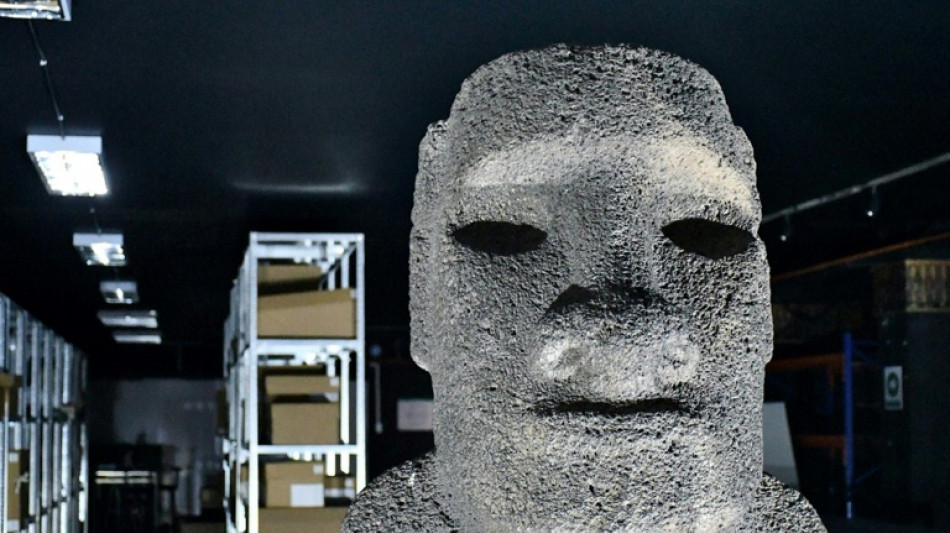
Chile museum to return Easter Island 'head'

 Turkish Energy Minister Highlights Qatar as Key Partner for Regional and Global Energy Security

 London Museum Granted 24/7 License Ahead of November Opening

 Dana White Confirms Flight to Washington for Trump Meeting on Press Secretary Role

 Dengue Fever Expands Into High Himalayas as Climate Change Warms Nepal

 IoT Refrigerator Hacks Disrupt Blood Labs and Supermarkets Across Europe and US

 Post-election pressures complicate US and Israeli decisions on Iran

 UN members approve talks on treaty protocol against environmental crime
 Family-run West Sussex beach café prepares for first winter season

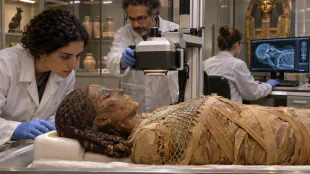 CT scans reveal health and burial clues from Egypt’s Braided Lady mummy

 Oxford faces complaints over lecturer’s classroom attire
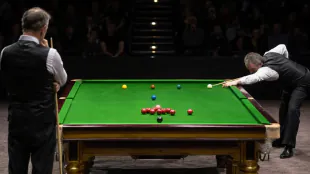 Kyren Wilson and John Higgins reach International Championship snooker final
Chile's National Museum of Natural History said Monday it will return to Easter Island an enormous stone statue taken from the Rapa Nui people and brought to the mainland 150 years ago.
The monolith is one of hundreds, called Moai, carved by the Rapa Nui in honor of their ancestors and sometimes referred to as the Easter Island heads.
The statues are today the island's greatest tourist attraction, sculpted from basalt more than 1,000 years ago.
The one being returned, dubbed Moai Tau, is a 715-kilogram (1,500-pound) giant brought by the Chilean navy some 3,700 kilometers (2,300 miles) across the Pacific in 1870.
Eight years later, it was moved to the natural history museum to be displayed.
The Rapa Nui, for whom the Moai represent the spirits of their ancestors, have been asking for the statue's return for years -- as well as other cultural treasures taken from their island.
"For the Rapa Nui, their ancestors, funerary objects and ceremonial materials may be as alive as members of their communities themselves," said a museum statement.
The return of the monolith "is profoundly significant as a gesture towards our indigenous peoples," said museum curator Cristian Becker.
With delays due to the coronavirus epidemic, the statue will finally depart from the port of Valparaiso next Monday on a trip of about five days to Easter Island, said the museum, "after a complex technical and diagnostic process" to guarantee its structural integrity.
A traditional ceremony was held at the museum Monday to send the statue safely on its way.
"It is essential that the Moai return to my homeland. For them (the community) and for me, this day is very much awaited," said Veronica Tuqui, a Rapa Nui representative.
Back on Easter Island, the Moai will be exhibited at the Father Sebastian Englert Anthropological Museum.
The Rapa Nui community has also asked the British Museum in London to return another Moai, dubbed Hoa Hakananai'a, that was taken in 1868 from Orongo, a ceremonial village on Easter Island.
The Rapa Nui in 2017 gained self-administration over their ancestral lands on Easter Island, a special territory of Chile.
G.Machado--PC

