
Biden hails Intel's $20 bn chip plant investment amid shortage

 Germans vote in elections threatening fresh blow to Merz

 US fears rapid escalation in Mideast after Houthis attack Riyadh

 Japan triathlete Hojo wins first gold of Asian Games

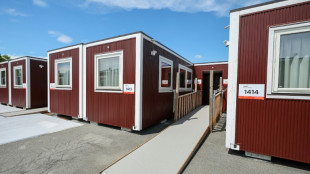 IOC president impressed by 'beautiful' Asian Games wooden huts

 First Asian Games gold goes to Japan as China's 13-year-old Yu lights up pool

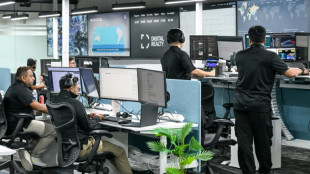 Data centre command hub keeps AI up and running

 Pope Leo in France: the issues on the table

 Packing for a pope: behind the scenes on foreign trips

 Republicans find transgender issues a powerful political weapon in midterm campaigning

 German state elections threaten new shock waves for Merz

 Chile's Bachelet quits race to be next UN chief

 Raphinha treble fires perfect Barca to win at Sevilla

 Thiam makes winning heptathlon return at Decastar meet

 Czechs beat USA to qualify for Davis Cup finals

 Dortmund sink Stuttgart to climb to Bundesliga summit

 Trump says will not tolerate attempts to slow AI growth

 'It has to stop': runners protest women's murders in S.Africa district

 Fire erupts near Riyadh airport as Houthis claim strikes

 Cuba works to restore power after another blackout

 England thrash Sri Lanka again to return to top of T20 rankings

 Arsenal thrashed by Brighton, sorry Spurs lose again

 South Korea, Austria qualify for Davis Cup finals

 Seare shocks Ingebrigtsen to win world 5km gold

 Brigitte Bardot widower slams sale of star's belongings

 Aston Villa compound Tottenham's misery despite late rally

President Joe Biden on Friday praised Intel's plans to spend $20 billion on a new US semiconductor facility, hailing the "historic" investment even as a global chip shortage fans the inflation wave weighing on his leadership.
Biden is urging manufacturers to bring production back to the United States, which was once a leader in making the chips key to everything from vacuums and televisions to cars which have become scarce during the pandemic.
Intel said it plans to begin construction at the end of the year on two plants in the Midwestern state of Ohio, and chip production could start as early as 2025.
"This is a truly historic investment in America and American workers," Biden said at the White House, where he spoke alongside Intel's CEO Pat Gelsinger.
Biden called it "one of the largest investments in semiconductor manufacturing in American history."
Problems in global supply chains have highlighted the fundamental importance of semiconductors, as well as the risks of overreliance on imports.
The closure of semiconductor plants, particularly in Asia, due to pandemic disruptions led to a global chip shortage that has affected a range of industries from automobiles to video games.
That was coupled with surging demand creating bottlenecks, forcing companies to slow production, and sending prices soaring.
"This will be our first new manufacturing site in 40 years, and spanning nearly 1,000 acres (400 hectares) will be a mega fab location," Gelsinger said at the White House.
"The site alone could grow to as much as $100 billion of total investment over the decade," he added.
- Boosting domestic production -
With the pandemic highlighting industrial dependence on imports, governments, particularly in the United States and Europe, have focused on securing semiconductor supply after years in which manufacturing has shifted to lower-cost Asian countries.
Geopolitical tensions also play a roles as the chips are largely manufactured in Taiwan, over which China has expressed territorial claims.
In a statement cheering the Intel announcement, the White House lamented that the United States had "lost its edge -- our share of global semiconductor production has fallen from 37 percent to just 12 percent over the last 30 years."
Biden's administration wants to invest $52 billion in domestic semiconductor research and production.
The Senate approved a bill last year but it still needs to pass the House of Representatives.
Intel last year announced a $20 billion investment in two new factories in Arizona.
The company plans to hire 3,000 new workers for the new site in Ohio, and building the factories will involve 7,000 construction workers.
The announcement Friday comes ahead of an eagerly awaited decision from the California-based group on the location for its European factories, which will make semiconductor components so fine that they are measured in nanometers.
Germany appears to be the favorite to host the Intel site.
Other major players in the microchip sector also are considering locating production closer to American consumers.
South Korean electronics giant Samsung announced in November it would build a $17 billion factory in Texas.
Since the start of 2021, the semiconductor industry has announced nearly $80 billion in new investment in the United States through 2025, according to industry federation data cited by the White House.
A.Santos--PC