Indigenous defenders of oil in the Amazon / Photo: Rodrigo BUENDIA - AFP

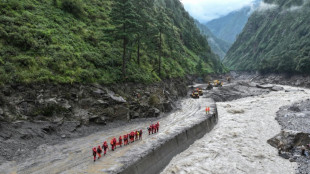
 Number of missing in Nepal, China floods soars past 2,400
 Trump announces deal for huge US stake in Venezuelan oil reserves

 Kane confirms talks on Bayern extension

 Trump govt. mulls deal to give away part of Yosemite park

 Indian release of Sonia Gandhi memoir uncertain after publisher clarification

 Cities show cleaner transport policies can reduce severe air pollution

 Four patients harmed in Nashville hospital medication mix-up

 Essex council hires private guards as Wethersfield asylum centre expands

 Haakon VIII becomes Norway's king after Harald V dies at 89

 Six injured after sign falls at Christian festival in West Sussex

 Dubai airport expands scanners that keep laptops and liquids in bags

 Kuwait and Pakistan sign military cooperation agreement
 Ramos strikes as AC Milan beat Venezia

 Odisha faces very heavy rain as Sri Ganganagar reaches 41.4C
 Scammers in China exploit Microsoft Teams and other workplace apps to target victims

 GSA employees report mice, ceiling damage and cloudy water after Washington office move
 Cara and former scraper develop open-source tool to alert artists when work appears in AI datasets

 Google expands easier file sharing between Android phones and Apple devices
 UK chefs turn to induction cooking to reduce kitchen heat, energy use and pollution
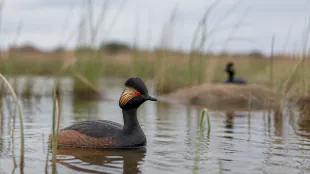 Restored Cheshire wetland becomes key UK breeding site for black-necked grebes
 Bayern steamroll Stuttgart in Bundesliga opener

 England pace quartet might keep Archer going until he is 40

 Driven by distraction? Trump steps up stunts as US midterms loom
 Springboks a wounded beast, warns All Blacks captain Savea

 Trump announces new US 'Space Academy'

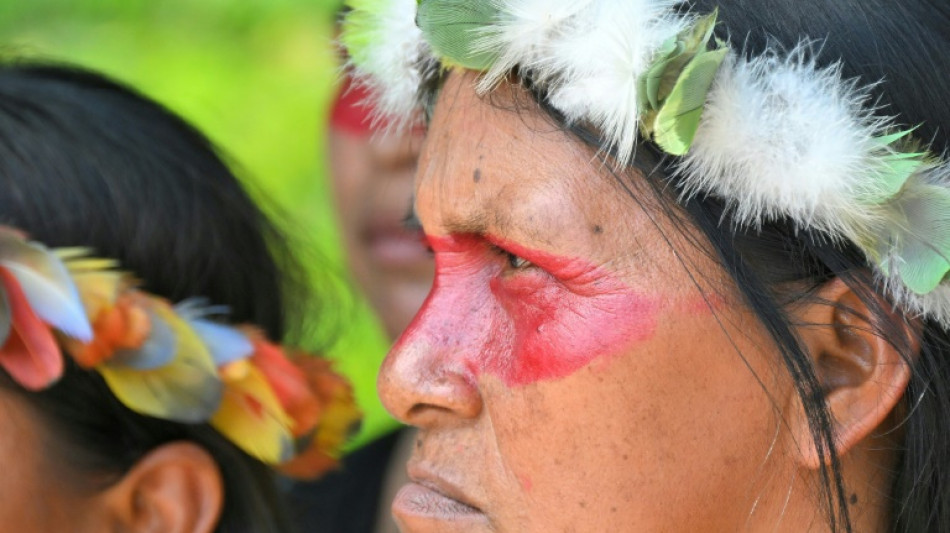
A group of Indigenous Waorani women give a war cry warning that environmentalists are not welcome in their part of the Ecuadoran Amazon, where an oil field operates partly on a protected reserve.
"We will not allow 'kowori' (strangers)... to enter," said Waorani leader Felipe Ima, translating the belligerent words of the group of seven women from the Kawymeno community that supports oil extraction at the nearby Ishpingo field.
The community is pitted in a battle of wills against environmental group Yasunidos, which has been fighting for a decade for a referendum on leaving the oil underground.
In May, Ecuador's Constitutional Court allowed the request, and a plebiscite has been scheduled for August.
Escorted by a spear-wielding warrior, the women from Kawymeno hold hands and dance in little clothing and feather crowns at the entrance to Ishpingo A platform.
They demand that any consultation should be with "the owners" of the land, and not with anyone that is "not even from the territory," explained Ima.
In Ecuador, the Constitution recognizes Indigenous people's "collective ownership of land as an ancestral form of territorial organization."
The State, however, maintains control over anything under the soil.
Ishpingo together with the nearby fields of Tiputini and Tambococha form the so-called ITT block, or block 43, which holds an estimated 282 million of the South American country's proven crude reserves of 1.2 billion barrels.
Extraction at Tiputini and Tambococha started in 2016 after years of fraught debate over whether to drill inside the Yasuni National Park.
This came after the government of then-president Rafael Correa failed to persuade the international community to pay former OPEC member Ecuador $3.6 billion not to exploit the ITT block to protect the Amazon and help curb climate change.
In April last year, the government announced pumping has also started at Isphingo.
- Pays for education, healthcare -
At the site protected by women in the dense, green jungle, stands one of twelve platforms of the ITT block that contributed 57,000 barrels per day (bpd) to Ecuador's total production of 464,000 bpd from January to April.
It is in the Yasuni National Park -- a biosphere reserve that houses some 2,000 tree, 610 bird, 204 mammal, 150 amphibian and more than 120 reptile species, according to the San Francisco University of Quito.
The Waorani community of Kawymeno, a journey of about four hours by foot and canoe from Ishpingo, is near the border with Peru.
Its 400 inhabitants have declared themselves defenders of the oil activity and its windfalls they say make up for the absence of government services.
"If there were no oil industry, we would not... have had education, health, family welfare," says Panenky Huabe, leader of the village where many work in the oil sector.
- Black gold benefits -
Besides being among the most biodiverse areas on Earth, the million-hectare (2.5-million acre) Yasuni park is home to two of the world's last uncontacted Indigenous populations.
It also holds oil fields that started operating before the ITT block.
"We see how extraction has been besieging the Yasuni for many years, since the 1970s when exploitation began," Yasunidos lawyer and spokesman Pedro Bermeo told AFP.
"Basically, the (block) 43 is the only one with a part (of jungle) that remains to be saved," he said.
But the referendum has generated deep divisions even among the Waorani, whose 4,800 members own some 800,000 hectares of jungle in the provinces of Orellana, Pastaza and Napo.
In 2019, the Waorani of Pastaza won a historic court ruling that prevents the entry of oil companies on 180,000 hectares on their territory.
But at Ishpingo A in Orellana, oil worker Akao Yetebe -- also a Waorani -- insisted "we will continue working" because "black gold benefits big cities, teachers, education, health, everything."
State-owned Petroecuador is authorized to operate on about 300 hectares of the Yasuni for its ITT block.
So far it has used about 80 hectares, generating $4.2 billion for the State -- some $1.2 billion in 2022 alone.
If the "Yes" wins in next month's referendum, "losses will be substantial," said Petroecuador manager Ramon Correa -- some $16.4 billion in projected income as well as jobs and investments already made.
X.Brito--PC