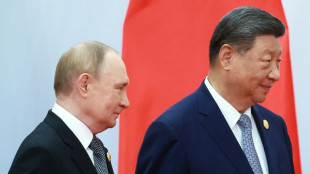
EU moves closer to launching digital euro / Photo: JOEL SAGET - AFP/File

 Trump announces deal for huge US stake in Venezuelan oil reserves

 Kane confirms talks on Bayern extension

 Trump govt. mulls deal to give away part of Yosemite park

 Indian release of Sonia Gandhi memoir uncertain after publisher clarification

 Cities show cleaner transport policies can reduce severe air pollution

 Four patients harmed in Nashville hospital medication mix-up

 Essex council hires private guards as Wethersfield asylum centre expands

 Haakon VIII becomes Norway's king after Harald V dies at 89

 Six injured after sign falls at Christian festival in West Sussex

 Dubai airport expands scanners that keep laptops and liquids in bags

 Kuwait and Pakistan sign military cooperation agreement

 Ramos strikes as AC Milan beat Venezia

 Odisha faces very heavy rain as Sri Ganganagar reaches 41.4C

 Scammers in China exploit Microsoft Teams and other workplace apps to target victims

 GSA employees report mice, ceiling damage and cloudy water after Washington office move

 Cara and former scraper develop open-source tool to alert artists when work appears in AI datasets

 Google expands easier file sharing between Android phones and Apple devices

 UK chefs turn to induction cooking to reduce kitchen heat, energy use and pollution

 Restored Cheshire wetland becomes key UK breeding site for black-necked grebes
 Bayern steamroll Stuttgart in Bundesliga opener

 England pace quartet might keep Archer going until he is 40

 Driven by distraction? Trump steps up stunts as US midterms loom

 Springboks a wounded beast, warns All Blacks captain Savea

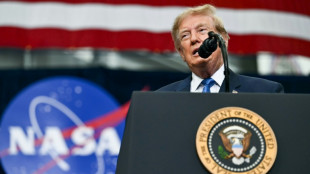 Trump announces new US 'Space Academy'

 Best Laser Printers in India: Top Options from HP, Brother and Canon

The EU on Wednesday took its first significant step towards launching a digital version of the euro, a controversial project that has been questioned by politicians and banks.
From China to the United States, Jamaica to Japan, more than 100 central banks worldwide are exploring or preparing to put in place digital currencies as electronic payments grow, changing the way people spend their money.
The move to create a digital version of the single currency began in 2020 when European Central Bank (ECB) President Christine Lagarde suggested the idea and her Frankfurt-based body launched a public consultation.
The European Commission, the EU's executive arm, published a proposal on Wednesday that will be the legal foundation on which the ECB could launch a digital euro.
The currency would be available to individuals living in the euro area and for visitors. It would offer an additional payment option for citizens to use online and offline with their digital wallets, thus ensuring as much anonymity as coins and banknotes.
The final law must be backed by the EU's 27 member states and the European Parliament.
Digital euro enthusiasts say it will complement cash and ensure the ECB does not leave a gap later filled by private -- usually non-EU -- players and other central banks.
"Given that the euro is already the world's second most-traded currency, it is not an area where can afford to stay behind the curve. We need to move ahead with a digital currency," commission vice president Valdis Dombrovskis told reporters.
Critics question the need for a digital euro and banks warn of major risks, while the ECB's own study found the public was concerned over payment privacy.
The ECB and the commission "have yet to make a compelling case of why we need the digital euro and what added value it will deliver," German MEP Markus Ferber said.
- Benefits 'outweigh' costs -
The commission's proposal argued that the digital euro's "long-term benefits... outweigh its costs" and warned "the costs of no action can potentially be very large".
Lagarde said in March that the digital currency was important for resilience and to "safeguard European payment autonomy".
Many means of payments are "not necessarily European", she noted, adding it was "very unhealthy to rely on one single source of payment".
US giants Visa and Mastercard currently dominate the global card payment market.
Others argue, however, that the bloc's plans spell trouble unless the EU takes necessary other steps.
Banks have warned of the risk of bank runs as customers could hold their funds in digital euro accounts and wallets, moving them away from the banks' balance sheets.
"To shield banks from the risk of deposit flight and to limit the negative impact on banks' ability to finance the economy, it is important to set appropriate and firm limits in holdings and transactions," the European Banking Federation said on Wednesday.
The proposal indicates there will be a limit to how much money people can keep in digital euros. ECB officials have suggested a cap of 3,000 euros ($3,300).
The digital currency will be granted "legal tender" status, meaning it must be accepted as payment. But there would be exceptions, including for small businesses that do not accept any form of digital payment.
The ECB is set to give the formal green light to a digital euro in October and the expectation is it would be available from 2027 onwards.
The ECB welcomed the commission's proposal, which it said offered "private intermediaries appropriate economic incentives to distribute the digital euro as they do other digital means of payment, while preventing excessive fees for merchants".
- Privacy concerns -
The ECB has a difficult battle to win over Europeans.
A public consultation showed that the number one priority when it comes to the digital euro is privacy.
To calm people's fears, the ECB has stressed it would not attempt to control how people can spend the digital currency or use it for surveillance, as critics claim is the case in China.
"This is not a Big Brother project for online payments," the EU's financial services commissioner, Mairead McGuinness, said during a press conference in Brussels.
"With the digital euro, the data privacy will be the same as for existing private digital means of payment. For offline payments, the data privacy will be even higher."
The commission's proposal said the digital euro "will be designed so as to minimise the processing of personal data by payment services providers" and the ECB.
X.M.Francisco--PC