Gulf oil states on a Pacific charm offensive / Photo: Ben BOHANE - AFP

 Trump announces deal for huge US stake in Venezuelan oil reserves

 Kane confirms talks on Bayern extension

 Trump govt. mulls deal to give away part of Yosemite park

 Indian release of Sonia Gandhi memoir uncertain after publisher clarification

 Cities show cleaner transport policies can reduce severe air pollution

 Four patients harmed in Nashville hospital medication mix-up

 Essex council hires private guards as Wethersfield asylum centre expands

 Haakon VIII becomes Norway's king after Harald V dies at 89

 Six injured after sign falls at Christian festival in West Sussex

 Dubai airport expands scanners that keep laptops and liquids in bags

 Kuwait and Pakistan sign military cooperation agreement

 Ramos strikes as AC Milan beat Venezia

 Odisha faces very heavy rain as Sri Ganganagar reaches 41.4C
 Scammers in China exploit Microsoft Teams and other workplace apps to target victims

 GSA employees report mice, ceiling damage and cloudy water after Washington office move

 Cara and former scraper develop open-source tool to alert artists when work appears in AI datasets

 Google expands easier file sharing between Android phones and Apple devices
 UK chefs turn to induction cooking to reduce kitchen heat, energy use and pollution

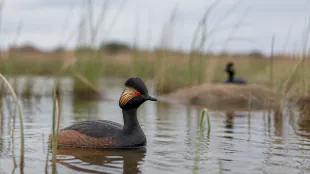 Restored Cheshire wetland becomes key UK breeding site for black-necked grebes
 Bayern steamroll Stuttgart in Bundesliga opener

 England pace quartet might keep Archer going until he is 40

 Driven by distraction? Trump steps up stunts as US midterms loom
 Springboks a wounded beast, warns All Blacks captain Savea

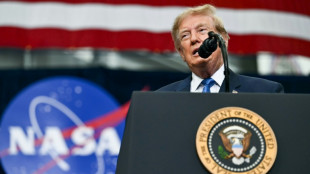 Trump announces new US 'Space Academy'

 Best Laser Printers in India: Top Options from HP, Brother and Canon

Gulf oil states are using their vast wealth to build influence across the far-flung South Pacific, experts have told AFP, tearing a page straight out of China's Belt and Road playbook.
Saudi Arabia and the United Arab Emirates -- two of the world's biggest crude oil producers -- have been ramping up efforts to shed their reputations as global climate laggards.
Both have been lavishing money and attention on small, isolated and often indebted Pacific nations, where rising sea levels are already creeping up on low-lying coastal communities.
Businessman Milroy Cainton, who was recently appointed as Vanuatu's special envoy to the Emirates, said it was clear the Gulf states wanted friends in the Pacific.
"There are some good things they see in the South Pacific," he told AFP. "We are getting big help from them, as well as from China."
Since 2015, the UAE says it has spent at least $50 million on infrastructure projects throughout the Pacific islands, typically focused on renewable energy.
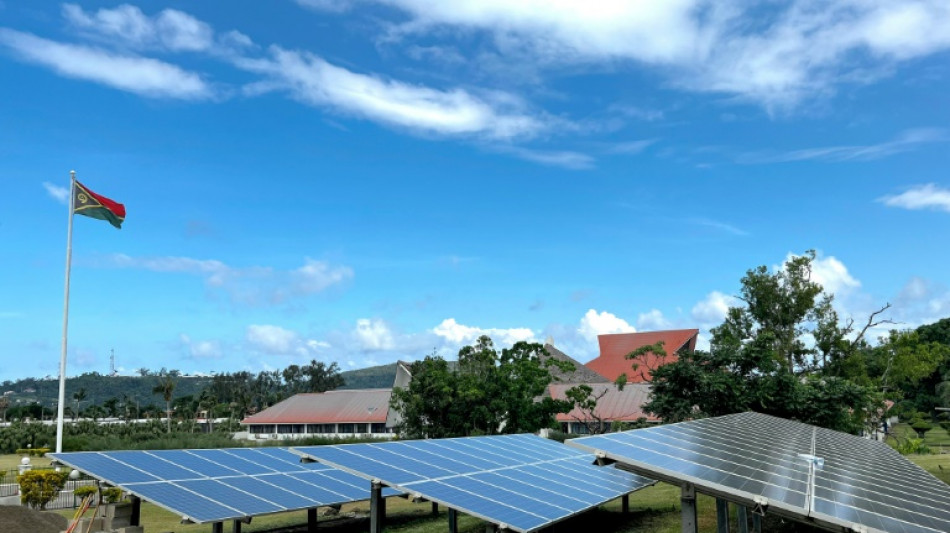
Emirati petrodollars have funded a wind farm in Samoa, water storage facilities in the Marshall Islands, and solar power projects in Kiribati, Tuvalu and Solomon Islands.
One of the most conspicuous examples sits smack in the middle of Vanuatu's leafy capital Port Vila, where a UAE-funded solar farm keeps the lights on inside the country's parliament.
"It's one of the largest-scale renewable energy projects in Vanuatu," said Cainton.
"The relationship is progressing big time with clean energy."
- Pacific Belt and Road -
Saudi Arabia has sought to establish diplomatic relations with a clutch of its own Pacific partners, including Tuvalu and Fiji in 2015, Tonga in 2020, Vanuatu in 2022, and the Cook Islands in April this year.
It has built a particularly warm relationship with Solomon Islands -- pledging $8 million in June to help it prepare for the Pacific Games in the capital Honiara.
A host of Pacific dignitaries travelled to the Saudi capital Riyadh earlier this year, where they discussed issues such as climate financing with counterparts from the Arab League.
Over the past decade Saudi Arabia and the UAE have become increasingly prominent players on the international stage.
They have snapped up high-profile sporting franchises, lured the biggest entertainers to perform in their cities, and become more assertive in their foreign policy.
Both have made headline-grabbing commitments to renewable energy, and the UAE pulled off a major coup when it secured the rights to host the COP28 climate conference in Dubai later this year.
"It reflects the new ambitions of these Gulf states, which were traditionally passive actors in international relations," said Jean-Loup Samaan from the Middle East Institute at the National University of Singapore.
"In the last decade they have gradually moved into the Persian Gulf, into the Indian Ocean and the Indo-Pacific. They use what they have -- financial assets," he said.
"The UAE is more advanced than the Saudis. They tend to go into these countries, establish strong diplomatic relations, and then come with investments in local infrastructure."
Samaan compared the strategy to a pared-back version of China's Belt and Road initiative -- spending money in developing countries to grow their global reach.
"It's like a smaller, Gulf version of the Belt and Road," he told AFP.
- Securing partners -
Samaan said profit was far from the most important consideration when dishing out these investments.
"They want to secure diplomatic partners that align with their interests later on."
Although they have a small collective population and limited economic clout, the Pacific islands can be immensely valuable diplomatic partners.
The Pacific bloc represents 12 of 55 votes in the United Nations' Asia-Pacific region, which also includes Saudi Arabia and the UAE.
Pacific affairs expert Stewart Firth said "influence comes at a cheap price" in the small, developing economies that make up the Pacific.
"Small amounts of assistance have large effects," said Firth, a fellow at the Australian National University.
Author and Middle East analyst Matthew Hedges said such relationships also helped the Gulf states burnish their climate credentials, which have been historically weak because of their role as major fossil fuel producers.
"It's about emboldening their reputation and trying to align with what's happening internationally," said Hedges, who in 2018 was jailed in the UAE on spying charges before being pardoned and released.
"They are deliberate and smart about how they communicate what they do.
"It's pragmatic, and it's for the long term."
L.Henrique--PC