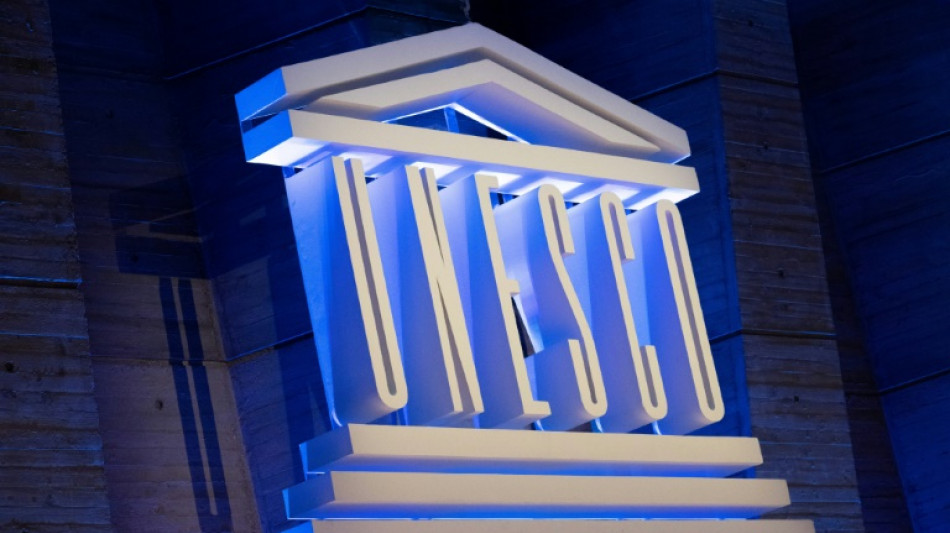
AI-supercharged neurotech threatens mental privacy: UNESCO / Photo: ALAIN JOCARD - AFP

 Birmingham City Seek First Championship Win Against Wrexham
 Four-wicket Robinson stars as Pakistan collapse in second Test
 Alcaraz anxious after layoff but feels 'great' about wrist

 Bezzecchi edges Marquez brothers in blazing Spanish MotoGP practice

 Ukraine opposes reintegration of Russia to motorsport

 The chaotic saga of Kanye West's planned Russian concerts

 Missing soar over 2,400 after deadly Nepal, China floods

 India Orders Wind Turbine Makers to Report on Data Localization for Cybersecurity

 Leknessund breaks away to win emotional Vuelta stage seven
 Four-wicket Robinson stars as Pakistan all out for 110 in second Test
 Fed chair Warsh signals 'work to do' on high US inflation

 Watkins's legacy at Villa untarnished, says Emery as Jackson arrives

 Spurs boss De Zerbi targets one more big signing before window shuts
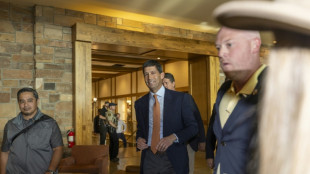 Fed chair Warsh flags high US inflation as 'concerning'

 Same Election Question, Two Different Odds: Predictions.io Launches Free Cross-Venue Comparison Tools

 Man Utd new signing Baleba sidelined for three weeks
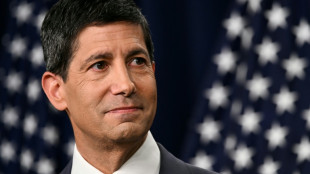
 Juve's Yildiz to miss 'several months' with foot injury

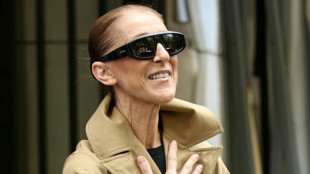 Celine Dion arrives in France ahead of sold-out comeback dates

 All-round Tongue stars for England in second Test against Pakistan

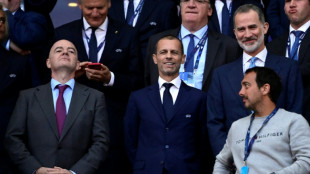 UEFA's legal move 'massive escalation' in bitter Infantino feud

 MEXC Launches Earn Plus With Limited-Time Event Offering Up to 800% APR Booster

 Norway's new King Haakon VIII, popular face of shaken monarchy

 Stocks rise ahead of Fed chair's policy speech

 Norway's new King Haakon VII, popular face of shaken monarchy

 Last-wicket duo take England to 290 all out in 2nd Test against Pakistan
The combination of "warp speed" advances in neurotechnology, such as brain implants or scans that can increasingly peek inside minds, and artificial intelligence poses a threat to mental privacy, UNESCO warned on Thursday.
The UN's agency for science and culture has started developing a global "ethical framework" to address human rights concerns posed by neurotechnology, it said at a conference in Paris.
Neurotechnology is a growing field seeking to connect electronic devices to the nervous system, mostly so far to treat neurological disorders and restore movement, communication, vision or hearing.
Recently neurotechnology has been supercharged by artificial intelligence algorithms which can process and learn from data in ways never before possible, said Mariagrazia Squicciarini, a UNESCO economist specialising in AI.
"It's like putting neurotech on steroids," she told AFP.
Gabriela Ramos, UNESCO's assistant director-general for social and human sciences, said that this convergence of neurotechnology and AI was "far-reaching and potentially harmful".
"We are on a path to a world in which algorithms will enable us to decode people's mental processes and directly manipulate the brain mechanisms underlying their intentions, emotions and decisions," she told the conference.
In May, scientists in the United States revealed they had used brain scans and AI to turn "the gist" of what people were thinking into written words -- as long as they had spent long hours inside a large fMRI machine.
Later that month, billionaire Elon Musk's firm Neuralink received approval to test its coin-sized brain implants on humans in the United States.
Musk has said his ultimate goal is to ensure that humans are not intellectually overwhelmed by AI -- though on Thursday he launched his own artificial intelligence company xAI.
Squicciarini emphasised that UNESCO was not saying that neurotechnology is a bad thing.
"If anything it's fantastic," she said, pointing to how the technology could let blind people see again, or paralysed people walk.
But with neurotechnology "advancing at warp speed," UN Secretary-General Antonio Guterres said that ethical guidelines were needed to protect human rights.
Investment in neurotech companies increased by 22 times from 2010 to 2020, rising to $33.2 billion, according to a new UNESCO report co-authored by Squicciarini.
The number of patents for neurotech devices doubled between 2015 and 2020, with the United States accounting for nearly half of all patents worldwide, the report said.
The neurotech devices market is projected to reach $24.2 billion by 2027.
X.M.Francisco--PC