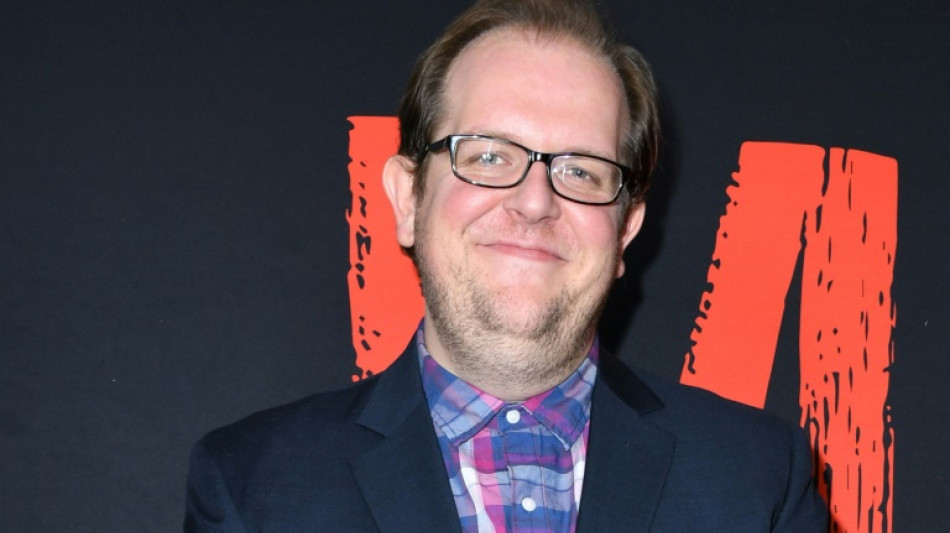
'I have to be able to pay my rent': Hollywood actor feels the squeeze / Photo: VALERIE MACON - AFP/File

 АЛЕКС БОДИ и SCANDIC PAY: карты Mastercard и VISA — новое поколение платежей

 ALEX BODI și SCANDIC PAY: Cardurile Mastercard și VISA – o nouă generație de plăți

 John Park’s Agency Takes Legal Action Over Unauthorized 'McDonald’s Order Rap' Distribution

 Best Pet Advent Calendars for Christmas 2026: Dog Treats and Cat Toys

 Grattan Institute Releases Blueprint to Target Specialists Over Excessive Fees

 Arizona Science Center Hosts Girls in STEM Astro Adventures for Students

 New Turkish Cafe, Japanese BBQ, and Korean Restaurants Open Across East Bay

 Knowle Move Four Points Clear at Top After Histon Victory
Dominic Burgess has been a member of Hollywood's Screen Actors Guild for well over a decade, guest starring in high-profile TV shows from "Modern Family" and "The Good Place" to "Star Trek: Picard."
Like thousands of his peers, the Los Angeles-based British actor stayed awake until the wee hours of Thursday to learn whether he would be headed for the picket lines.
He now has his answer.
Contract talks with studios over better pay and other conditions broke down overnight, and the Screen Actors Guild has formally called a strike.
"I fully support the strike action," Burgess told AFP. "We all want to work, but at what cost, when the salary and the residuals are no longer sustainable for actors?"
"I have to be able to pay my rent and pay for my cat's insulin," he said.
While the actor's life can appear glamorous to the outside world, the reality is often anything but, says the 40-year-old.
For "99 percent of actors," daily life is spent "on the ground, auditioning and hustling and fighting to get in audition rooms."
And that is when they are not working part-time jobs.
For the first six years he lived in Los Angeles, Burgess worked part-time at the local Arclight movie theater, for $7.75 per hour, to supplement his meager acting income.
Since then, he says he has been "fortunate to be able to sustain myself through acting," landing guest roles in shows like Netflix's Emmy-nominated "Dahmer - Monster: The Jeffrey Dahmer Story."
Still, "day-to-day, I'm very proactive. I have a manager who I adore, and we sniff out work where we can."
- 'Unsustainable' -
Most actors earn their living through a mixture of wages when they are actively working, along with "residuals" -- payments for shows and films they previously appeared in, which are still being rewatched by audiences.
Both of these have dwindled over the years, said Burgess, as studios and networks keep "squeezing, forcing everyone down."
"A real trend of late, especially with streamers, is that they won't pay above 'scale' -- you're working for the bare minimum that you're legally allowed to work for under SAG rules," he said.
"I worked for a company this year that I worked for in 2012, and I'm being paid less for my services this year than I was 10 years ago," he said.
The union minimum salaries that most actors earn can appear misleadingly high, explained Burgess.
While the day rate for a television performer is $1,082, around half of that disappears to agents, legal fees and taxes.
Even then, an actor being paid for just one or two days' work may be required to hold several weeks free for a shoot, as the producers work out their schedule.
"It's pretty common," said Burgess.
"So then that $500 has to stretch you for eight days, or 16 days, or 21 days if it's a prestige drama -- it becomes very unsustainable."
Other cost-cutting measures are becoming ever more common, such as downgrading "series regulars" to "recurring guest stars" or even one-day guest stars.
- 'The goal' -
It is all a far cry from what Burgess expected when he arrived in the United States some 16 years ago.
"LA was always the goal for me, because I was raised on 'X-Files' and 'Buffy' and 'Twin Peaks' and 'Star Trek.' They were the shows that I loved, so that was where I gravitated towards," he said.
By coincidence, he arrived from England right in the middle of the last writers' strike, which lasted for 100 days in 2007-08.
"Back then, casting directors were meeting people in person. I met more casting directors in three weeks of being in LA than I had done in three years of being in London," he recalled.
Since the pandemic, most auditions are "self-taped," meaning actors have to film themselves reading lines, and send in a video clip that may never be watched.
Limiting this practice was another union demand in talks with studios that collapsed this week.
Still, Burgess says he wouldn't trade the job for any other.
"We're artists, we're actors and writers and creators, and I think sometimes that's taken advantage of -- studios know that we love what we do," he said.
"If we're offered a job for minimum scale, if we say no, there's going to be 450 other actors right behind you, who will be like, 'Yep, I'll do it.'"
C.Amaral--PC