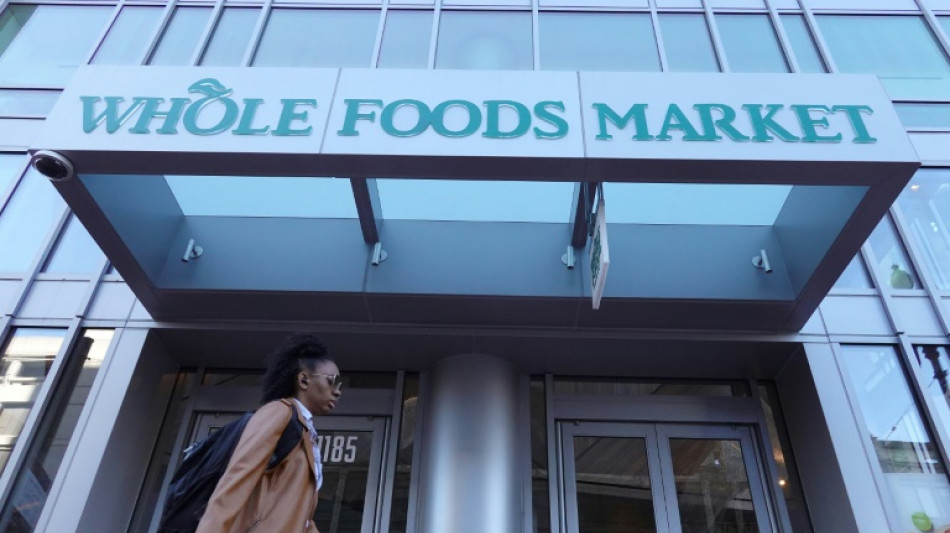
Amazon expands pay-by-palm service in US grocery stores / Photo: JUSTIN SULLIVAN - GETTY IMAGES NORTH AMERICA/AFP/File

 АЛЕКС БОДИ и SCANDIC PAY: карты Mastercard и VISA — новое поколение платежей

 ALEX BODI și SCANDIC PAY: Cardurile Mastercard și VISA – o nouă generație de plăți
 John Park’s Agency Takes Legal Action Over Unauthorized 'McDonald’s Order Rap' Distribution

 Best Pet Advent Calendars for Christmas 2026: Dog Treats and Cat Toys

 Grattan Institute Releases Blueprint to Target Specialists Over Excessive Fees

 Arizona Science Center Hosts Girls in STEM Astro Adventures for Students

 New Turkish Cafe, Japanese BBQ, and Korean Restaurants Open Across East Bay

 Knowle Move Four Points Clear at Top After Histon Victory
Customers shopping at Amazon's US-based Whole Foods grocery stores will be able to pay for items by hovering their palm over a scanner, much like shoppers already do with smartphones or credit cards.
The Seattle-based online giant will extend a service that was already available in 200 of the chain's 500-plus outlets, acquired in 2017, according to a press release issued Thursday.
The Amazon One program is also available to third-party companies, and in March it entered into a partnership with the American fast-food chain Panera Bread, which has begun installing terminals in some of its branches.
The service can also be found in several entertainment venues and airport shops, and is also being tested in some Starbucks cafes.
To satisfy clients for whom the collection of personal data is a sensitive issue, Amazon said any palm images recorded by the machines will be stored in a highly secure server on the company's AWS cloud service.
Usage depends not only on the image of the palm, but also maps of the vascular network.
As a result, a user's palm signature cannot be duplicated and the system will know the difference between a real palm and a copy, the company said.
Amazon said it has tested more than 1,000 silicone and 3D-printed palm copies to ensure the terminal cannot confuse a replica with the original.
The use of palm recognition is growing, with the Airport Express Line in Beijing now accessible using WeChat's technology.
P.Sousa--PC